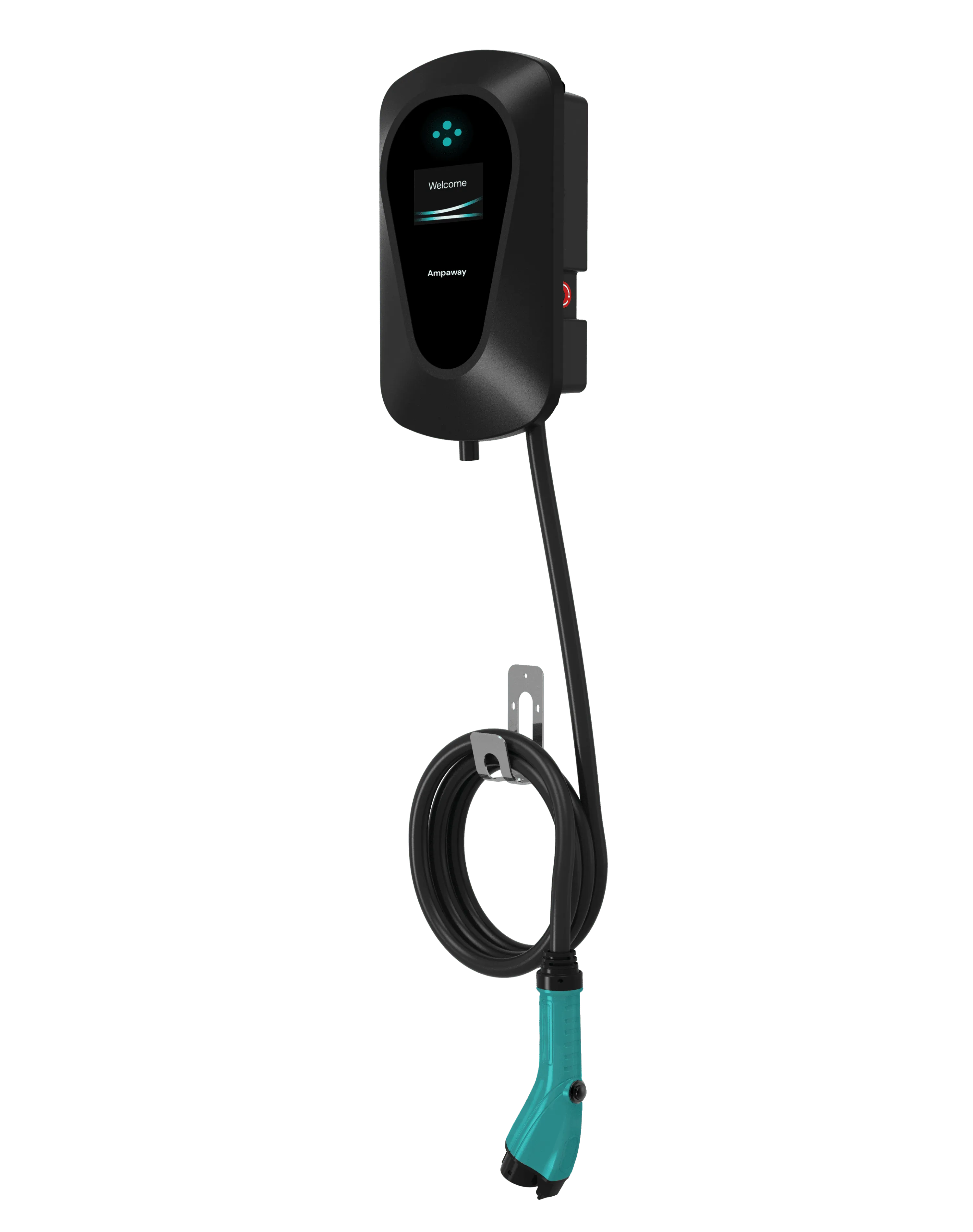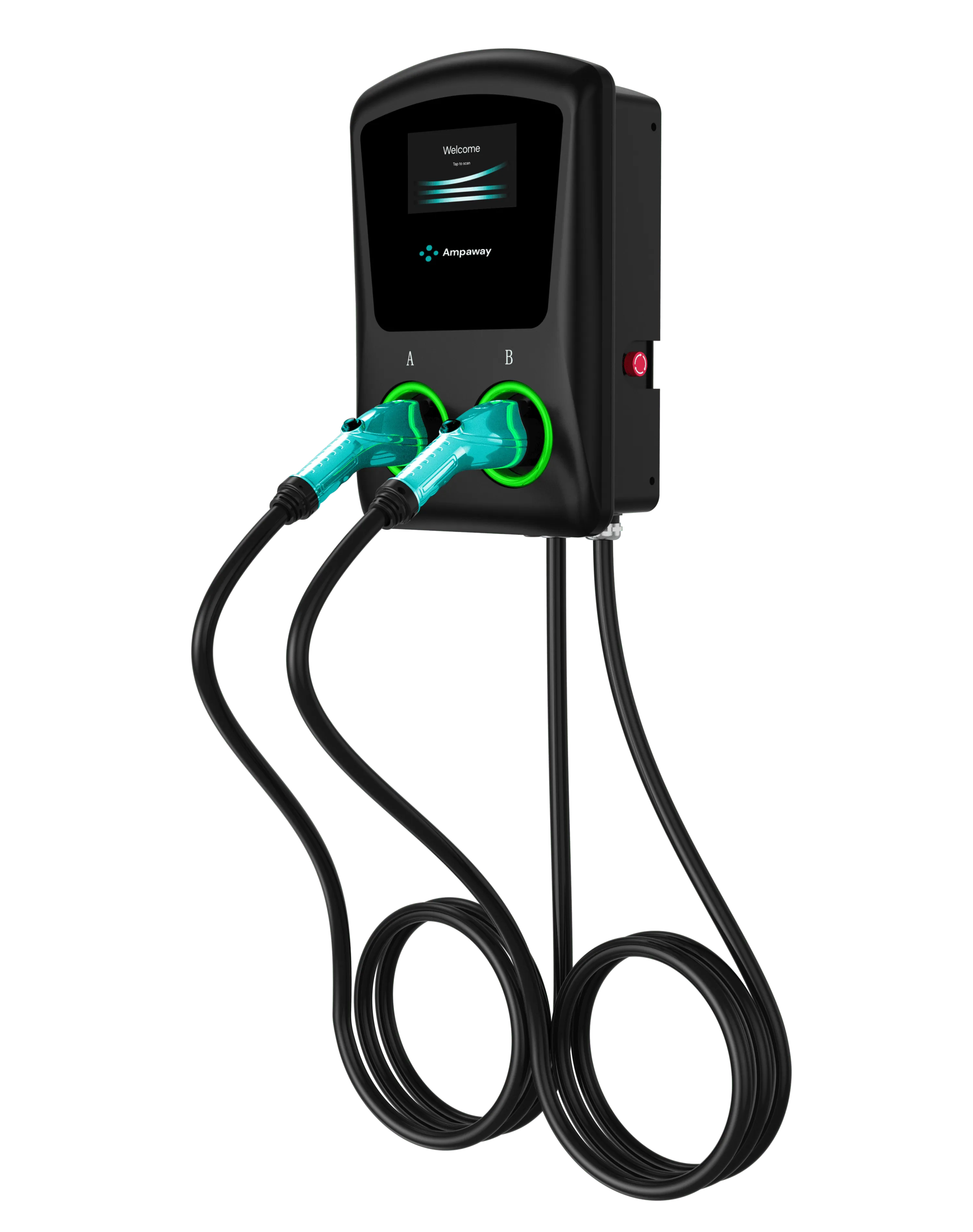

Before installing EV chargers at a property, you need to know how much electrical capacity the building can support. Available power determines how many chargers you can install, how quickly vehicles can charge, and whether you'll need electrical upgrades.
EV charger electrical requirements depend on several factors. For property owners, understanding these requirements early helps avoid unnecessary infrastructure costs, choose the right equipment, and plan for future expansion.
What are the electrical requirements for EV charging?
The electrical requirements for EV charging vary depending on the charging level, equipment power rating, number of charging ports, and available building capacity. For example, installing two Level 2 chargers in an apartment garage requires significantly less electrical infrastructure than operating several DC fast chargers at a commercial fleet depot.
The table below shows typical ranges for each charging level. Actual numbers depend on the specific equipment and site, so use them as a starting point for planning.
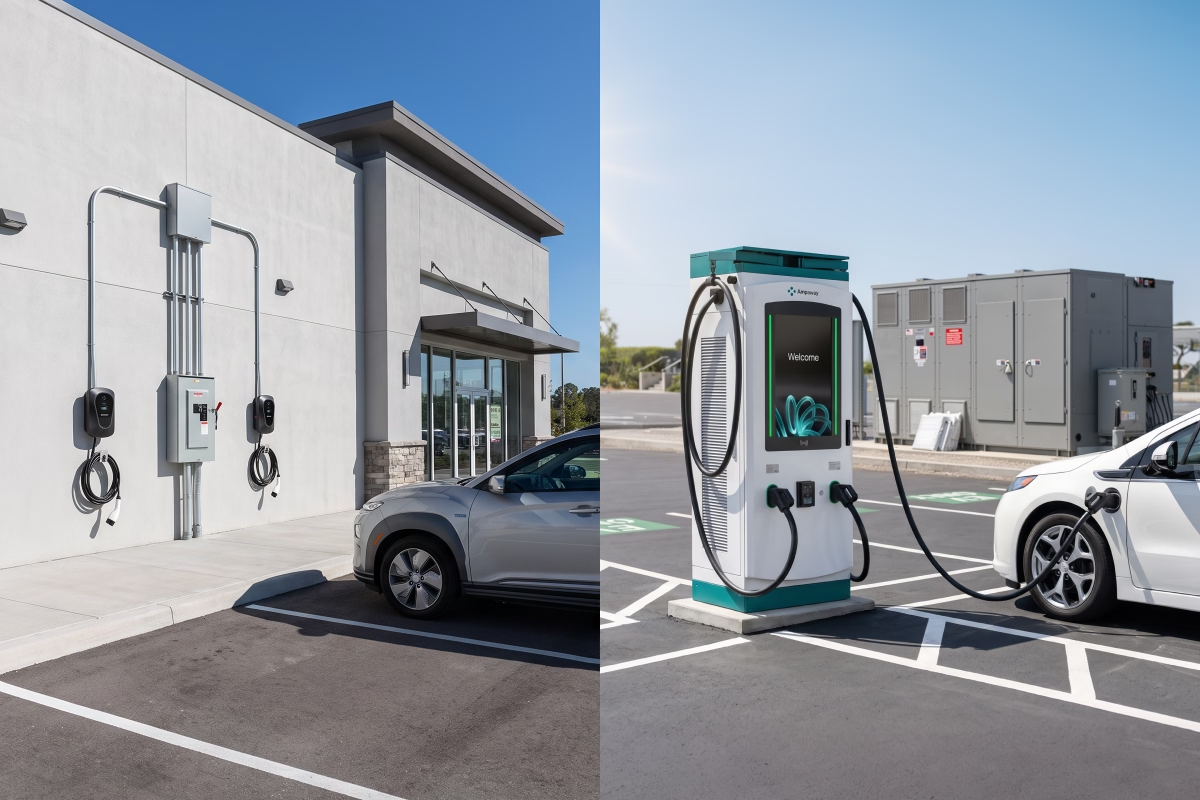
Level 2 charging is often practical for commercial properties because it can use electrical infrastructure already available in many buildings. DC fast charging requires substantially more power and may involve new transformers, switchgear, and utility coordination.
Among the main EV charger types, Level 1 is generally less suitable for commercial locations because its low charging speed limits how much energy vehicles can receive during a typical visit.
How much electrical capacity does an EV charger need?
An EV charger's electrical demand depends primarily on voltage and current.
- Voltage (V) describes the electrical potential the charger receives.
- Amperage (A) measures the electrical current flowing through the circuit.
- Kilowatts (kW) measure electrical power.
For a single-phase AC charging circuit, power can be estimated using this formula:
Power (kW) = Voltage × Amperage ÷ 1,000
For example:
- A 32A charger operating at 208V delivers approximately 6.7 kW.
- A 40A charger operating at 240V delivers approximately 9.6 kW.
Four 40A chargers operating at 208V would have a combined rated output of approximately 33.3 kW. However, the electrical infrastructure must also meet applicable continuous-load sizing requirements.
For commercial three-phase systems in the U.S., power is calculated using voltage, current, the three-phase factor (1.732), and power factor:
Power (kW) = Voltage (V) × Current (A) × 1.732 × Power Factor ÷ 1,000
Level 2 EV charger electrical requirements
Level 2 EV charger electrical requirements are particularly relevant to apartment and condo buildings, workplaces, retail properties, and parking facilities.
These chargers typically operate on 208V or 240V AC power. Many commercial buildings have 208V three-phase electrical distribution systems, with Level 2 chargers connected to individual line-to-line circuits.
Because charging power depends on voltage, equipment operating at 208V generally provides less power than the same equipment operating at 240V, assuming the same current.
Voltage and amperage
Commercial Level 2 chargers commonly offer output settings ranging from approximately 16A to 80A. Higher amperage allows greater charging power, but the vehicle's onboard charger also limits how much AC power it can accept.
For example, an EV with an 11 kW onboard charging limit cannot take full advantage of a 19.2 kW Level 2 charger. For properties where vehicles remain parked throughout the workday or overnight, a lower output may already provide sufficient energy.
*Circuit ratings are based on the NEC's general 125% continuous-load sizing requirement for EV charging equipment. Actual requirements depend on the applicable electrical code, equipment specifications, and installation conditions.
A 32A charger, for example, can add roughly 20–25 miles of range per hour to many passenger EVs, depending on vehicle efficiency and supply voltage. For buildings with long parking durations, moderate-power charging ports may be more useful than fewer high-output units.

Dedicated circuits
Level 2 chargers generally use dedicated branch circuits sized for the equipment's maximum operating current. EV charging creates sustained electrical loads, so connecting chargers to circuits that also serve other equipment can create overload risks and violate electrical requirements.
The NEC provides certain exceptions for approved equipment and energy-management arrangements that allow multiple charging units to share a branch circuit. These configurations require a compliant electrical design and compatible equipment.
For most commercial installations, dedicated circuits remain a straightforward approach, while load management can coordinate how the available power is distributed across the charging system.
Electrical panel requirements for EV chargers
The electrical panel requirements for an EV charger involve two considerations: available electrical capacity and physical space for the necessary circuits. A building may have enough electrical power to support new chargers but insufficient breaker space in its existing panel. Alternatively, a panel may have several unused breaker positions while the electrical service has little spare capacity. Evaluate both conditions before installation.
Available panel and service capacity
A licensed electrician, electrical engineer, or experienced EV charging consultant can assess the property's electrical infrastructure. A typical evaluation considers:
- Main electrical service rating
- Panel and feeder ratings
- Existing building loads
- Historical peak demand
- Proposed charger quantity and output
- Expected simultaneous charging demand
- Future building or equipment loads
Utility demand records can help establish how much power a property uses during peak periods. Under applicable NEC provisions, qualifying projects may use historical maximum-demand data or, in certain circumstances, a properly conducted load study instead of relying exclusively on conventional connected-load calculations.
However, utility bills or a 30-day measurement period do not automatically establish usable capacity. The calculation must satisfy the conditions of the locally adopted code, including any required adjustments to measured demand. This assessment establishes the electrical capacity that can safely be allocated to charging.
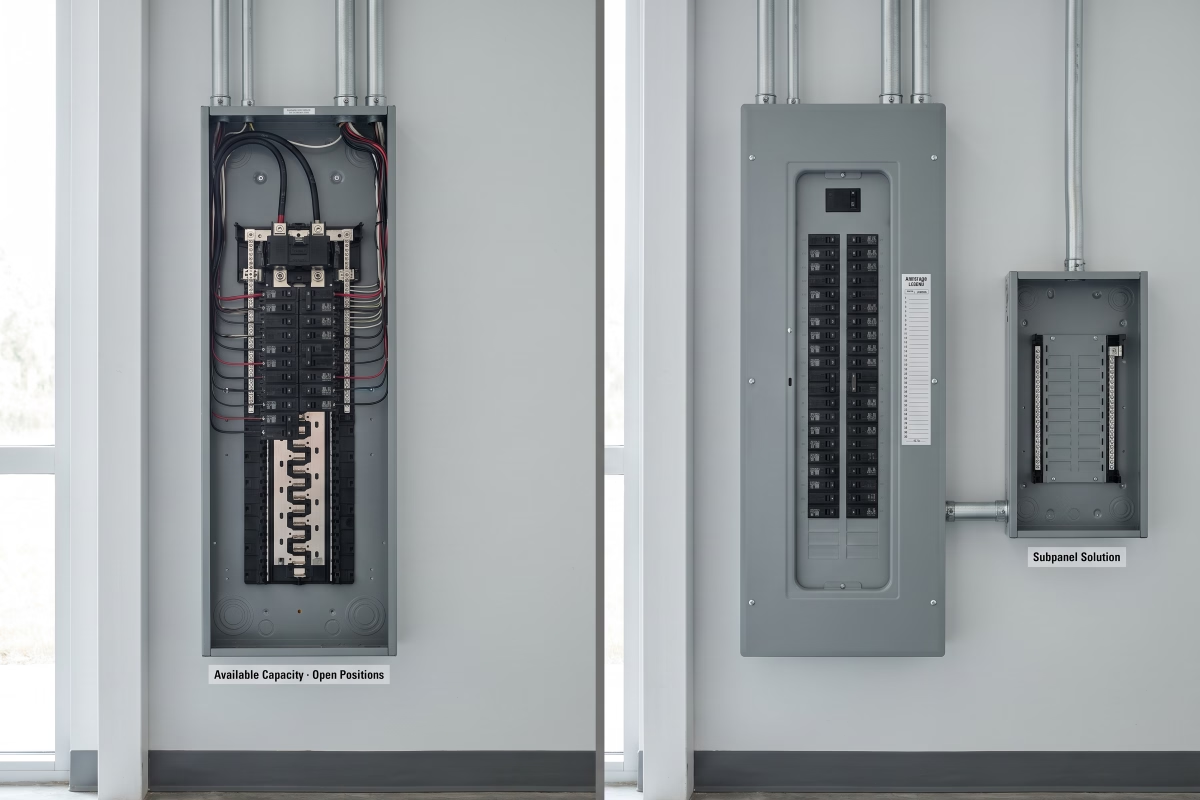
Breaker space
Each conventional Level 2 branch circuit at 208V or 240V typically uses a two-pole breaker. That means ten independently supplied charging circuits may require twenty breaker spaces, depending on the equipment and panel configuration.
If the existing panel lacks sufficient space, you can install a subpanel. A subpanel provides additional circuit positions, but it does not increase the building's available electrical service capacity. The upstream panel, feeder, and service must still support the new loads.
When capacity is sufficient, this can be less expensive and less disruptive than upgrading the main electrical service.
When is an electrical upgrade required?
An electrical upgrade may be necessary when the required charging demand exceeds the existing service, feeder, panel, or transformer ratings. Potential situations include:
- A building operating close to its electrical capacity
- A planned installation requiring sustained high charging power
- Distribution equipment that cannot safely support additional circuits
- DC fast charging that exceeds the existing infrastructure's capabilities
Depending on the project, upgrades may involve panels, transformers, switchgear, or the utility connection. These components form part of the broader commercial EV charging infrastructure. Before committing to an upgrade, property owners should evaluate alternatives such as reduced charging output, phased installation, and approved load management.
EV charger circuit and breaker sizing
EV charger operating current and branch-circuit rating are different. The NEC treats EV charging as a continuous load, so conductors and overcurrent protection generally need additional capacity. For typical installations, size the circuit for at least 125% of the charger's maximum continuous current, subject to applicable code provisions and equipment configurations.
Some commercial chargers support adjustable maximum current settings. When configured per the manufacturer's instructions and applicable electrical code, a lower operating limit can reduce the required circuit capacity.
However, changing a charger's software setting does not automatically make an undersized circuit acceptable. Where required, establish current limits through approved configuration methods. Breaker sizing must also account for conductor ampacity, terminal temperature ratings, equipment specifications, and installation conditions.
These technical checks complement broader EV charger installation requirements, including permits, inspections, and code compliance.
Wiring requirements for EV chargers
Choosing the correct wire size requires more than checking the charger's rated output. Electrical designers must account for current, conductor material, temperature ratings, installation conditions, and the distance between the electrical panel and charging equipment.
Copper and aluminum conductors are both used in electrical installations, but they have different characteristics. Copper generally supports higher current at a smaller conductor size. Aluminum is often more economical for larger conductors and longer runs but requires appropriate sizing and compatible terminals.
Environmental conditions also affect conductor selection. For example, installing several charging circuits in one conduit can require ampacity adjustments because the conductors generate heat. High ambient temperatures may require additional derating.
For outdoor EV charger installation, wiring methods must also account for moisture, physical protection, and exposure conditions. Conductors installed in wet locations, including many underground raceways, must be rated for those conditions.
Why distance matters
The distance between the electrical panel and charging equipment directly affects installation costs. Longer routes require additional conductors, conduit, and labor. Outdoor installations may also involve trenching, pavement removal, and surface restoration.
Long conductor runs introduce voltage drop, which can affect equipment performance. Electrical designers commonly use a voltage-drop target of about 3% for branch circuits as a design guideline, though this is not a universal, mandatory limit.
Longer runs may also require larger conductors to manage voltage drop, increasing material costs. Positioning chargers closer to suitable electrical infrastructure can reduce overall EV charging station installation costs, but accessibility, equipment protection, and future expansion must also be considered.
DC fast charger electrical requirements
DC fast chargers operate at a substantially higher power level than Level 2 chargers. Where Level 2 equipment commonly delivers about 3-19.2 kW, commercial DC fast chargers can provide 50–350 kW or more in DC output.
Actual electrical input demand exceeds charging output because the equipment has conversion losses and auxiliary power requirements. Most high-power DC fast chargers require three-phase commercial electrical service. Many use 480V AC input, although voltage requirements vary by manufacturer and equipment configuration.
The differences between AC and DC charging therefore have important consequences for infrastructure planning.
Transformers, switchgear, and utility coordination
A DC fast charging site may require electrical infrastructure beyond what an existing commercial building can supply. Depending on available service capacity and charger specifications, the project may need:
- A dedicated or upgraded transformer
- New switchgear or distribution equipment
- High-capacity feeders and protective devices
- Utility service upgrades
- Additional electrical rooms or equipment space
Utility coordination is particularly important because service changes, engineering reviews, and equipment procurement can affect the installation schedule. Transformer requirements also depend on the utility-supplied voltage and the voltage required by the charging equipment.
Power demand and operating costs
Several DC fast chargers operating simultaneously can create substantial demand. For example, four chargers delivering 150 kW each represent 600 kW of combined charging output. Their actual electrical input will exceed that amount because of equipment losses.
Consider this demand alongside existing building loads. Many commercial utility tariffs also include demand charges based on the highest power draw recorded during a billing period.
A charging facility that experiences short periods of high demand may therefore face significant electricity costs even if its overall energy consumption is moderate. Careful charger selection, power sharing, and demand management can help control peak loads.
What if your property does not have enough electrical capacity?
Limited spare electrical capacity does not automatically mean that a property needs a complete service upgrade. The appropriate solution depends on charging demand, parking duration, existing infrastructure, and the property's future plans. Property owners can consider four approaches.
Reduce charging power
Reducing charger output can allow more vehicles to charge within the same electrical capacity. For example, a 6–7 kW Level 2 charger can supply approximately 48–56 kWh over eight hours of continuous charging, before accounting for charging losses and vehicle limitations.
For many passenger EVs, that represents well over 100 miles of additional driving range. This approach can work particularly well for workplaces and multifamily EV charging, where vehicles remain parked for extended periods. Lower charging output also reduces the amount of electrical capacity that needs to be allocated to each charging session.
Phase the charger deployment
Properties expecting gradual EV adoption can begin with fewer charging ports and expand as demand increases. However, the first installation should consider future infrastructure needs. For example, installing additional conduit pathways or reserving space for future electrical equipment during initial construction may reduce the cost of later expansion. Phased deployment works best when the initial electrical design accounts for the property's long-term charging requirements.
Upgrade the electrical infrastructure
When existing capacity cannot support the required charging demand, even with reduced output or load management, upgrading the electrical infrastructure may be necessary. This can involve new panels, transformers, or utility service equipment. Because upgrades can increase project costs and extend installation timelines, property owners should compare their cost against the operational benefits before proceeding.
Use EV load management
Load management lets multiple chargers share a defined amount of electrical capacity. Instead of allocating each charger its full rated power, the system adjusts charging output based on available capacity and active demand.
Ampaway's dynamic load balancing redistributes power as vehicles connect and disconnect, keeping total charging demand within the configured electrical limit. This can help properties install more charging ports without immediately upgrading their electrical service.
The number of vehicles that can actively charge depends on available power, equipment capabilities, and minimum charging-current requirements.
Where permitted by the adopted electrical code, a compliant energy-management system can also establish the maximum managed charging load used in applicable service and feeder calculations.
For commercial property owners, this can provide several financial and operational benefits:
- Avoid or delay costly electrical upgrades.
- Support more charging ports within existing capacity.
- Expand charging availability as demand increases.
How to assess your property's electrical system before installing EV chargers
An electrical assessment helps determine which charging configuration the property can support. The following process provides a practical starting point.
- Estimate charging demand. Determine how many vehicles need charging today and how that number may change over the next several years.
- Choose the charging level. Match charger output to parking duration, vehicle types, and expected energy requirements.
- Evaluate building demand and review existing electrical infrastructure. Review existing loads and use an appropriate code-compliant calculation method to determine available capacity. Confirm the necessary breaker space, conductor ratings, and distribution arrangements.
- Plan charger placement. Compare locations based on electrical routing, installation costs, accessibility, and operational convenience.
- Finalize the electrical design. Qualified professionals develop the design and prepare the project for permitting and EV charger installation.
Planning EV charging around the power your property already has
A successful commercial EV charging installation begins with understanding how much power the property has available and how drivers will use the chargers.
For apartment buildings and workplaces, moderate-power Level 2 charging may meet driver needs without extensive electrical upgrades. Higher-turnover locations and fleet operations may require more charging power and dedicated infrastructure.
Matching charging output to actual parking patterns can help property owners control costs while giving drivers reliable access to charging.
Ampaway helps property owners make these decisions through an end-to-end approach to commercial charging. The team assesses site conditions, selects suitable charging equipment, plans the electrical installation, and completes the work through its in-house installation and service teams without subcontractors. After installation, Ampaway also manages charger operations, maintenance, and support.
For qualifying properties, Ampaway offers turnkey EV charging solutions through a zero-upfront-cost revenue-sharing model. Ampaway covers equipment, installation, software, and ongoing service while property owners receive a share of charging revenue. An owner-funded model is also available.