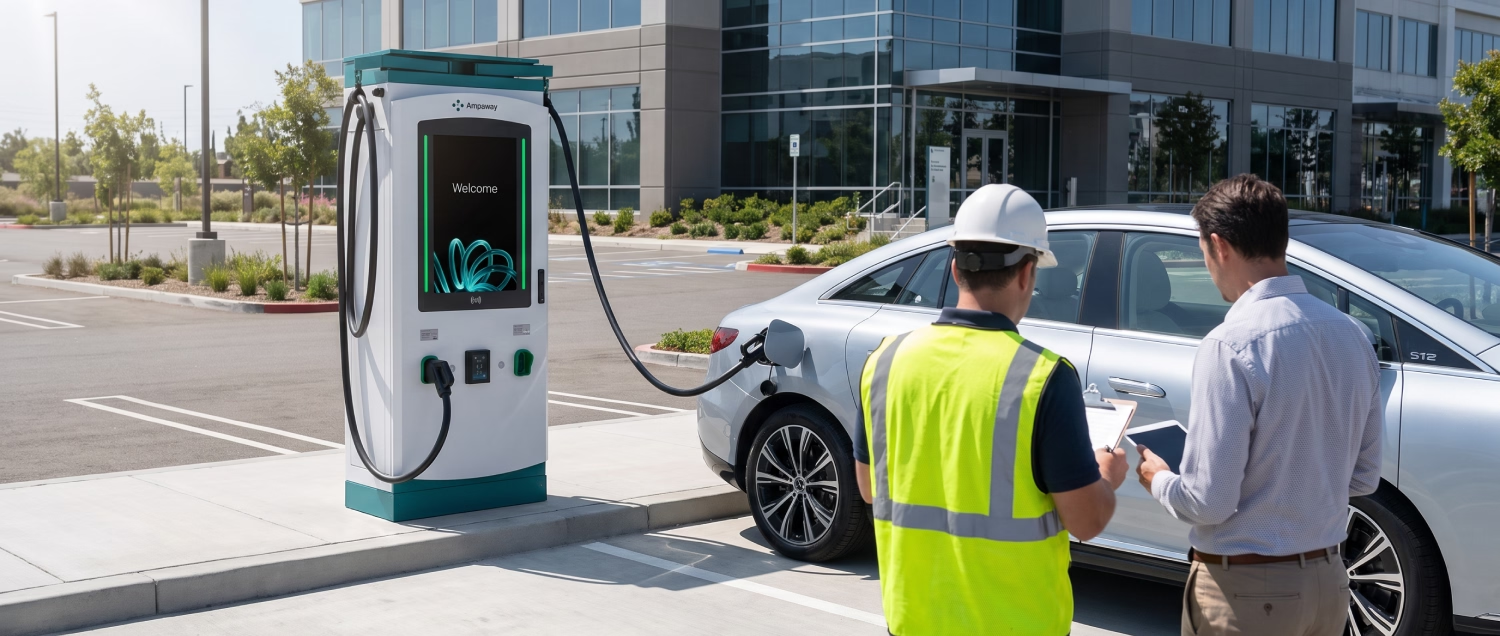
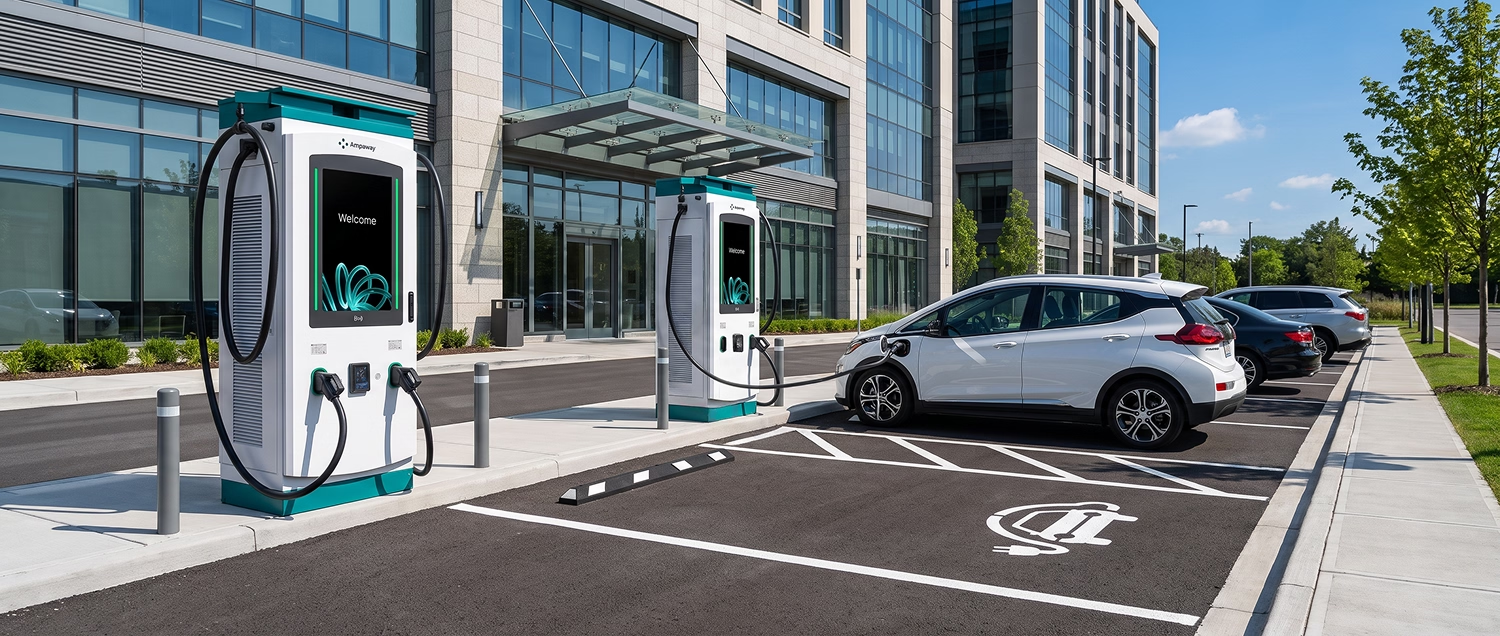
As more drivers switch to electric vehicles, commercial properties are facing growing demand for convenient charging. Shopping centers, parking lots, retail stores, office buildings, and other commercial properties are adding EV charging to attract customers.
Adding commercial EV charging infrastructure takes more than installing chargers and connecting them to power. Chargers add demand to a building’s electrical service, and the project can involve electrical design, permitting, software, and ongoing maintenance long after installation.
Before moving ahead, property owners need clear answers to a few practical questions:
- Does the building have enough electrical capacity to support EV charging?
- How many chargers does the property actually need?
- Which charger types best fit how the site is used?
- Will the electrical system require upgrades?
- How will charging demand affect the building’s existing energy use?
- Who will manage installation, software, maintenance, and day-to-day operations?
- What will the project cost, and how will it generate a return?
What is commercial EV charging infrastructure?
Commercial EV charging infrastructure includes everything between a building’s electrical service and a plugged-in vehicle. The charging station is the most visible part, but much of the infrastructure sits behind it.
- Charging stations and connectors. The hardware at each parking space, along with the connector type that determines which vehicles can charge. Common connector types for commercial EV charging include J1772 for AC Level 2 charging and NACS (SAE J3400) and CCS1 for DC fast charging.
- Electrical supply and distribution. The building’s available service capacity, panels, breakers, conduit, and dedicated circuits that deliver power to each charging space. These electrical upgrades can account for a significant share of the project cost.
- Network connectivity. Chargers connect through cellular service or the building’s network so property owners can authorize, monitor, and bill charging sessions.
- Software and access. Drivers start sessions through an app. EV charging software gives property owners visibility into usage, uptime, and revenue while controlling who can access the chargers, from the general public to residents, employees, or customers.
- Load management. Controls how much power chargers draw at any given time, keeping total charging demand within the building’s available electrical capacity.
- Installation and maintenance. The project also includes electrical design, permitting, construction, commissioning, and ongoing monitoring, maintenance, and repairs.
How EV charging infrastructure works in commercial buildings
Electrical current flows from the building’s primary service panel through distribution subpanels and dedicated conduit to individual charging stations. Electrical demand is one of the biggest considerations for property owners. Ten chargers operating at the same time can add a substantial load on top of elevators, HVAC, lighting, and tenant use. That is why a commercial EV charger installation should start with an assessment of the building’s existing electrical capacity and how much demand it can support.
Start with the building, not the charger
Most charging projects run into problems at the same point: the number of chargers is decided before anyone determines what the property’s electrical system can actually support. The order should be reversed.
The assessment starts with the electrical side. How large is the building’s main service? How much capacity do existing loads already consume? And how much is available during the times when charging demand is likely to be highest? A 900-amp service with 260 amps already committed to elevators, HVAC, lighting, and tenant use has 640 amps to work with, not 900. In practical terms, that remaining capacity might only support a fraction of a 400 kW fast charger, depending on voltage and other loads.
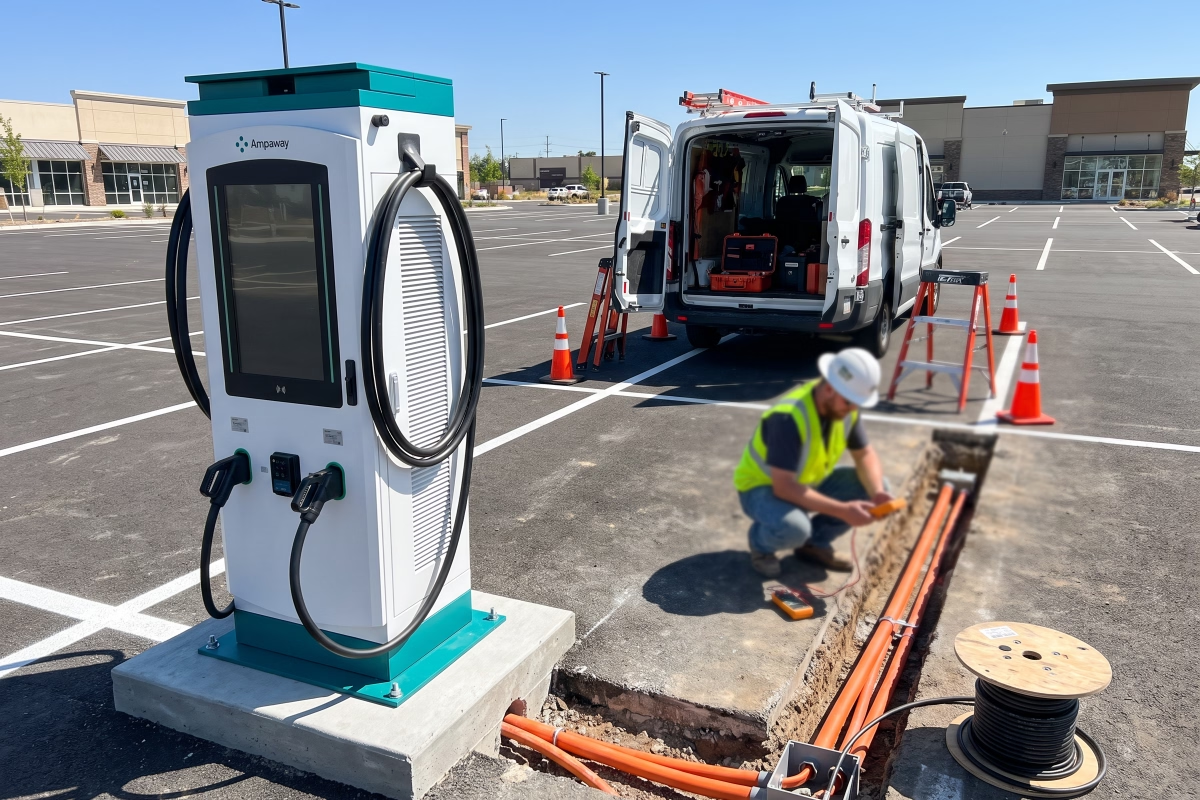
Then comes the site itself. The location of the electrical room, the distance to the parking area, and what the conduit must cross all affect project complexity and cost. Fifty feet of conduit along with an interior wall is a different project from 200 feet running beneath a paved drive aisle. The parking layout also determines which spaces can realistically accommodate chargers, how circuits can be distributed, and how far drivers will be willing to walk to a charging station.
Future expansion should be part of the assessment, too. Installing conduit or other infrastructure for future capacity during the initial project can be far less expensive than reopening pavement and repeating electrical work later.
What electrical upgrades does a commercial building need to support EV charging stations?
Required electrical work ranges from simple dedicated branch circuits for smaller Level 2 setups to dedicated step-down transformers, switchgear, and utility transformer replacements for high-power DC fast charging.
A utility service upgrade is typically the most complex and costly path because it can involve utility engineering, equipment changes, and timelines that the property owner does not fully control.
Choose the right chargers for the property
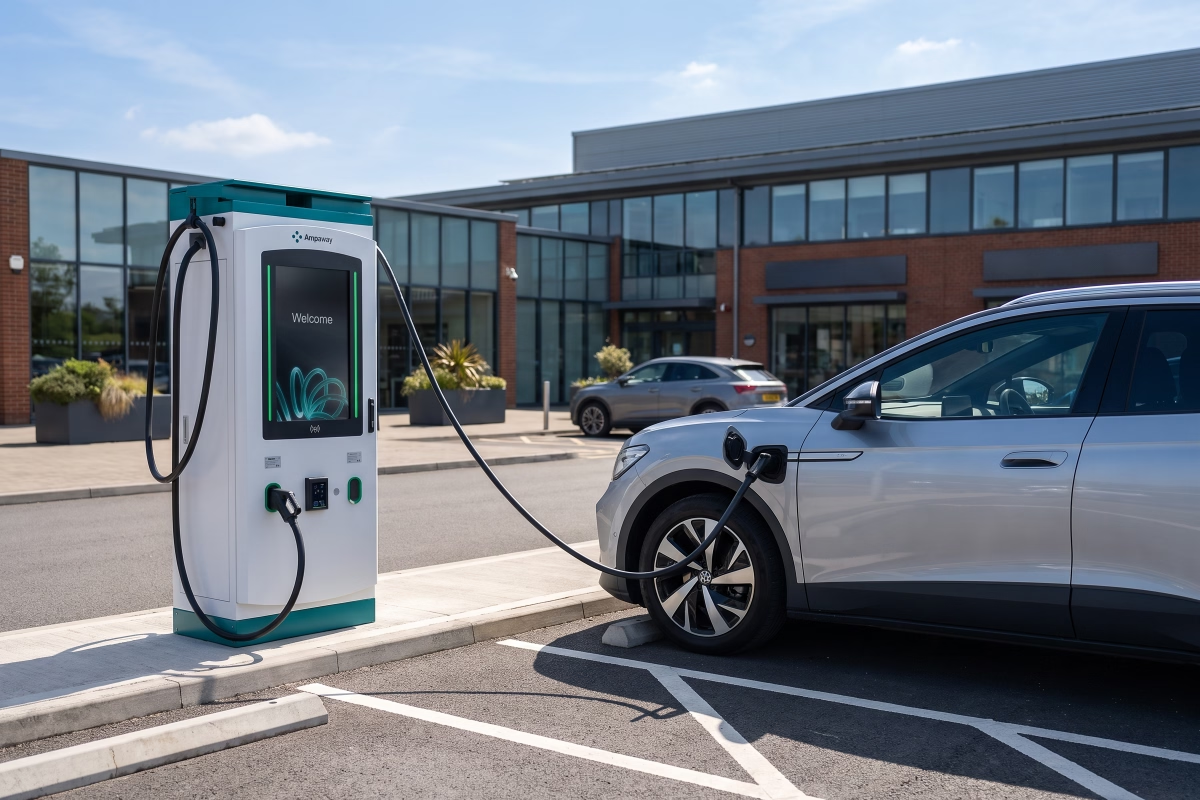
Most commercial installations come down to two EV charger types: Level 2 and DC fast charging. Level 2 uses the same type of AC service already present in most buildings and adds range over a period of hours, making it a good fit for any property where vehicles are parked for extended periods.
DC fast charging can deliver a substantial amount of range in the time it takes to shop or run an errand, but each unit draws significantly more power. Supporting it may require a transformer, a utility service upgrade, or both.
Retail and hospitality properties operate on a different schedule. A shopper may spend only 40 minutes on-site, so faster charging can add meaningful range during a single visit and give EV drivers another reason to choose that business over a competing location.
Turnover can also vary within the same property. Employee parking and customer spaces may share a site but have very different charging requirements. The right equipment should reflect how long vehicles actually stay parked. Dwell time, not the charger’s maximum rating, should drive the equipment decision.
Plan for electrical demand before installation
Charger count and electrical demand are not the same thing. For example, a commercial charger rated at 400-500 amps can place a substantial potential load on a property’s electrical system, but that does not mean the site will actually draw its maximum rated current at all times. Vehicles arrive at different times, batteries stop drawing power when they are full, and a car that needs 20 miles of range has a very different charging profile from one that arrives nearly empty.
The building’s existing demand also changes throughout the day. Charging load is added on top of whatever elevators, HVAC systems, lighting, and tenants are already consuming. Designing the system around the theoretical maximum of every charger can therefore lead to electrical upgrades a property may not actually need.
How can businesses add EV charging without overbuilding their electrical infrastructure?
EV load management distributes available power across active charging sessions instead of allowing every charger to draw its maximum rating at the same time. When a new vehicle plugs in and the site is already close to its electrical limit, the system can adjust power across active sessions based on each vehicle’s needs. A vehicle that does not need its full charging rate can temporarily receive less power, freeing capacity for the new session without exceeding what the building can supply.
This allows properties to support more charging spaces with their existing electrical service, expand capacity as demand grows, and potentially avoid or postpone costly electrical upgrades.
What does a commercial EV charging installation involve?
The project runs in a sequence, and most of the work happens before or after the day the chargers are installed.
- Assessment and planning. An electrical assessment establishes available capacity and site conditions. Site planning determines how many parking spaces to equip and where to place the chargers. Charger selection follows from both. Getting these three decisions right makes the rest of the project more predictable.
- Design and permitting. This is where projects often stall. Electrical drawings must meet local building and electrical codes, permit reviews run on the jurisdiction’s timeline, and utility coordination adds time when additional service capacity is required. Experience with commercial properties in a specific market can make a significant difference at this stage.
- Construction. This includes running conduit, pulling wire, installing panels and protection equipment, mounting the chargers, and restoring any surfaces that had to be opened.
- Software and commissioning. Chargers are connected to the network and configured with pricing and access rules. Each unit is then tested to confirm that it delivers power correctly, communicates with the network, and processes payments accurately before drivers begin using it.
- Monitoring and maintenance. Once the chargers are live, the work continues. Ongoing service includes uptime monitoring, fault resolution, driver support, preventive maintenance, and equipment repairs.
EV charger installation is one phase of the project, and usually one of the shortest. The final phase continues for years after the installation crew leaves, and it is the part property owners ultimately have to live with.
What does commercial EV charging cost?
Any single number quoted for a commercial charging project is of limited value because the hardware is rarely the only (and often not the highest) cost. Two otherwise similar buildings can have very different project costs depending on their electrical capacity, site layout, and the distance between the electrical room and parking spaces.
What actually moves the cost:
- Number and type of chargers: More stations and higher-powered equipment increase both hardware and installation costs.
- Electrical capacity: Existing capacity and whether panels, distribution equipment, transformers, or the utility service need to be upgraded.
- Distance to the parking area: Longer conduit runs can increase the cost of wiring, trenching, and surface restoration.
- Permitting and inspection: Requirements and fees vary by jurisdiction.
- Software and network services: These are typically recurring fees charged monthly per charger.
But the installation invoice is only part of the cost. Chargers consume electricity, which adds to the building’s energy bill and can increase demand charges if charging load is not managed. Equipment requires ongoing maintenance and eventual repairs, while software and network services typically run on subscriptions.
The good news is that there are incentives that can reduce the upfront cost of a commercial EV charging project. Depending on the property’s location, project type, and eligibility, businesses may have access to federal, state, local, or utility incentives that help offset equipment, installation, or electrical upgrade costs.
The number worth calculating is the full picture: what the property spends to build it, what it spends to run it, and what comes back in charging revenue. Some providers cover the capital cost entirely and take a share of that revenue instead, which changes the question from what the project costs to how the returns get divided. Ampaway operates on this model.
Think beyond installation
A charging station is not a one-time construction project. It is an ongoing service that starts operating as soon as installation ends. Software handles access and payments, tracks every session, and reports usage and revenue back to the property owner. It also provides an early warning system for problems. A charger that goes offline or fails to complete a session can be identified through monitoring before it becomes a tenant complaint, provided someone is actively monitoring the system.
And eventually, something will go wrong. A connector may be damaged, a charger may drop offline, or a driver may be unable to start a session late at night. Uptime depends on who responds, how quickly they respond, and who covers the cost.
With Ampaway, maintenance, driver support, and service costs stay with us, including hardware and software issues. Property owners do not have to field charging complaints or manage repairs for equipment they did not install themselves.
Settle that question before signing anything. Providers that sell hardware and hand off service leave both the costs and the complaints with the building.
How to choose a commercial EV charging provider
Providers differ less in hardware than in how much of the project they actually own. Some handle installation but outsource ongoing service. A smaller number manage the entire project themselves. That difference determines who the property owner calls when something goes wrong and who absorbs the cost. It is also what separates the best commercial EV charging solutions from the ones that look identical on a spec sheet.
Before signing a contract, check:
- Commercial property experience: Specifically with the building type and jurisdiction where the project will be installed.
- Electrical planning and installation: Find out what the provider handles in-house and where subcontractors enter the process.
- Software: Make sure the property owner has access to usable reporting on charging activity, uptime, and revenue.
- Load management: This determines how efficiently the site uses its existing electrical capacity and how easily it can expand.
- Maintenance and support: Clarify who owns maintenance, expected response times, and repair costs after commissioning. If service is outsourced, those responsibilities can ultimately fall back on the property owner.
- Economics: Look beyond the upfront quote. Understand the revenue split, ongoing fees, and total cost to the property over time. A large provider share can significantly reduce the project’s long-term return.
The last two points are where property owners get caught off guard. Ampaway keeps electrical planning, installation, software, load management, and service in-house, so responsibility stays with one provider from installation through ongoing operations. We also cover the full project cost, including hardware and installation, and share charging revenue with the property owner. The building can therefore offer charging and begin earning revenue without an upfront capital investment.
What upgrading a commercial property for EV charging really means
Adding EV charging does not necessarily mean rebuilding a property’s electrical system. Most buildings can start with the capacity they already have.
Start by assessing how many EV drivers use the property today and what the existing electrical service can support. From there, equip the appropriate number of spaces with the charger type that matches the property’s typical dwell times. Load management can stretch available capacity further, often allowing a property to support more charging spaces than the raw electrical numbers initially suggest.
Future expansion should be planned during the first installation, especially while walls, pavement, and other surfaces are already open. Oversizing conduit, reserving panel capacity, and running infrastructure toward spaces that may receive chargers later can cost far less than repeating the trenching and surface work in the future.
Charging demand rarely grows in a perfectly predictable curve. Installing far more capacity than a property needs today can leave the owner paying for infrastructure that may never be used. A better approach is to install for current demand while building in a practical path for expansion. The property gets the amenity in place, starts generating value, and keeps the next phase less expensive.