Key Takeaways
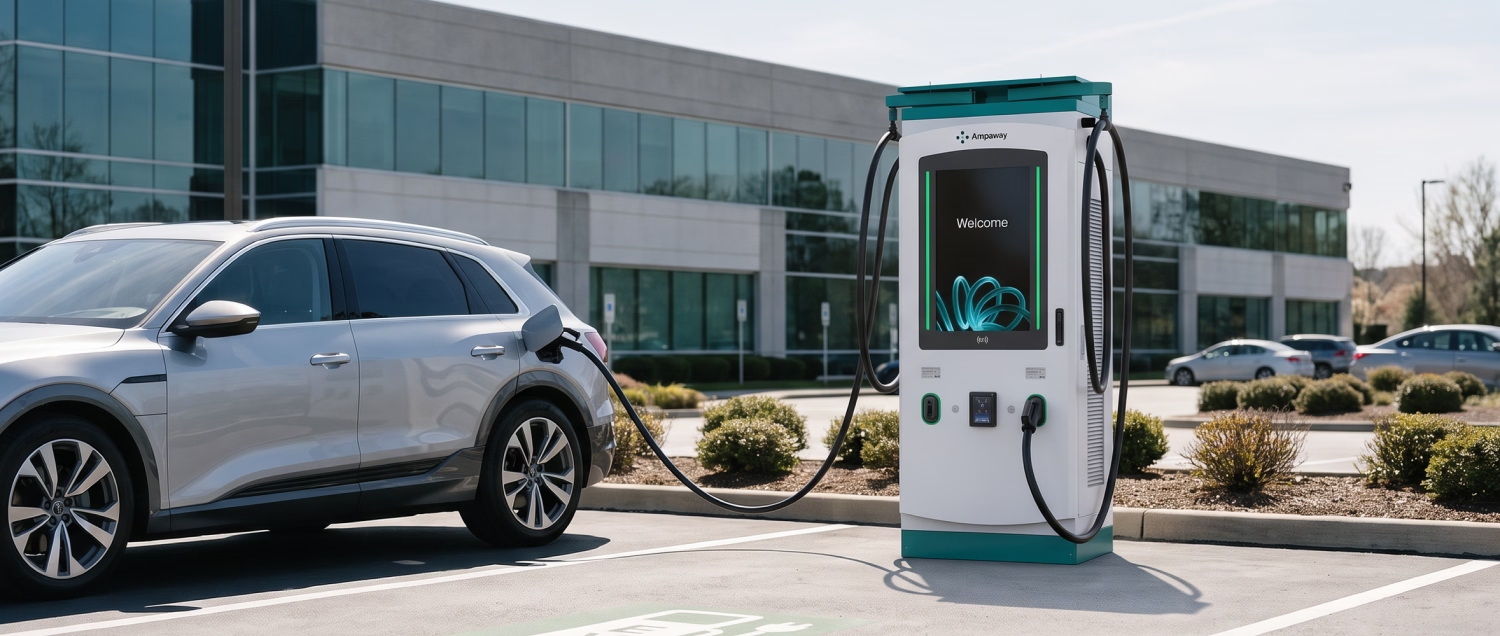
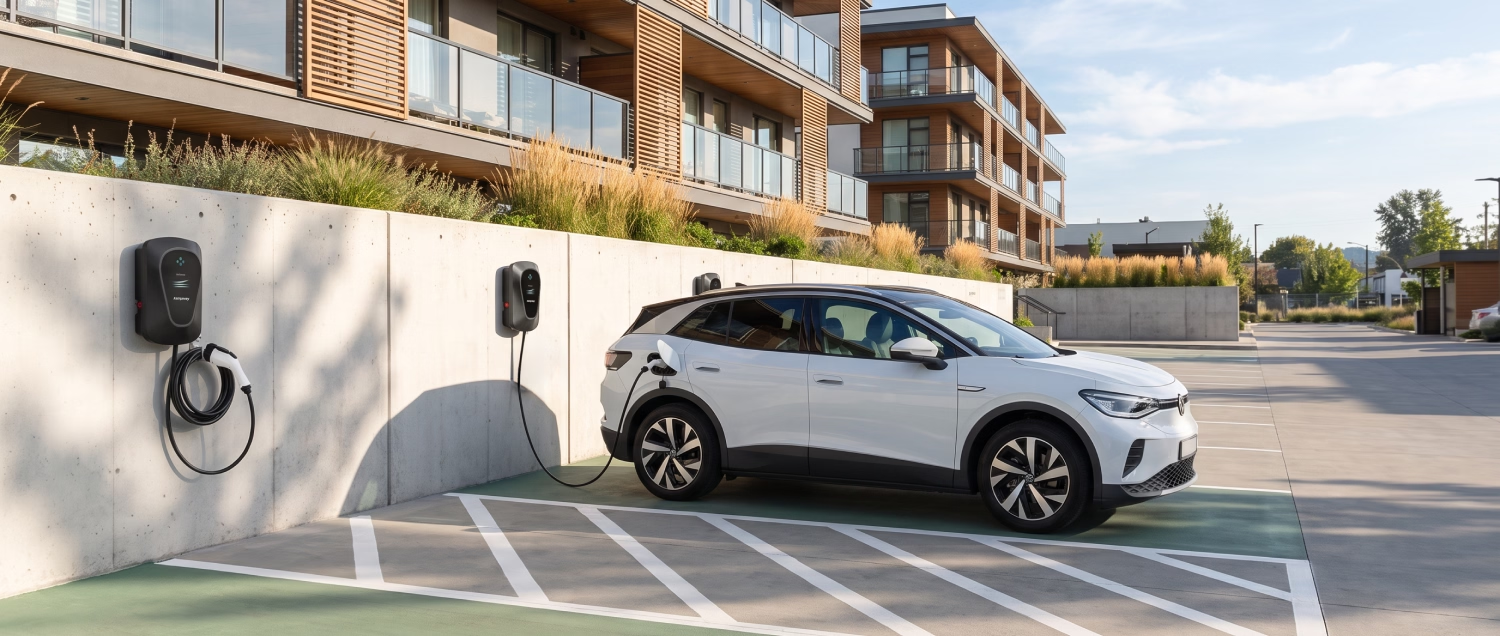
- US EV charging infrastructure will continue to expand through 2030 and beyond, with much of the growth expected at homes, multifamily properties, workplaces, and other destinations where vehicles remain parked longer.
- Reliability will become just as important as charger availability.
- Level 2 charging will remain particularly important for multifamily, workplace, and fleet properties, where longer dwell times often make high-powered DC fast charging unnecessary.
- Smart load management can help properties expand charging capacity without automatically requiring expensive electrical upgrades, making it easier to add chargers gradually as EV adoption increases.
- Open standards, Plug & Charge, and emerging technologies such as bidirectional charging will shape the future of EV charging.
The future of EV charging in the US will depend on how well charging infrastructure performs after installation. Charger count remains important, but so do location, reliability, efficient use of electrical capacity, and the ability to accommodate growing demand without unnecessary costs.
Understanding where the industry is heading can help property owners make informed investments that serve current drivers while preparing for future demand.
Open technology standards will also play a growing role, helping charging infrastructure remain compatible as vehicles, software platforms, and payment systems evolve. These developments put property owners at the center of the market. Apartment buildings, workplaces, retail centers, parking facilities, and fleet depots will serve a substantial share of charging demand.
Property owners must decide how much charging capacity to install, how to fund it, and who will manage daily operations. Understanding where the industry is heading can help them make informed investments that serve current drivers while preparing for future demand.
EV Charging Infrastructure Forecast: What to Expect Through 2030 and Beyond
The EV charging infrastructure forecast for the US points to continued network expansion over the next decade. In 2025, the US had about 235,000 public charging ports, including nearly 70,000 fast-charging ports. According to the International Energy Agency (IEA), the public network could exceed 420,000 ports by 2035 under current policies. A scenario with stronger policy support puts that figure closer to 630,000.
Public charging, however, represents only part of the infrastructure the country needs.
A planning scenario published by the National Renewable Energy Laboratory (NREL) in 2023 estimated that supporting 33 million EVs on US roads in 2030 would require approximately 28 million charging ports:
- 25.7 million private residential charging ports
- 2.1 million public and private Level 2 ports at multifamily properties, workplaces, hotels, retail centers, and other destinations
- Approximately 182,000 public DC fast-charging ports
NREL also estimated that Level 1 and Level 2 charging would provide about 80% of the electricity EVs consume, with public fast charging supplying the remaining 20%.
These figures are planning estimates, not guaranteed outcomes. The NREL scenario assumed EV adoption levels and policy conditions that may differ from those in place today. The IEA projections use different assumptions and extend through 2035, so consider the two forecasts separately.
Federal support has also changed. The federal EV purchase credit ended for vehicles acquired after September 30, 2025, and the federal charging equipment credit ended for equipment placed in service after June 30, 2026. The NEVI highway charging program was paused in 2025 and resumed under revised guidance. These changes may slow some forecasts, which is another reason to plan charging around actual demand rather than projections.
Still, both forecasts highlight the need for charging infrastructure beyond highway corridors, particularly at locations where vehicles spend much of their time.
In NREL's scenario, public DC fast chargers account for fewer than 1% of all required ports. Most would be installed at homes and destinations where drivers can leave their vehicles connected for several hours.

Why the Future of EV Charging Depends on Reliability and Performance
For years, the industry measured progress by counting chargers. That number says little about how useful the equipment actually is. A port that's frequently offline, hard to activate, or expensive to operate offers little value to drivers and property owners.
As the market matures, charging providers will increasingly be evaluated on operational performance, including:
- Charger uptime: How consistently equipment is available and operational
- Successful charging sessions: The percentage of charging attempts that result in a successful charge
- Repair and response times: How quickly technical problems are addressed
- Utilization: How frequently ports are used throughout the day
- Energy and revenue per port: How much charging activity each location generates
- Operating costs: Electricity, maintenance, software, and other recurring expenses
- Driver satisfaction: Ease of payment, session activation, and overall charging experience
Reliability has improved, although problems remain. J.D. Power's 2026 US Electric Vehicle Experience Public Charging Study found that the industry's non-charge visit rate fell to 12% in the most recent quarter, compared with 14% a year earlier. Satisfaction with public Level 2 charging nevertheless declined, reflecting ongoing concerns about the charging experience, including payment and ease-of-use issues.
These findings highlight the importance of what happens after installation. Charging infrastructure requires continuous monitoring, software updates, payment processing, driver assistance, and equipment maintenance.
A provider's service response times, maintenance responsibilities, and operating commitments can therefore be just as important as the equipment itself. For property owners, understanding who handles technical problems and associated costs is essential to limiting operational risk.
More EV Charging Will Take Place at Residential and Commercial Properties
Charging requirements vary considerably between apartment buildings, workplaces, retail centers, parking garages, and fleet depots. One of the most useful factors in choosing equipment is dwell time, or how long a vehicle typically remains parked. A highway traveler may need to add substantial driving range during a short stop, making DC fast charging appropriate.
Apartment residents can often charge overnight, while employees may have an entire workday to replenish their batteries. Fleet vehicles may follow predictable charging schedules between shifts.
In these longer-duration environments, Level 2 charging can often deliver the required energy without the expense of installing high-powered DC equipment. Retail locations present a different situation. Charging needs depend on visit duration, parking turnover, and the businesses operating at the property. A shopping center with restaurants and entertainment venues may have longer parking durations than a convenience-oriented retail location.
Convenient charging can also influence where EV drivers shop or spend time, potentially boosting customer traffic and generating revenue from otherwise underutilized parking spaces.
Before selecting equipment, property owners should evaluate:
- Typical parking duration and turnover
- Energy required before vehicles depart
- Expected charging demand and local EV adoption
- Existing electrical capacity and construction costs
- Local electricity rates and demand charges
- Nearby charging competition
- Opportunities for future expansion
Installing higher-powered chargers than a site needs can increase construction expenses and electrical demand without meaningfully improving the driver experience. An effective charging plan matches available power to vehicle needs during typical parking periods while keeping operating costs sustainable.
Why Multifamily EV Charging Is a Major Growth Opportunity
Multifamily properties matter to the broader EV charging infrastructure forecast because millions of drivers lack access to a private garage or driveway where they can easily install a charger.
Approximately 44 million US households, representing around 31% of the national total, live in multifamily housing. Yet apartment and condominium residents face significantly greater barriers to home charging than people with private garages or driveways.
Residents of single-family homes can often charge overnight using an existing residential electrical connection. Those living in multifamily buildings may lack an assigned parking space, access to power, or the authority to install charging equipment independently.
Relying on public fast charging can also be more expensive than charging at home, reducing some of the operating-cost advantages of EV ownership. For property owners and managers, charging availability can influence a resident's decision to rent, renew a lease, or choose a competing property.
Meeting this demand does not require equipping every parking space immediately. A phased approach can begin with existing resident needs while preparing the electrical infrastructure for additional ports. The operating plan should also establish clear rules for charger access, billing, maintenance, and shared use. Because electrical capacity is frequently a constraint at multifamily properties, intelligent load management can make phased installations more practical and affordable.
Plug & Charge and ISO 15118: The Future of EV Charging Authentication
Starting a charging session can still require several steps. Depending on the network, drivers may need to open an application, scan a QR code, use an RFID card, or enter payment information. These processes create friction when applications fail, payment methods are rejected, or drivers are unfamiliar with a particular charging network.
Plug & Charge offers a simpler experience. With a compatible vehicle, charging station, and supporting services, the driver connects the cable, authentication happens automatically, and the session begins without separate manual authorization.
The technology uses ISO 15118, a family of standards governing communication between electric vehicles and charging equipment. By reducing the steps involved in starting a session, Plug & Charge can improve convenience and address common sources of frustration at public charging locations.

How Ampaway Supports Plug & Charge
Ampaway's OCPP 2.0.1-certified software provides a standards-based foundation for charging management. OCPP, maintained by the Open Charge Alliance, governs communication between charging stations and their management systems.
It works alongside ISO 15118, which handles communication between the vehicle and the charger. OCPP 2.0.1 includes certification profiles covering capabilities relevant to Plug & Charge and intelligent charging operations:
- ISO 15118 Support enables functionality for certificate management and Plug & Charge authorization.
- Advanced Security supports secure communication between charging stations and their management platform.
- Smart Charging enables the platform to manage and control charging power.
Together, these capabilities support a more connected and adaptable charging system. Plug & Charge functionality still depends on compatibility across the vehicle, hardware, management software, and supporting certificate and service infrastructure. It is not available on every EV or charging station. For property owners, support for these standards lays the groundwork for adopting more convenient authentication methods as the wider EV charging ecosystem develops.
Smart Load Management Will Become Essential for EV Charging Expansion
Most existing buildings weren't designed to charge dozens of vehicles simultaneously. Limited electrical capacity is often the first obstacle property owners face when planning EV charging installations. Increasing that capacity may require electrical panel upgrades, transformer work, utility approvals, and substantial construction costs.
Traditional charging designs can also be inefficient. If every charger draws its maximum rated power at the same time, properties may need more electrical infrastructure than typical charging patterns require.
In practice, vehicles arrive at different times, remain parked for different periods, and need varying amounts of energy. Load management makes better use of these differences. The system monitors available electrical capacity and distributes power among connected vehicles in real time.
When another vehicle plugs in, the system adjusts the available power across active sessions while keeping total demand within the site's established limit. Charging speeds may temporarily decrease as more vehicles connect, but the system can share available capacity across more ports.
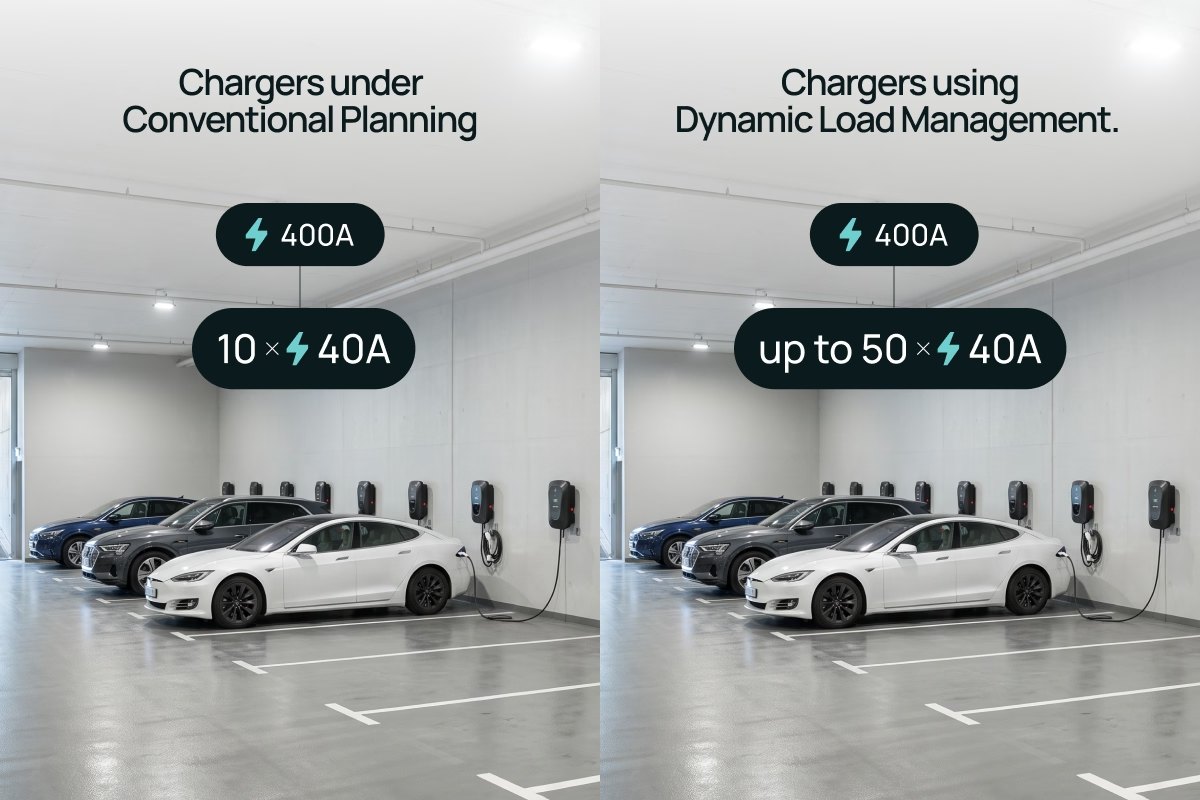
Consider a building with 400 amps allocated to EV charging. Under a conventional design, that capacity could support 10 chargers drawing 40 amps each. With dynamic load management, the same 400-amp allocation could support up to 50 chargers rated at 40 amps by distributing power among active charging sessions. Actual charging speeds would depend on how many vehicles are connected and their energy requirements.
For property owners, this approach offers several advantages:
- Additional charging ports without automatically requiring electrical service upgrades
- Lower initial infrastructure costs when existing capacity is sufficient
- Greater control over charging demand and potential peak-related expenses
- Charging priorities for fleet vehicles with scheduled departures
- A practical way to accommodate higher EV adoption over time
Ampaway uses dynamic load balancing to manage power across connected chargers according to available electrical capacity. Its in-house team also handles system design and installation, so electrical planning and EV charging software can be coordinated from the start. For multifamily, commercial, and fleet properties, this can reduce the need for major electrical modifications while allowing more drivers to access charging.
Open Standards Will Shape the Future of EV Charging Infrastructure
EV charging equipment may remain installed for a decade or longer. During that time, software platforms, payment systems, vehicle capabilities, and communication standards will continue to evolve. This creates potential risks for property owners whose charging systems depend entirely on proprietary technology.
If a provider increases fees, discontinues support, or leaves the market, migrating to another platform may be difficult. In some cases, hardware may require reconfiguration or replacement to keep working. Open communication standards can reduce dependence on a single provider. Two important standards are:
- OCPP (Open Charge Point Protocol): Enables communication between compatible charging stations and charging management systems.
- OCPI (Open Charge Point Interface): Supports communication between charging service providers and network operators, including roaming arrangements that let drivers access chargers across participating networks.
These standards improve opportunities for interoperability, but they do not guarantee that every charger will work with every software platform. Compatibility still depends on supported protocol versions, implementation quality, certification, and testing. OCPP 2.0.1 introduced capabilities for stronger security, improved device management, smart charging, and ISO 15118 support. OCPP 2.1, released in 2025, builds on those capabilities by adding support for bidirectional charging and distributed energy resources, including solar generation and battery storage.
Ampaway supports this evolving ecosystem with OCPP 1.6 and OCPP 2.0.1 certifications, along with OCPI compatibility for interoperability between charging networks and service providers.
What NACS Means for Charging Connectors
Most US EVs have used the J1772 connector for Level 2 charging and CCS for DC fast charging. That is changing. Most major automakers have announced a move to the North American Charging Standard (NACS), which SAE has standardized as J3400. Newer vehicles will increasingly arrive with NACS ports, while millions of existing EVs will continue using J1772 and CCS for years.
For property owners, this means connector choice matters. Options include chargers with J1772 connectors and driver-supplied adapters, chargers with NACS connectors, or equipment that supports both. Ask providers which connectors they offer and whether you can swap cables later without replacing the charger.
For property owners, independently certified, standards-based equipment can reduce technology-related risks and provide greater flexibility when software or operating requirements change.
Vehicle-to-Grid Technology: What's Next for EV Charging?
Vehicle-to-grid technology, commonly called V2G, allows compatible electric vehicles to return stored electricity to the power grid. Related bidirectional charging technologies can also let vehicles supply electricity to buildings or other loads.
These capabilities could eventually allow parked EVs to participate more actively in energy management. Vehicles could charge when electricity prices are lower or renewable generation is abundant, then supply controlled amounts of stored energy during periods of higher demand.
Potential applications include:
- Reducing peak electricity demand
- Making greater use of on-site solar generation
- Participating in utility demand-response programs
- Providing electricity and other services to the grid
- Supporting building backup power where compatible equipment and electrical systems are installed
Where V2G Could Be Most Useful
Fleet depots are a promising early application because vehicles often operate on predictable schedules. Fleet operators could coordinate charging and energy discharge around route requirements, battery levels, electricity prices, and departure times.
During idle periods, participating vehicles could make some stored energy available to the site or grid, provided enough battery capacity remains for scheduled operations. Workplaces and multifamily properties could also benefit as vehicle compatibility, electrical infrastructure, and commercial programs develop. However, the financial value depends on electricity tariffs, compensation arrangements, equipment costs, and the impact of additional battery cycling.
Why V2G Is Still an Emerging Technology
Despite its potential, V2G is not yet a mainstream charging capability. According to the IEA, only 22 vehicle models offered V2G capability in 2026, representing fewer than 1.5% of available EV models. Commercial adoption also requires several elements to work together:
- Compatible electric vehicles and bidirectional chargers
- Utility approval and suitable interconnection arrangements
- Vehicle and battery-warranty provisions that permit the intended use
- Software capable of coordinating energy flows
- Appropriate grid and energy-market regulations
- Financial arrangements that compensate participants for energy or grid services
Technical standards are advancing. ISO 15118-20 supports the communication required for bidirectional power transfer, while OCPP 2.1 adds functionality to coordinate bidirectional charging and distributed energy resources.
However, these developments do not mean V2G is ready for widespread commercial deployment. For most properties today, load management and scheduled charging offer more immediate benefits.
Owners interested in future bidirectional applications should discuss potential electrical and equipment requirements during initial planning, without committing significant capital to capabilities that may not yet be commercially useful.
What Does the Future of EV Charging Mean for Property Owners?
Property owners do not need to predict exactly how many EVs their residents, employees, or customers will drive ten years from now. They need infrastructure that meets current demand, performs reliably, and can accommodate changing requirements at a reasonable cost. Several practical considerations can help guide investment decisions.
Questions to Ask Before Installing EV Charging
- How much electrical capacity is available now, and what upgrades would more ports need?
- How will load management affect charging speeds when the site is busy?
- How many ports does current demand justify, and how will the design allow for more later?
- Who handles repairs, what are the response times, and who pays when equipment fails?
- Which OCPP versions are supported, and what would it take to move to another software platform?
- Which connectors are offered (J1772, NACS, or both)?
- Is Plug & Charge supported, and how are software updates delivered?
- If bidirectional charging becomes relevant, what hardware or electrical changes would it need?
Understand the Full Financial Model
Evaluate equipment and installation costs alongside electricity rates, ongoing service expenses, expected utilization, and potential charging revenue. State, local, and utility incentives may still be available, depending on the project. Therefore, assess charging investments on their underlying economics rather than relying entirely on temporary subsidies.
Funding arrangements also matter. For qualifying properties, Ampaway offers a zero-upfront-cost revenue-sharing model that covers equipment, installation, and ongoing operations under agreed terms.
Alternatively, property owners can choose an owner-funded model, paying for equipment and installation while retaining ownership from the beginning. The revenue-sharing and service arrangements differ between the two options. The appropriate model depends on available capital, expected charging demand, ownership preferences, and long-term financial objectives.
Preparing for the Next Generation of EV Charging
The future of EV charging infrastructure in the US points toward more charging at homes, workplaces, commercial properties, and other locations where vehicles spend extended periods parked.
These sites will need systems that operate reliably, use electrical capacity efficiently, and adapt as demand changes. For property owners, choosing the right infrastructure and operating partner today can make future investment decisions easier.
Ampaway provides a turnkey charging solution with its own installation and service teams, supporting properties from initial design through software, payments, and ongoing operations.
With dynamic load management, OCPP 2.0.1- and OCPP 1.6 -certified software, and more than 1,000 AC chargers installed, Ampaway helps property owners introduce EV charging while keeping costs, operational responsibilities, and long-term scalability in view.