
Buying and installing a charger is only the first cost on the list. Once it's up and running, reliability requires its own ongoing investment, and property owners who budget only for EV charging station installation often get caught off guard by what comes after.
EV charger maintenance needs aren't uniform. A Level 2 charger in a covered parking garage has different demands than a DC fast charger that sits outdoors in a high traffic retail lot. Usage volume matters too. A charger that serves a handful of tenants wears differently than one that runs dozens of sessions a day at a commercial site.
The good news is that most modern chargers stay reliable with little hands-on attention. That low maintenance bar only holds if basic upkeep isn't skipped, though. Small issues left unchecked turn into downtime, and downtime leads to lost revenue and frustrated drivers. Understanding EV charger maintenance cost before it becomes a problem is what separates a smooth-running charging program from a reactive one.
Do EV charging stations require regular maintenance?
EV charger maintenance is real, but it's smaller in scope than most people assume. It has less to do with constant intervention and more to do with consistent, low effort checks that catch problems before they reach drivers. What that maintenance looks like depends on the charger type, how it's used, and where it's installed.
Home vs. commercial EV chargers
A charger installed in a single family home sees light, predictable use, usually one vehicle, once a day. Commercial chargers operate under a different set of conditions. An EV charging solution for a multifamily property, retail center, or workplace handles multiple drivers, variable schedules, and far more plug in cycles over its lifespan. That higher usage puts more wear on connectors, cables, and internal components, and it raises the stakes when something does go wrong. Multifamily buildings in particular deal with this tradeoff often, and property owners weighing their charging options usually find maintenance is just one piece of a larger cost and ownership decision. A single charger going offline at a home affects one household. The same failure at a commercial site affects every driver who relies on that location, along with the revenue tied to it.
AC vs. DC fast chargers
EV charger type also shapes what maintenance looks like. AC chargers, commonly known as Level 2, are mechanically simple. They draw power, deliver it to the vehicle at a moderate rate, and involve relatively few moving parts that can fail. DC fast chargers are a different category of equipment. They convert power at much higher rates and rely on internal cooling systems, power electronics, and more complex hardware to do it safely. That added complexity means DC fast chargers generally need closer attention and more specialized service than a standard Level 2 unit.
Why maintenance matters for reliability and safety
Reliability and safety are the two things maintenance protects. A charger that goes unchecked for long stretches is more likely to fail at an inconvenient moment, whether that means a driver arriving at a dead unit or a property owner losing a session's worth of revenue. Safety carries even higher stakes. Chargers handle real electrical load, and worn cables, damaged connectors, or faulty grounding are not just inconvenient. They can create genuine hazards. Routine attention keeps both risks low without requiring a heavy service schedule.
EV charger maintenance needs
Maintaining a charger involves a handful of recurring tasks, most of which are quick and don't require specialized expertise. Together, they cover the physical hardware, the software running it, and the connection that keeps it online. The sections below break down what each task involves.

Visual inspections
A visual inspection is the simplest and most frequent check a charger needs. It involves a quick look at the housing, screen, cables, and connector for obvious signs of damage, wear, or corrosion. Cracks in the casing, exposed wiring, or a connector that looks worn down are the kind of issues a visual check is meant to catch early, before they turn into something that takes the charger offline.
Cleaning the charger and connectors
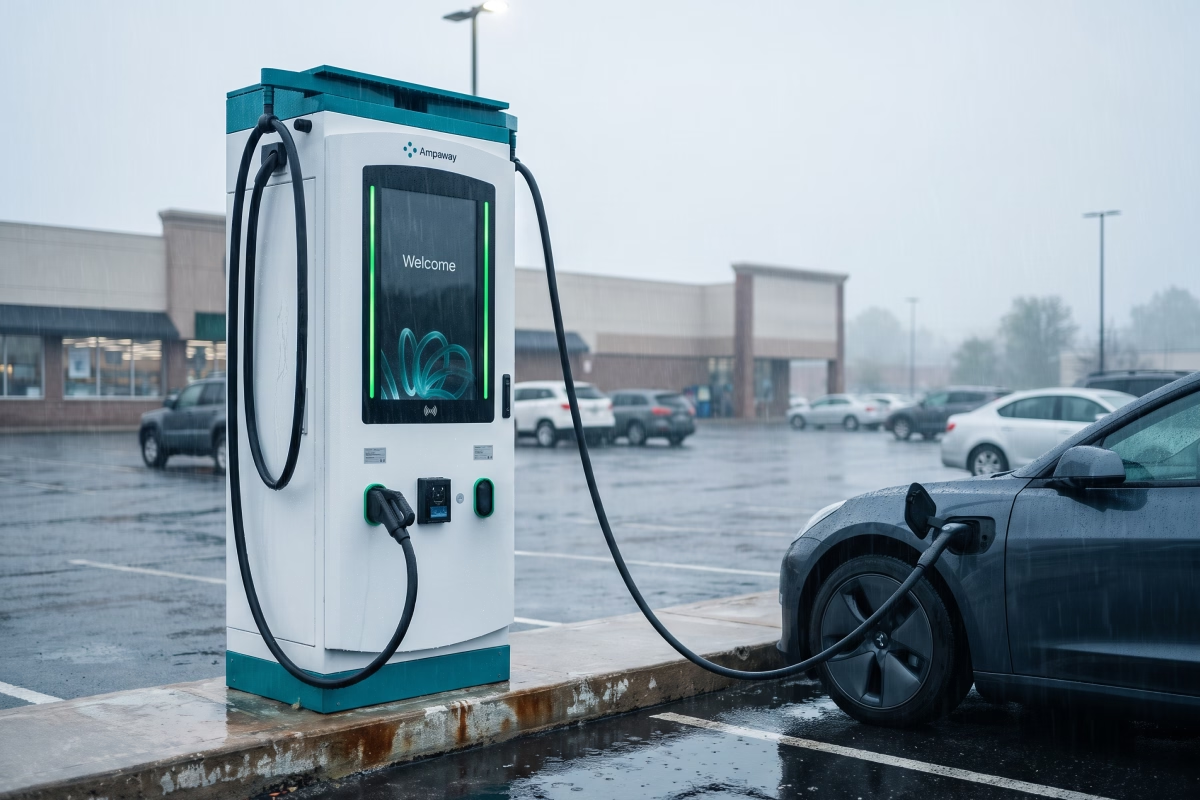
Dust, dirt, and debris build up on chargers over time, especially units installed outdoors or in parking structures exposed to the elements. Cleaning the exterior housing and the connector itself helps prevent buildup that can interfere with the plug in connection or trap moisture against electrical components. For outdoor chargers, this task carries more weight, since exposure to rain, dust, and temperature swings speeds up wear.
Cable and connector inspections
This goes a step further than a general visual check. It means physically examining the cable for fraying, cracking, or stiffness, and testing the connector for a secure latch and clean electrical contact. Cables take the most physical abuse of any part of a charger. Drivers drop them, run over them, and stretch them across parking spaces, so this is often where wear shows up first.
Firmware and software updates
Chargers run on software that needs periodic updates, the same way any connected device does. Updates patch security vulnerabilities, fix bugs, and sometimes add new functionality. Skipping them can leave a charger running outdated software that's more prone to glitches or compatibility issues with the network it connects to.
Electrical safety checks
Electrical safety checks confirm that ground fault protection, circuit breakers, and internal wiring within the charger are functioning as they should. These checks matter because chargers carry real electrical load, and a fault that goes undetected creates a genuine safety risk, not just a performance issue. This task typically requires a qualified electrician rather than routine self inspection.
Network connectivity monitoring
Most chargers stay connected to a network for payment processing, usage tracking, and remote access. Monitoring that connection confirms the charger stays online and can communicate properly, since a drop can stop a driver from starting a session or block a property owner's visibility into their site. A charger can be in perfect physical condition and still be unusable if it loses connection.
How often should EV chargers be serviced?
Service frequency depends on the equipment type, usage, and environment, and manufacturer guidance varies enough that no single schedule fits every charger. The sections below cover what generally shapes that timeline, rather than fixed intervals.
Recommended inspection schedule
Most chargers follow a layered approach rather than one fixed interval. Visual checks happen most often, since they're quick and catch obvious issues early. Deeper checks, like cable, connector, and electrical safety inspections, happen less frequently and usually require a technician. Firmware and software updates follow their own schedule, pushed by the manufacturer or network provider. Exact cadence varies by manufacturer, so a charger's own documentation should take priority over general guidance.
Preventive vs. corrective maintenance
Preventive maintenance covers routine checks performed on a set schedule, regardless of whether anything seems wrong. Corrective maintenance is the opposite, repairs made after a fault has already occurred. Preventive maintenance is generally the more cost effective approach, since it catches small issues while they're still cheap to fix. Corrective maintenance tends to bring higher costs and unplanned downtime.
Factors that affect maintenance frequency
A few variables shape how often a charger needs attention. Usage volume plays the largest role, since heavier use accumulates wear faster. Environment matters too, outdoor chargers exposed to rain, dust, and temperature swings need more frequent checks than covered or climate controlled units. Charger type factors in as well, since DC fast chargers typically call for closer attention than a standard Level 2 unit. These same factors resurface later when we look at how they shape maintenance cost.
EV charger maintenance costs
Maintenance costs vary depending on charger type, usage, and what's covered under warranty or a service agreement. The breakdown below covers what to expect across residential, commercial Level 2, and DC fast chargers, along with recurring and one off costs outside routine upkeep.
Residential EV charger maintenance costs
Residential chargers cost the least to maintain, since they're simpler units that see lighter, more predictable use. Routine upkeep typically stays low, often limited to occasional cleaning and a basic inspection. Costs rise only when something breaks, and even then, repairs tend to be less involved than commercial fixes.
Commercial Level 2 charger maintenance costs
Commercial Level 2 chargers cost more to maintain than residential units, largely due to higher usage and the added weight of servicing multiple chargers across a property. A site with several units often justifies a more structured maintenance routine, adding a predictable ongoing cost while reducing the odds of unexpected downtime. At multifamily buildings and retail centers, spending generally scales with charger count and how heavily each one is used. To put things in perspective, Level 2 chargers cost upwards of $400 a year to maintain. For DC fast chargers, you’re looking at $900 and above.
DC fast charger maintenance costs
DC fast chargers carry the highest maintenance costs by a wide margin. Their power electronics, cooling systems, and demanding duty cycles translate into more expensive service calls and pricier components. Property owners considering DC fast charging should budget for this gap up front, since it tends to be significant rather than incremental.
Software subscriptions and network management fees
Most chargers also run on a software platform with its own recurring cost. Network management fees typically cover EV charging payment processing, usage monitoring, and remote diagnostics, usually billed monthly or annually per charger. This sits separately from hardware maintenance, but it's a real part of keeping a charger operational and worth budgeting for on its own.
Repair and replacement costs
Repairs fix a specific fault, a damaged cable, a failed connector, a malfunctioning display, while replacement applies once a component or unit reaches the end of its usable life. Costs vary by what's broken and the charger type, with DC fast components generally pricier to replace than Level 2. Warranty coverage often reduces or eliminates these costs, which makes warranty terms worth factoring in before a charger goes into service.
What affects EV charger maintenance costs
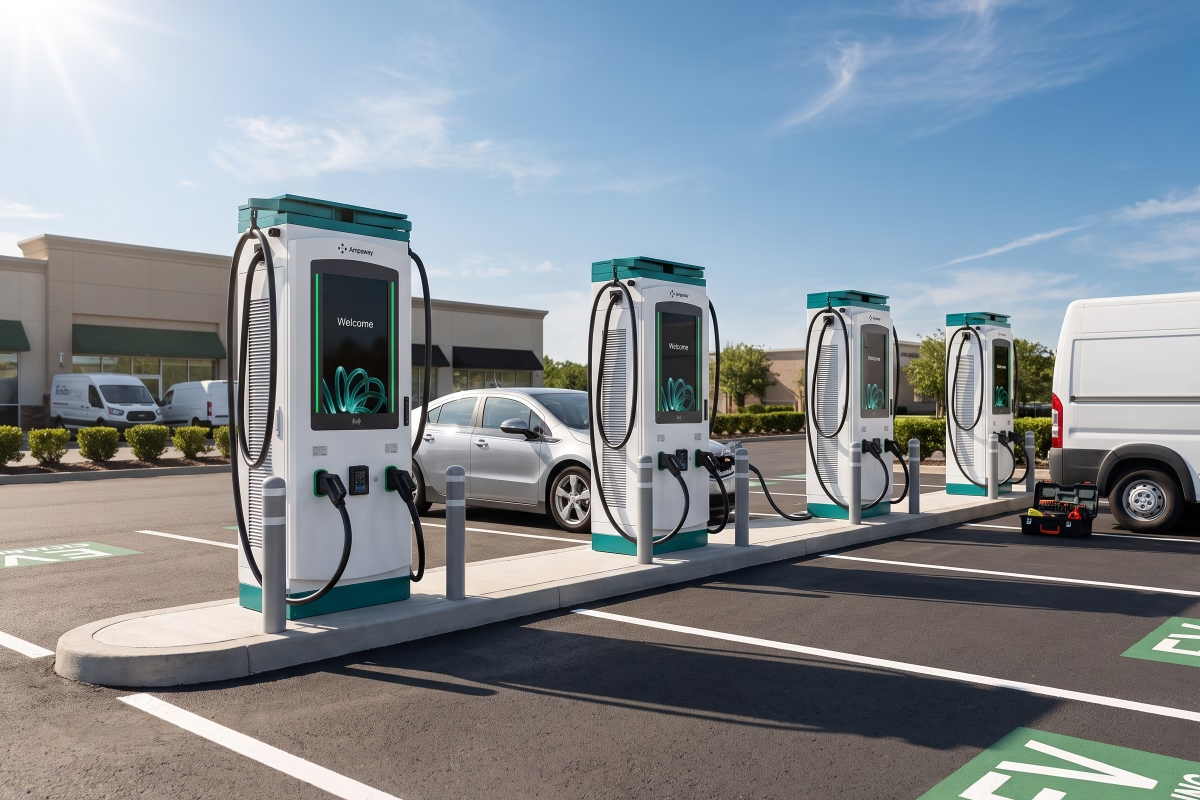
The same variables that affect how often a charger needs service also affect what that service costs. Here's how each one factors into the price rather than the schedule.
Charger power level
Higher power chargers carry more complex hardware, which means costlier parts and more expensive service calls when something needs attention. DC fast chargers sit well above Level 2 units on this scale.
Usage frequency
A charger running frequent sessions wears faster, and that wear shows up as higher repair and replacement costs over time compared to a lightly used unit.
Indoor vs. outdoor installation
Outdoor chargers face more exposure to the elements, which tends to shorten component lifespan and drive more frequent repairs than units installed in covered or indoor spaces.
Environmental conditions
Heat, cold, humidity, and dust all accelerate wear on electrical components. Chargers in harsher climates typically carry higher long term maintenance costs than those in milder, more controlled environments.
Warranty coverage
Warranty terms determine how much of the repair and replacement cost falls on the property owner versus the manufacturer. Stronger coverage lowers out of pocket costs, which makes warranty terms worth comparing closely before purchase.
Common EV charger problems and how they're fixed
Most charger issues fall into a handful of recurring categories. Here's what typically causes each one and how it gets resolved.
Damaged charging cables
Cables take the most physical wear of any part of a charger, from being dropped, run over, or stretched across parking spaces. Fraying or cracked insulation usually means a cable replacement rather than a repair, since damaged insulation is a safety concern.
Connector wear
Repeated plug in cycles wear down connector pins and latching mechanisms over time. A loose or unreliable connection is the usual symptom, and the fix is typically a connector replacement rather than a full unit swap.
Communication and network issues
A charger that drops offline or fails to report usage data usually points to a network or firmware issue rather than a hardware fault. These are often resolved remotely, through a restart, a firmware update, or a network reset, without a technician visit.
Ground fault and electrical protection faults
These faults trip when the charger detects an unsafe electrical condition, often due to moisture, a wiring issue, or a failing internal component. Resolving them usually requires a qualified electrician to inspect and address the underlying cause before the charger goes back into service.
Payment system failures
When a charger can't process payment, the cause is often tied to network connectivity or a software glitch rather than the payment hardware itself. Most cases resolve with a remote fix, though a persistent failure may point to a hardware issue that needs a technician.
Preventive maintenance vs. reactive repairs
The choice between preventive and reactive maintenance affects cost, downtime, and how long a charger stays in service. Here's what that tradeoff looks like in practice.
Why preventive maintenance costs less
Catching a worn cable or a loose connector early is far cheaper than replacing a component after it fails outright. Preventive checks address small issues while they're still inexpensive, which keeps overall spending lower than a reactive approach built around fixing failures after the fact.
Minimizing charger downtime
A charger that fails without warning takes longer to get back online than one flagged for a known issue ahead of time. Preventive maintenance reduces how often chargers go down unexpectedly, which matters most at sites where downtime means lost revenue or frustrated drivers.
Extending equipment lifespan
Components under regular strain, cables, connectors, and internal electronics, degrade faster without routine attention. Preventive maintenance slows that wear, which extends how long a charger stays reliable before it needs major repair or replacement.
How EV charging software reduces maintenance costs
EV charging software plays a bigger role in maintenance than most people expect. The right platform catches problems early, cuts down on site visits, and keeps small issues from turning into expensive repairs.
Remote monitoring
Remote monitoring gives operators visibility into a charger's status without a physical visit. Connectivity, usage, and performance data flow back in real time, which means an issue can often be spotted and addressed before a driver ever notices it.
Predictive fault detection
Some platforms go a step further and flag patterns that point to a developing problem, like a connector drawing inconsistent power or a unit running hotter than usual. Catching these signals early allows a fix before the issue turns into a full failure.
Over-the-air firmware updates
Pushing firmware updates remotely means chargers stay current without a technician visiting each unit in person. This cuts both the cost and the downtime that come with in person software maintenance.
Automatic alerts and diagnostics
Automated alerts flag issues as they happen rather than waiting for a routine inspection to catch them. Built-in diagnostics also help narrow down the cause of a problem quickly, which shortens repair time and reduces the guesswork involved in a service call.
How to lower the lifetime cost of EV charger ownership
A few decisions made early, and maintained consistently, have an outsized effect on what a charger costs to own over time.
Choose reliable hardware
Cheaper hardware often costs more over time through frequent repairs and shorter lifespan. Chargers built with durable components and backed by strong warranty terms tend to cost less to maintain across their full lifespan. Ampaway’s EV chargers are a solid pick if you’re looking for hardware you can rely on.
Install the charger correctly
A poor EV charger installation can create problems that surface months or years later, from wiring issues to premature wear on components. Getting it right from the start avoids costs that trace back to the install itself rather than the equipment.
Schedule regular inspections
Consistent inspections catch small issues while they're still cheap to fix. Skipping them tends to shift costs toward repairs and replacements later, which usually run higher than routine upkeep would have.
Monitor charger performance remotely
Remote monitoring flags problems early and reduces the number of site visits needed to catch them. Over time, that visibility lowers both repair costs and the downtime tied to undetected issues.
Keep firmware up to date
Outdated firmware is more prone to bugs, compatibility issues, and security vulnerabilities. Staying current keeps a charger running smoothly and avoids problems that stem from software rather than hardware.
Why managed EV charging is easier to maintain
A managed model shifts most of the maintenance burden off the property owner and onto the provider running the charging program. This is where Ampaway's approach fits.
- Centralized monitoring: Every charger's status, usage, and performance data flows into one system, rather than requiring separate checks at each site.
- Remote troubleshooting: Most issues get diagnosed and often resolved without a technician visit, which cuts both cost and downtime.
- Automated software updates: Firmware and platform updates push out automatically, keeping every charger current without manual intervention.
- Lower operational costs: With monitoring, troubleshooting, and updates handled centrally, property owners avoid the recurring expense of managing maintenance themselves.
- Better uptime for drivers: Faster detection and resolution means fewer chargers sitting offline, which keeps the experience reliable for everyone using the site.
To Conclude
EV charger maintenance costs more attention than most people expect going in, but it doesn't have to mean constant intervention. The bulk of it comes down to routine checks, catching wear before it becomes a failure, and understanding how charger type, usage, and environment affect both the schedule and the EV charger maintenance cost over time. Preventive care consistently costs less than reactive repairs, and software plays a growing role in keeping that cost down through remote monitoring and early fault detection.
For property owners who'd rather not manage that process directly, Ampaway's model covers installation, software, and maintenance end to end, so chargers stay reliable without adding another operational responsibility to the property.