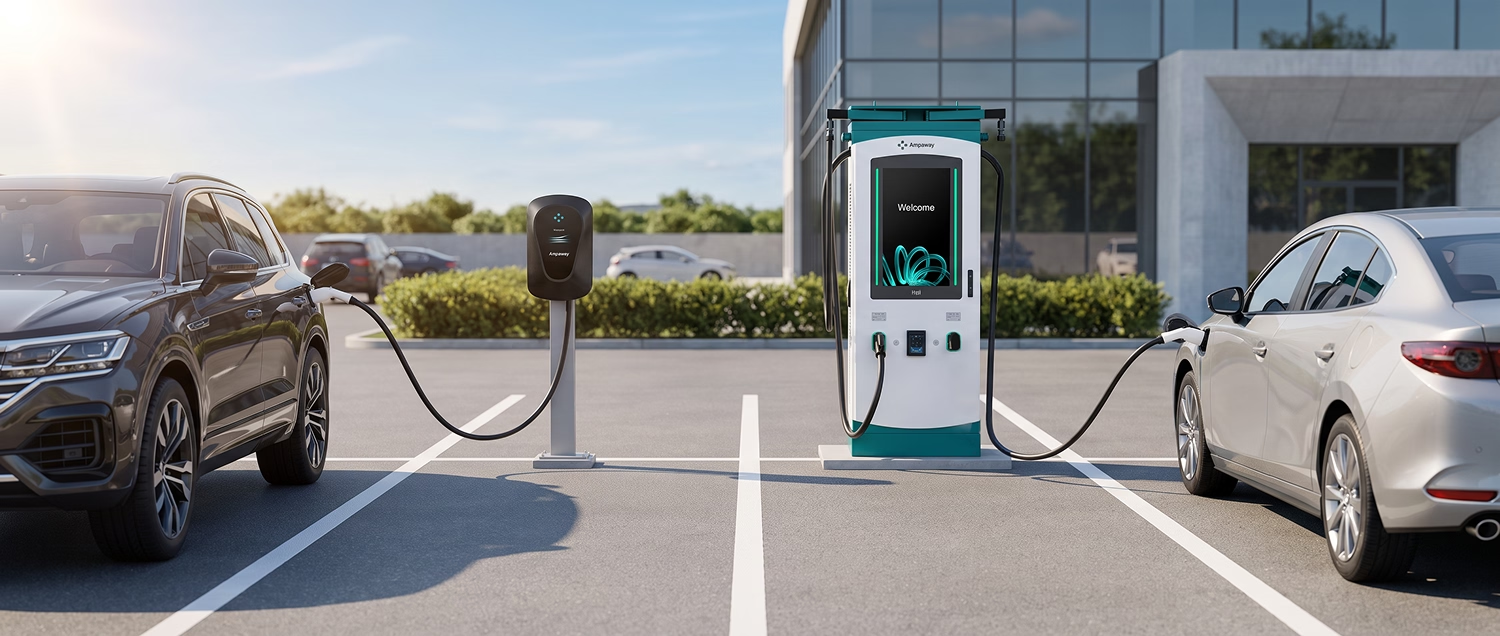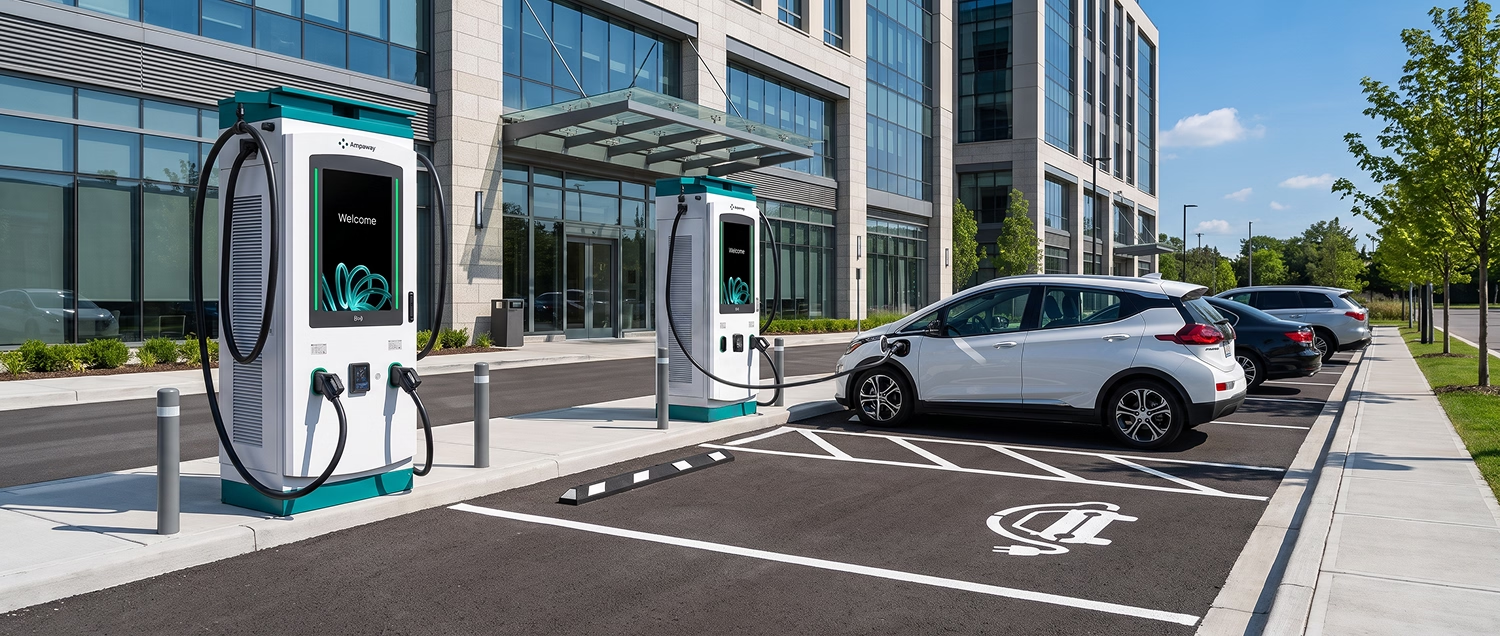

When fleet operators start looking into charging, they usually compare charger models and price per unit first. It's a natural place to begin, but the charger is only one part of your fleet charging infrastructure.
The fleet EV charging provider you choose also affects installation, software, maintenance, support, and how easily you can expand as more electric vehicles join the fleet. Together, these factors determine whether vehicles are charged and ready when their shifts begin.
A charger that stays offline for a week, or a depot that needs major electrical work every time you expand, can cost far more over time than you saved on hardware. This guide explains what to look for in installation, software, support, scalability, and total cost, along with the questions to ask before signing a contract.
What does an EV fleet charging provider actually do?
Some companies sell charging hardware and leave the rest to you. Your team then has to hire an electrician, arrange permits, choose software, and determine who handles repairs. A full-service EV charging provider manages those parts as one project, from the initial site assessment through ongoing operation.
A provider typically evaluates your vehicles, daily mileage, duty cycles, parking layout, and available electrical capacity to determine how many chargers you need and at what power levels. From there, the provider can design the electrical infrastructure, secure permits, coordinate with the utility, install and commission the chargers, and connect them to the charging network.
Once the site is operational, software becomes the day-to-day management layer. It lets your team monitor charger status, control access, track charging activity and energy use, and identify faults. Maintenance and technical support then keep the equipment operational throughout its service life.
For fleets, these services are closely connected. The design choices made during installation affect software management, maintenance, and future expansion, which is why it is important to compare the complete service rather than hardware alone.
Start with your fleet's actual charging requirements
Before comparing providers, map out how your fleet operates. Knowing your vehicles, routes, schedules, and site constraints makes it easier to judge whether a proposal fits your actual operation.
Fleet size and vehicle types
Passenger cars, cargo vans, and trucks have different battery sizes and energy requirements. A sedan used for local site visits may need only a small overnight top-up, while a loaded delivery van may require considerably more energy.
Mixed fleets may need different charging power levels rather than the same charger at every parking space. Larger vehicles can also require wider spaces or different parking layouts.
Duty cycles and daily mileage
Daily mileage determines how much energy each vehicle needs to recover before its next shift. A vehicle covering 40 miles a day may easily recover overnight on Level 2 charging. In comparison, a vehicle traveling 200 miles may need higher-power charging, depending on its efficiency and available charging window.
Look beyond average mileage as well. Routes that vary significantly from day to day may require more charging flexibility than predictable routes.
Charging windows
Many fleets charge overnight because vehicles remain parked for long periods. Fleets running multiple shifts may instead need daytime or opportunity charging between routes.
Consider when vehicles return to the depot and when they need to leave again. If many arrive at once, the site must either provide enough electrical capacity for the peak or use load management to distribute available power intelligently.
Depot and site constraints
Parking layout determines where chargers can go, while electrical capacity limits how much power they can draw. Future growth matters too. If you expect to add vehicles, make sure the initial design leaves physical space and an electrical path for additional chargers.
Look for an end-to-end EV fleet charging provider
Providers best suited to a phased fleet transition can manage the project from site assessment and installation through software and long-term maintenance.
Some companies instead coordinate several vendors: one supplies the chargers, another handles installation, a third provides software, and another responds to service calls. This model can work, but it creates more handoffs when something goes wrong.
A single-provider model consolidates hardware, installation, software, and maintenance under one contract. The team responsible for the original depot can continue supporting it as the fleet expands. Ampaway's EV fleet charging solution works this way. Ampaway's team handles site assessment, installation, software, and maintenance.
When comparing providers, ask which parts of the project they handle directly. Site preparation, electrical work, permitting, installation, commissioning, software, and maintenance all affect project timelines and long-term reliability.
Look for a provider that can manage the hardware and software as one system. Integrated monitoring makes it easier to connect charger faults, settings, session data, and maintenance without forcing the fleet team to coordinate between separate vendors.
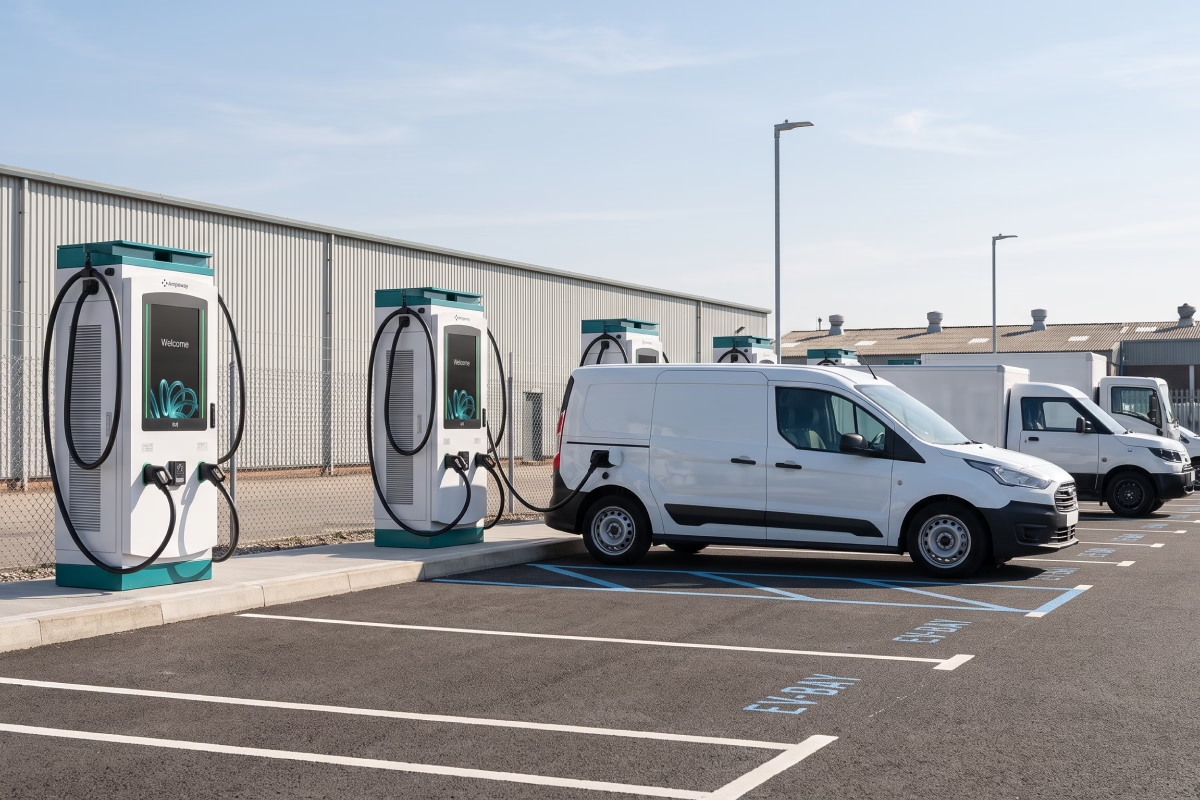
Can the provider support a phased EV fleet transition?
Planning an EV fleet transition in stages lets you test how electric vehicles perform on real routes before converting the entire fleet. It can also spread investment over time and align electrical upgrades with actual demand.
A first phase might include one depot, a small group of vehicles, and a limited number of chargers. This gives the fleet data on energy consumption, charging windows, charger utilization, and software workflows.
Later phases can build on those results by adding vehicles and chargers, increasing electrical capacity where necessary, or bringing additional depots onto the same platform. The provider should be able to expand the existing setup rather than requiring the fleet to start over with new hardware or software. Ampaway plans the first phase with later phases in mind, so new vehicles, chargers, and depots can be added to the same electrical plan and software platform.
Evaluate the charging software, not just the chargers
Once chargers are installed, fleet managers will interact with the EV charging software more often than with the hardware itself. The platform should provide enough visibility and control to keep vehicles charged while helping operators manage energy and plan future expansion.
Remote monitoring and alerts
The software should show the live status of every charger, including whether it is available, charging, or offline. Fault alerts let the fleet team or provider respond before a driver discovers an unusable charger at the start of a shift.
Energy and charging data
Look for records showing when each charging session occurred, how much energy was delivered, and which vehicle or user received it. Over time, this data reveals charging costs, charger utilization, and vehicle-level energy consumption.
Load management
Dynamic load management distributes the site's available power across active chargers. Instead of every charger drawing maximum power at once, the system adjusts charging rates based on demand.
This can allow a depot to support more charging ports within its available electrical capacity and potentially delay infrastructure upgrades. Ampaway's software uses load balancing to manage available site power across connected chargers.
Access management and reporting
Drivers should be able to start charging quickly, while administrators should be able to control who can use chargers and who can view or change settings.
Reporting should make it easy to compare energy use, charger utilization, and costs over time and across sites. This information is especially useful when planning the next phase of an EV rollout.
Integration and open standards
Ask whether the software can share data with the fleet management or telematics tools your team already uses. Connecting charging data with vehicle state of charge and route schedules makes it easier to see which vehicles need priority charging before the next shift.
It is also worth asking whether the chargers and software use open standards such as OCPP. Open protocols make it easier to add different hardware later and reduce the risk of being locked into one vendor."
OCPP and ISO 15118 certifications
Ampaway’s charging management software is certified for OCPP 1.6 and OCPP 2.0.1, helping it work reliably with compatible charging hardware and support a more flexible charging setup.
The OCPP 2.0.1 certification covers all supported profiles, including Smart Charging and ISO 15118 Support. ISO 15118 covers smart charging and Plug & Charge authorization, allowing compatible vehicles and chargers to support automatic authentication when a vehicle is plugged in.

What makes a good fleet charging support model?
Support can look like a minor line item in a proposal, but it directly affects vehicle availability once the chargers are operating.
Ask who actually repairs equipment when a charger fails. Some providers rely on subcontracted technicians, while others use their own service teams. In either case, determine who dispatches technicians, who remains responsible for resolving the issue, and whether common replacement parts are readily available.
Response time should also be specific. Ask how quickly an issue is acknowledged, which faults can be diagnosed or fixed remotely, and how soon someone can arrive on site when physical repairs are required. If uptime is critical to your operation, check whether the service agreement includes response commitments.
For a fleet depot, charger downtime can affect routes and labor costs. Vehicles that miss an overnight charge may need to switch routes, wait for another charger, or use public charging during working hours. The support model should therefore be evaluated as part of the charging system's operational cost. With Ampaway, the team that installs the chargers also monitors them and handles maintenance and repairs, so fleet operators have one point of contact when something goes wrong.
Level 2 vs. Level 3: Can one provider support both?
Many fleets use a combination of Level 2 and DC fast charging, often called Level 3. A provider that supports both can plan the site's electrical infrastructure, software, and load management around the complete charging mix.
Level 2 chargers commonly deliver roughly 7 to 19 kW and work well for vehicles that return to the depot for long overnight stops. They generally cost less to install and place less demand on site electrical capacity, making them suitable for predictable daily routes.
DC fast chargers deliver much more power and can be useful for high-mileage vehicles, short turnaround times, or midday opportunity charging. Because they require significantly more electrical capacity, incorporate them into the site's infrastructure planning from the beginning when future fast charging is likely.
The right mix depends on vehicle batteries, mileage, dwell time, route schedules, and site capacity rather than charging speed alone.
When comparing providers, confirm that they can design, install, manage, and service both charging levels within the same infrastructure and software environment. This matters especially for fleets whose charging mix may change as vehicles, routes, and duty cycles evolve.
Ampaway designs and manages Level 2 and DC fast charging on the same software platform, with load management balancing available power across both.
What about specialized fleets, like loaner vehicles?
Not every fleet follows predictable routes. Repair shops and dealerships with electric loaner vehicles may have cars returning throughout the day at different states of charge, sometimes with little time before the next customer needs them.
For these fleets, a managed EV charging solution should make it easy to plug vehicles in as soon as they return, distribute available power through load management, and show staff which vehicles are charged and ready. Simple charging workflows are particularly important because service advisors and lot staff should not have to spend significant time managing charging.
A managed solution can also shift charger monitoring and repairs from the dealership's service team to the provider, letting employees stay focused on customers and vehicles. Ampaway's managed model covers this setup. It monitors the chargers, handles repairs, and uses load management to spread available power across vehicles as they return through the day.
How to evaluate scalability before you sign
Scalable fleet charging infrastructure should be designed around the fleet you expect to operate in several years, even if you install only part of it today.
Start with electrical scalability. Ask how much capacity the first phase will use, how load management can support additional chargers, and when a utility or service upgrade would eventually become necessary. Panels, conduit, and power distribution should be planned so future chargers can be added without unnecessarily redoing existing work.
Hardware should scale too. Your fleet may eventually need more Level 2 chargers, DC fast chargers, additional depots, or equipment for larger vehicles. New hardware should operate alongside your existing chargers.
Finally, evaluate software at the scale you expect to reach. A platform that works for 10 chargers should remain manageable at 50 or across multiple locations. Ask to see how the software handles site filtering, permissions, reporting, and charging activity across a larger fleet.
Compare the provider's total cost and ROI
A low upfront quote can leave out expenses that appear later. Compare providers based on total cost of ownership rather than charger price alone.
Costs can include hardware, installation, electrical infrastructure, software subscriptions, maintenance, repairs, and electricity. Charging schedules and load management can also affect operating costs by helping fleets use available electrical capacity more efficiently and, where applicable, charge during lower-cost utility periods.
Faster ROI does not come from hardware price alone. Reliable chargers, responsive maintenance, load management, and accurate charging data can improve deployment economics by reducing downtime, avoiding unnecessary infrastructure upgrades, and helping fleets use charging assets more efficiently.
Vehicle availability and staff time matter too. If drivers regularly wait for chargers or employees spend hours coordinating service calls, those operational costs reduce the return generated by the charging infrastructure.
Commercial terms also vary among the best EV charging companies. Depending on the project, fleets may purchase and own the charging infrastructure or pay ongoing service fees for software, operations, maintenance, and support.
The parties involved can also vary. In some projects, the site owner, charging infrastructure owner, and fleet operator are different organizations. For example, a property owner may install chargers in a dedicated parking area that is then used by a fleet company leasing the space.
Ampaway can support these different deployment structures by providing the charging platform and ongoing operational support.
Incentives and rebates
State and utility programs can lower the cost of fleet charging projects, but eligibility rules and paperwork vary by location. Ask each provider whether they will find the programs that apply to your sites and manage the application.
Ampaway handles the rebate process for its customers, from identifying programs and checking eligibility to preparing documentation and coordinating the application.
Questions to ask an EV fleet charging provider
Use the same questions with each fleet EV charging provider so you can compare proposals consistently:
- Do you handle installation directly or subcontract it?
- Who provides ongoing maintenance and repairs?
- What are your typical support and on-site response times?
- What charging software is included?
- Can the platform manage multiple depots?
- Can you support both Level 2 and DC fast charging?
- How does your solution handle limited electrical capacity?
- Can we expand without replacing existing infrastructure?
- What happens when a charger goes offline?
- What recurring costs continue after installation?
- Can you support a phased fleet transition?
- Who is our main point of contact?
The answers should give you a clearer picture of what happens not only during installation, but throughout the charging system's operating life.
Why Ampaway for EV fleet charging?
Ampaway manages fleet EV charging end-to-end, from site assessment and permitted EV charger installation through software, maintenance, and operation.
With over 1,000 chargers installed, Ampaway monitors systems 24/7 and directly handles all field service and repairs. Centralized software provides complete visibility into charging activity, while dynamic load management optimizes available power as your fleet grows.
Ampaway’s EV fleet charging solutions are built for scalability, allowing fleets to expand capacity over time without rebuilding infrastructure. Ampaway's team handles site assessment, installation, software, and maintenance.