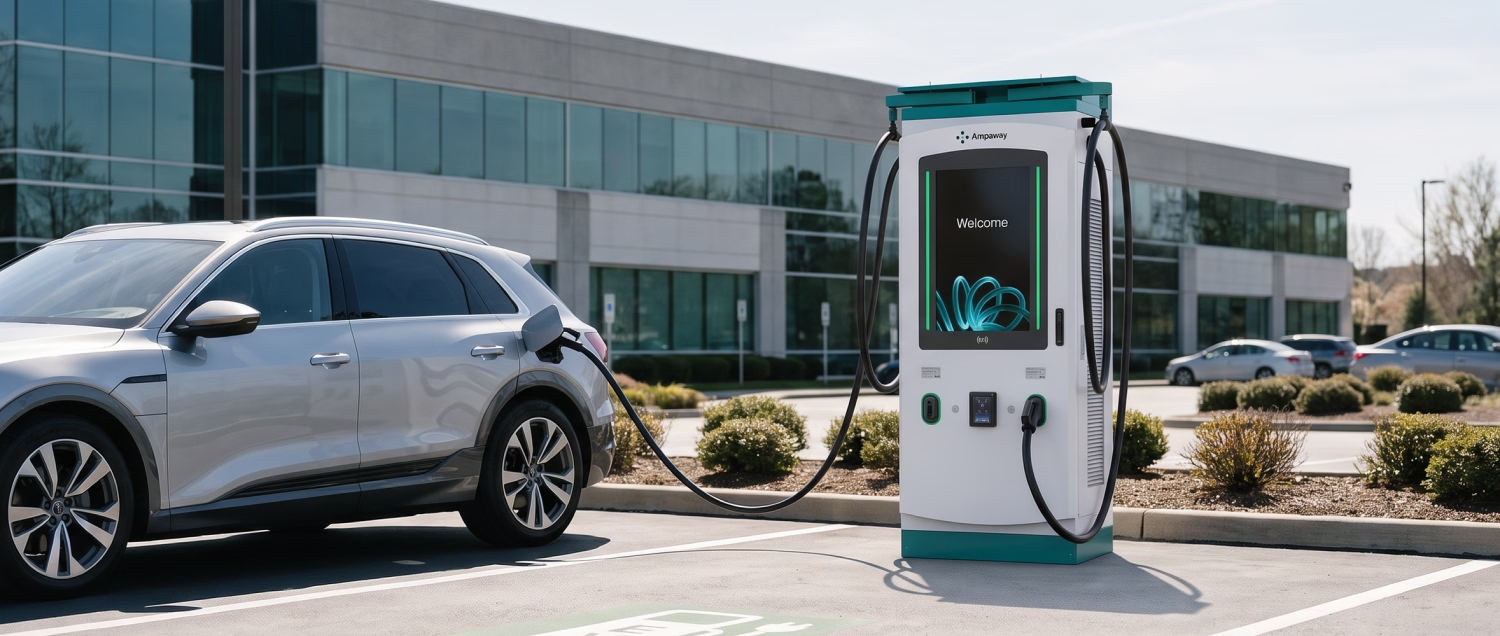

Most property owners start their search for an EV charging provider by looking at chargers. Charging speed, plug types, and how many units fit in the parking lot. Hardware is easy to compare, so it's where attention naturally goes first.
But the hardware is only one part of what you're actually choosing. The provider behind it is responsible for the installation process, the software that runs day-to-day operations, how drivers and tenants pay to charge, ongoing maintenance, and how the system holds up as demand grows. A provider that handles hardware well but falls short on any of these can leave you with chargers that work on day one and become a liability a year later.
This article walks through the factors that matter when evaluating EV charging providers, from your property's specific needs to hardware, software, pricing models, and long-term support. By the end, you'll have a clear framework for comparing providers and choosing one that fits your property now and as it scales.
What does an EV charging provider actually do?
An EV charging provider is responsible for more than dropping off equipment. The role spans five distinct functions, and how well a provider handles each one affects how the system performs for years.
Hardware supply
The provider sources the physical chargers, selecting equipment suited to your property's power capacity, expected usage, and the type of access you plan to offer.
Installation and commissioning
This covers the electrical work, permitting, and testing required to get chargers safely connected and operational, along with confirming everything runs correctly before handover.
Charging management software
Behind every charger is a software platform that handles monitoring, access control, and reporting. This is what turns a set of chargers into a system you can actually manage.
Maintenance and technical support
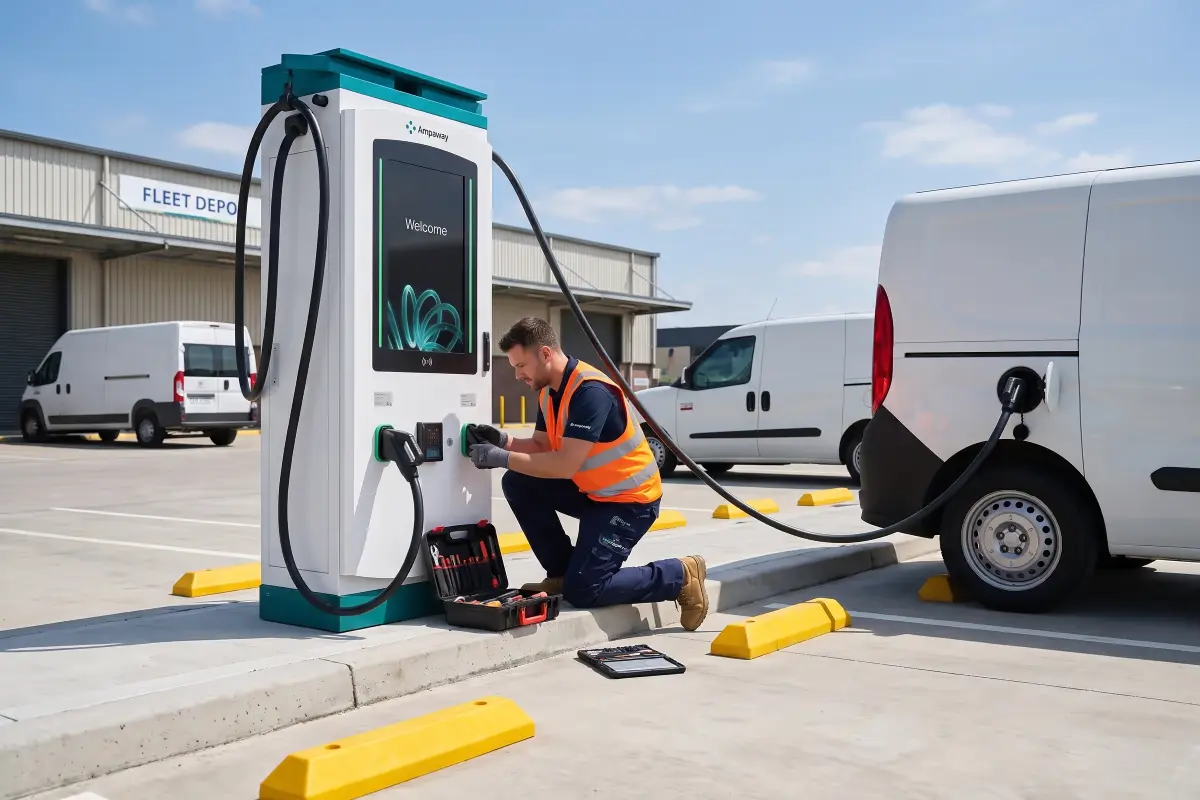
Chargers need upkeep over time, from routine checks to fixing issues when they come up. Who handles this, and how quickly, is part of what you're evaluating in a provider.
Payment processing and billing
Someone has to collect payment from drivers and reconcile it, whether that's a flat fee, pay per use, or a revenue share arrangement with the property owner.
Start by understanding your property's needs
Before comparing providers, it helps to know what you're actually looking for. The right setup depends on how your property is used, who's parking there, and what your electrical system can support today.
Residential vs. commercial properties
Charging patterns differ significantly by property type. Multifamily buildings typically need overnight charging for residents who plug in once and leave their car parked for hours. Commercial sites like retail centers or office parks see shorter, more frequent sessions throughout the day. If you're weighing options for EV charging for businesses, that pattern is the main thing affecting equipment and pricing decisions.
Number of parking spaces and expected demand
Look at how many spaces you have and what share of drivers are likely to need charging, now and over the next few years. Overbuilding ties up capital in unused chargers, and underbuilding means tenants or customers get turned away. A realistic estimate is the right starting point.
Public, private, or mixed access
Access depends on who you're charging for. A residential building typically restricts access to residents, a retail center wants to serve customers coming and going, and some properties need to support both tenants and general visitors under different terms. This decision affects everything from access control to pricing later on.
Current electrical capacity and future expansion
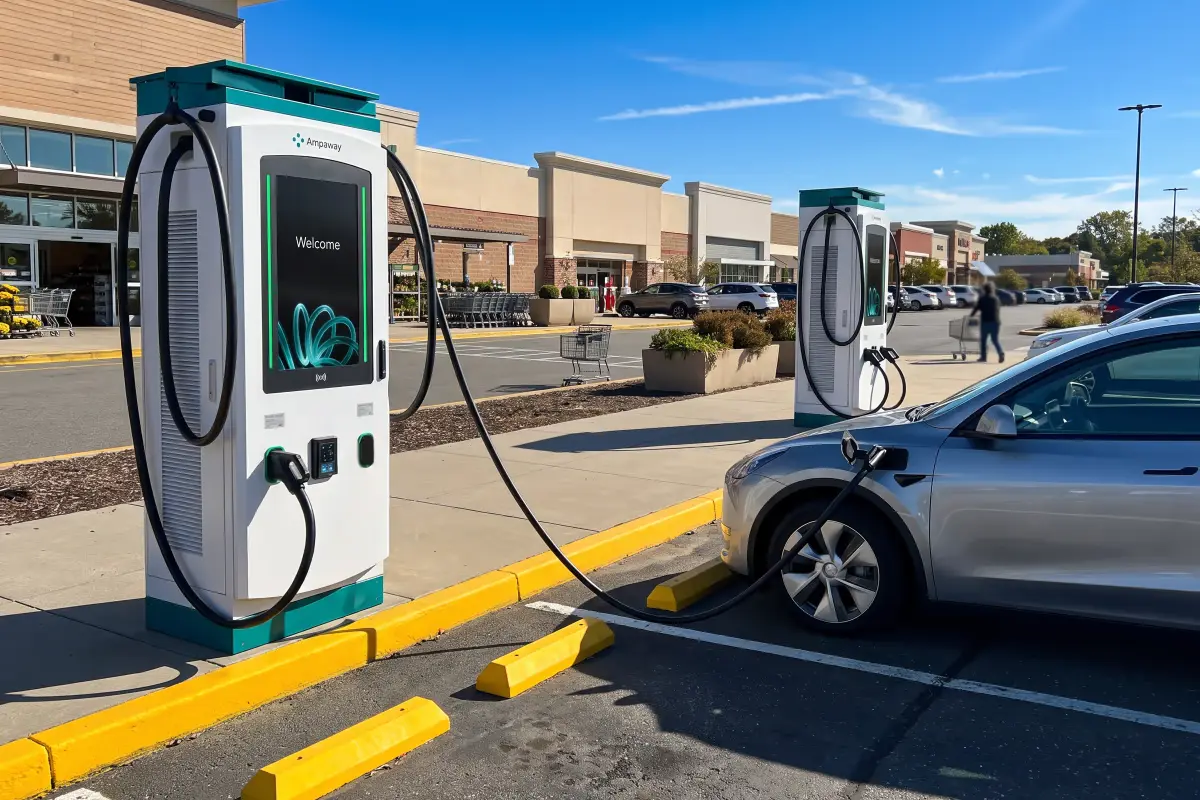
Most properties don't have enough spare electrical capacity to power every parking space at full charging speed simultaneously. This is where a feature called dynamic load balancing becomes relevant. Instead of reserving a fixed amount of power for each charger, the system distributes available power across all active chargers in real time, adjusting automatically as vehicles plug in and finish charging.
The practical effect is that a property can support significantly more chargers within its existing electrical capacity. A building with enough power for 10 chargers at full speed might support 40 or more with load balancing in place, since it's rare for every charger to need maximum power at the exact same moment. This matters most for properties planning to grow their charging network over time, since it can delay or reduce the need for costly electrical upgrades.
Compare charging hardware options
Once you know what your property needs, the next step is understanding the hardware itself. A few core distinctions determine what will work for your site.
AC vs. DC chargers
AC chargers are the standard choice for properties where cars sit parked for extended periods, like overnight at an apartment building or during a full workday at an office. DC fast chargers deliver power much faster but cost significantly more to install and run, making them better suited to high turnover locations like retail centers or public charging hubs where drivers need a quick top-up.
Compatible vehicle connectors
Depending on your region and the vehicles you expect to serve, chargers need to support the right connector types, and increasingly, more than one, since the market is still transitioning toward a unified standard. Choosing hardware that supports multiple connector types helps avoid turning drivers away over a plug mismatch.
Smart charging capabilities
Chargers that connect to a network can be monitored, updated, and managed remotely, rather than requiring someone to physically check on them. This connectivity is also what makes features like dynamic load balancing possible in the first place, since the system needs real-time data from every charger to distribute power effectively.
Reliability and certifications
Chargers should carry recognized safety certifications confirming they meet electrical and building code requirements. Beyond certification, look for hardware with a track record of holding up under regular use, since a charger that frequently breaks down creates more problems than it solves, regardless of how advanced its features are.
Evaluate the charging management software
Hardware gets most of the attention, but the software behind it determines how well your charging system actually runs day to day. This is often where the best EV charging management software, like Ampaway, separates itself from the rest, in the details most buyers overlook until something goes wrong.
Remote monitoring and diagnostics
Good software gives you visibility into every charger's status without needing to walk the property. It flags issues as they happen, often before a driver even notices, which shortens the time between something going wrong and getting it fixed.
Dynamic load management
As covered earlier, this is the feature that distributes available power across active chargers in real time. When evaluating software specifically, the question is whether it actually does this automatically and reliably, rather than requiring manual adjustments or fixed power caps per charger.
User access and permissions
Different people need different levels of access. Property owners and managers typically need a dashboard to oversee the whole system, while staff might need limited access to specific functions, and drivers only need enough to start and pay for a charging session. Software should support these distinctions cleanly.
Reporting and analytics
Usage data and revenue reports give property owners a clear picture of how the charging system is performing over time, which sessions are most common, and how earnings are trending. This is also what makes it possible to plan future expansion based on actual demand rather than guesswork.
Over-the-air software updates
Chargers connected to a network can typically receive software improvements and bug fixes remotely, without a technician needing to visit the site. This keeps the system current and reduces how often service calls are needed for issues that can be resolved with a software fix.
Understand pricing and ownership models
How you pay for a charging system affects your upfront costs, who carries the risk, and how much of the ongoing revenue you keep, which is really what EV charging business models come down to.
Purchasing the chargers outright
Buying hardware directly means a larger upfront investment, but full ownership. The property owner is responsible for maintenance, repairs, and any software fees, and typically keeps all revenue generated.
Leasing or subscription models
Leasing lowers the initial cost by spreading payments over time, usually through a fixed monthly fee. The tradeoff is ongoing payments regardless of how much the chargers are used, and revenue generated typically still goes to the property owner.
Revenue sharing and fully managed solutions
Under this model, a provider covers the cost of hardware, installation, and ongoing service, and takes a share of the revenue generated instead of charging fees. The property owner isn't responsible for operating or maintaining the system. This removes the upfront cost barrier, at the cost of a smaller share of revenue than full ownership would provide.
Understanding ongoing operating costs
Beyond the initial setup, every model carries ongoing costs like electricity, software fees, and maintenance. Who's responsible for each of these varies by model, and it's worth confirming upfront rather than assuming they're included.
Consider payment and user experience
How drivers pay and access chargers affects whether they actually use the system, and how much friction property owners deal with afterward.
Contactless payments
Letting drivers pay by tapping a card or scanning a code removes the need for separate accounts or cash handling, and matches how most people already expect to pay for everyday services.
Mobile apps and RFID access
A mobile app typically handles both starting a session and paying for it, while RFID cards or fobs offer a simpler option for tenants or employees who charge regularly and don't need the full app experience.
Guest charging and public access
Properties that serve visitors need a way to let guests charge without requiring an account or ongoing relationship with the provider. This usually means a simplified, one time payment flow built for occasional use.
Pricing flexibility for different user groups
Not every user should pay the same rate. Tenants, employees, and guests often warrant different pricing, and the software should support setting these rates separately rather than applying one flat price across the board.
Check integration and future scalability
A charging system installed today should still fit your plans a few years from now, without requiring a full replacement to get there.
OCPP compatibility
OCPP is an open communication standard that lets charging hardware and software from different providers work together. Choosing OCPP compatible equipment keeps you from being locked into a single provider's ecosystem if your needs change down the line.
Integration with building management systems
Larger properties often run existing systems for energy monitoring or building operations. Charging software that can connect with these systems gives a more complete picture of the property's overall power use, rather than treating charging as a separate, isolated system.
Support for energy management and solar
Some properties generate their own power or plan to in the future. Charging software that can factor in on-site solar or broader energy management strategies gives property owners more control over how that power gets used.
Expanding your charging network over time
Demand for charging tends to grow gradually rather than all at once, so it's worth evaluating whether a provider can support that growth. The best companies for large-scale EV charging build systems that scale without requiring you to start over, letting you add chargers as demand increases rather than overbuilding from day one.
Evaluate service, maintenance, and support
Chargers that work well on installation day still need ongoing attention. This is where a provider's reliability gets tested over time.
Response times and service level agreements
Ask what response times a provider commits to when something goes wrong, and whether those commitments are documented in a service level agreement or left informal. A clear SLA gives you something concrete to hold the provider to.
Preventive maintenance
Routine checks catch small issues before they turn into breakdowns. A provider with a preventive maintenance schedule is working to avoid problems, not just reacting once a charger is already down.
Remote troubleshooting
Many issues can be diagnosed and resolved remotely through the charging software, without waiting for a technician to visit the site. This usually means faster fixes and fewer service calls overall.
Warranty coverage
Confirm what's covered under warranty, for how long, and whether it applies to hardware, installation work, or both. This matters most in the early years, when manufacturing defects are most likely to surface.
Questions to ask before choosing an EV charging provider
By now you know what to look for. The next step is turning that into a short list of questions that separates the best EV charging companies from the rest.
What services are included?
Get a clear breakdown of what's covered under the agreement, including installation, software, maintenance, and support, versus what would cost extra later. Vague answers here tend to turn into unexpected bills.
Who owns the equipment?
Ownership determines who's responsible for maintenance, repairs, and end of life replacement. This also affects how the property is valued and what happens if you decide to switch providers down the line.
How are software updates handled?
Ask whether updates happen automatically and remotely, or whether they require a technician visit and scheduled downtime. This is a good indicator of how modern the underlying platform actually is.
What happens if demand grows?
A provider should be able to explain how the system handles additional chargers as demand increases, whether that means more hardware, more capacity through load balancing, or both. If they can't answer this clearly, it's worth questioning how much future planning went into their setup.
What support is available after installation?
Find out who you'd actually contact if something goes wrong, how quickly they typically respond, and whether support is handled in-house or passed along to a third party. This shapes how much attention the relationship gets once the initial sale is done.

Why software is just as important as the charger
Ask most people what makes a good charging system, and they'll describe the charger. Faster charging, sturdier build, a recognizable brand. Software rarely comes up, even though it's doing most of the work behind the scenes once the hardware is installed.
Optimizing energy use
Software manages how power gets distributed across chargers in real time, making sure available capacity is used efficiently rather than sitting idle or getting maxed out unevenly.
Reducing operational costs
Remote monitoring and automatic diagnostics cut down on the number of site visits needed to keep chargers running, which lowers the cost of keeping the system operational over time.
Improving reliability and uptime
Software catches issues early, often before a driver ever encounters a charger that isn't working, which keeps downtime low and the system dependable.
Simplifying day-to-day management
A good platform gives property owners a single place to monitor usage, manage access, and track revenue, instead of juggling multiple tools or relying on manual check-ins.
Choosing an EV charging provider that supports long-term growth
There's no single factor that makes an EV charging provider the right fit. It comes down to understanding your property's needs, comparing hardware honestly, evaluating the software behind it, picking a pricing model that fits your goals, and confirming the level of support you can expect once the system is live.
Of all these, software, scalability, and support tend to matter more over time than the charger itself. Hardware is what you see on day one. The rest is what determines whether the system still works well in year three, as demand grows and your property's needs change.
This is where Ampaway fits in, giving property owners a single system to manage, monetize, and scale EV charging, backed by dynamic load balancing that lets a property support more chargers without expensive electrical upgrades, and a revenue-sharing model that removes the upfront cost of getting started. Installation, software, and ongoing support are all handled end-to-end, without subcontractors or added layers between you and the team responsible for keeping things running.
If you're evaluating EV charging providers for your property, it's worth talking to one of the turnkey EV charging solution providers like Ampaway about your property's needs.