
Every fleet depends on one requirement: vehicles have to be charged and ready when dispatch needs them. That gets harder as the fleet grows. When dozens of vehicles plug in at the end of a shift, the site's electricity demand can spike, and supporting that load may require pricey electrical upgrades.
The right charging strategy also depends on how the fleet operates. A last-mile delivery fleet may need vehicles ready for early-morning routes, a school bus fleet may have predictable charging windows between runs, and a medical transportation fleet may need greater flexibility because vehicles can return at different times throughout the day.
Adding more or faster chargers can seem like an obvious fix, but it often increases costs without improving vehicle readiness. An effective EV fleet charging strategy aligns daily operations with vehicle schedules, battery needs, charger output, electricity tariffs, and site power limits.
This guide covers each part of that process: defining fleet requirements, planning charging capacity, managing load, and scheduling charging to keep long-term costs under control.
What Is an EV Fleet Charging Strategy?
An EV fleet charging strategy defines when, where, and how each vehicle charges. It aligns daily operations with site electrical capacity using three key inputs: vehicle energy requirements, operational schedules, and site power availability and costs.
It synthesizes three core areas:
- Vehicle specifications: Fleet size, battery capacity, daily mileage, and duty cycles
- Operational timing: Dispatch schedules and parking duration
- Site infrastructure: Charger count, power output, and electricity tariffs
These variables directly impact uptime. For instance, a delivery van parked overnight from 7 p.m. to 6 a.m. has an 11-hour window to replenish its charge via Level 2 equipment, while a shuttle operating across multiple shifts may have only one hour. Applying a uniform charging approach can leave some vehicles without enough charge while giving others more charging capacity than they need.
The goal is to keep vehicles ready when they’re needed without spending more than necessary. For many fleets, slower charging scheduled around vehicle use can provide enough energy while keeping equipment, infrastructure, and electricity costs under control.
Start With Fleet Uptime Requirements
For fleets that need vehicles ready every morning, the charging plan should start with the departure schedule. Charger types, power levels, and electricity rates only make sense once the fleet knows when each vehicle leaves and how much energy it needs by then.
Work Backward From Dispatch Time
With a 6:00 a.m. dispatch, charging should ideally finish before drivers arrive for pre-trip checks, making 5:30 a.m. a practical target. If vehicles are back and plugged in by 7:00 p.m., the charging window is about 10.5 hours. From there, operators can work out when each vehicle needs to start charging to be ready on time.
Understand Daily Energy Requirements
Energy needs depend on vehicle type, route length, daily mileage, and return state of charge. For example, a van traveling 80 miles at an average of 0.5 kWh per mile needs about 40 kWh. Charging only what is required for the next route, plus a reasonable safety margin, can prevent unnecessary power use and reduce charger congestion.
Build in a Charging Buffer
Routes can run longer than planned, drivers may plug in late, cold weather can reduce range, and chargers occasionally go offline. A buffer, such as additional charge on critical vehicles or access to a spare charger, helps keep these events from turning into missed dispatches.
It is also important to understand how quickly a charging provider can detect and address faults. Reliable monitoring and support reduce charger downtime and make the charging plan more resilient.
Identify Mission-Critical Vehicles
Some vehicles have little room for delay, such as emergency response units or vehicles on fixed, time-sensitive routes. Flagging them early allows the charging plan to prioritize their energy needs. Load management can then allocate available power to those vehicles before charging less time-sensitive vehicles.
What Types of EV Fleet Charging Solutions Are Available?
Fleets typically use a combination of Level 2 AC and DC fast charging, often coordinated through software to balance vehicle availability, electrical capacity, and operating costs. Connector compatibility is also part of fleet planning.
Depending on the vehicles and chargers being deployed, fleets may need to account for J1772 for AC charging, CCS for DC fast charging, and the increasingly adopted SAE J3400, also known as NACS.
Level 2 AC Charging
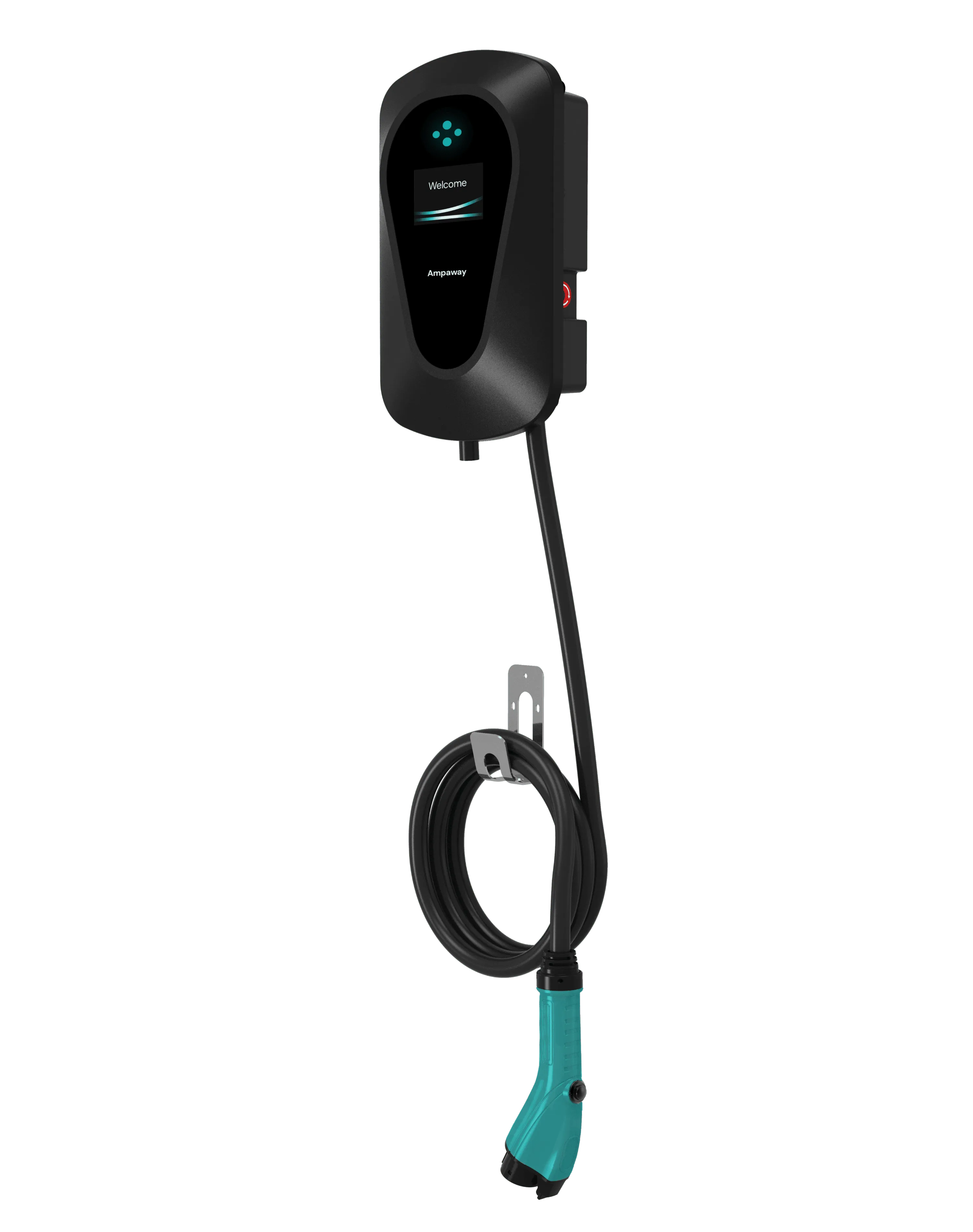
Level 2 chargers commonly deliver around 7 to 19 kW. At 7 kW, replacing 40 kWh takes roughly six hours, which can fit comfortably within an overnight charging window. Lower hardware and installation costs also make Level 2 well suited to fleets with predictable, long dwell times.
For depot vehicles parked overnight, high-speed charging adds unnecessary infrastructure expense. Longer charging windows let you distribute power draw evenly over time.
DC Fast Charging
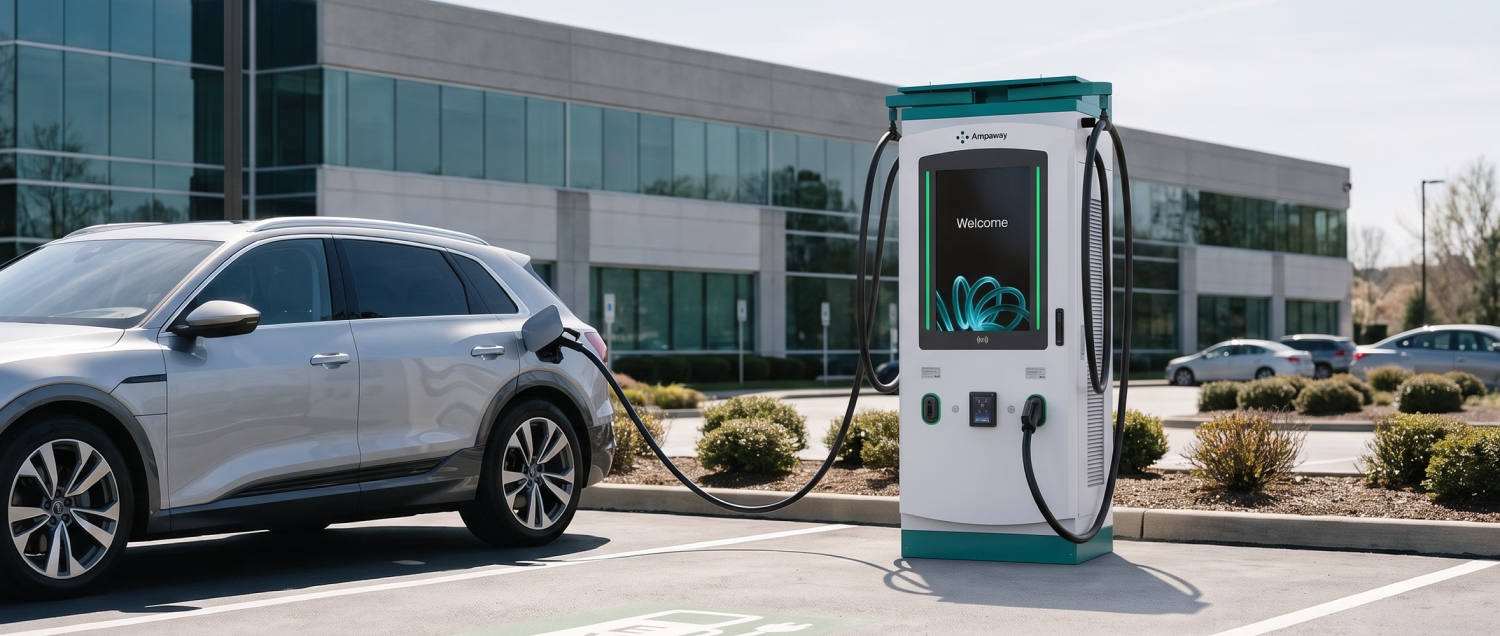
DC fast chargers typically deliver 50 kW or more and can add substantial range in a relatively short period. They suit high-mileage vehicles and multi-shift operations. They give good opportunities to charge during short breaks between routes.
The downside is cost. DC fast charging equipment is generally more expensive, installation can require significant electrical work, and high-power charging can contribute to higher demand charges depending on the site's utility tariff.
Fast charging becomes more useful when parking windows are too short for Level 2 or when vehicles need additional energy between scheduled charging periods.
Managed Fleet Charging
Managed charging software coordinates chargers and vehicles as a single system. It can regulate power output based on departure times, energy requirements, vehicle priorities, and site electrical limits.
This lets fleets use available electrical capacity more efficiently, rather than assuming every charger needs to run at maximum power at the same time.
Mixed Charging Strategies
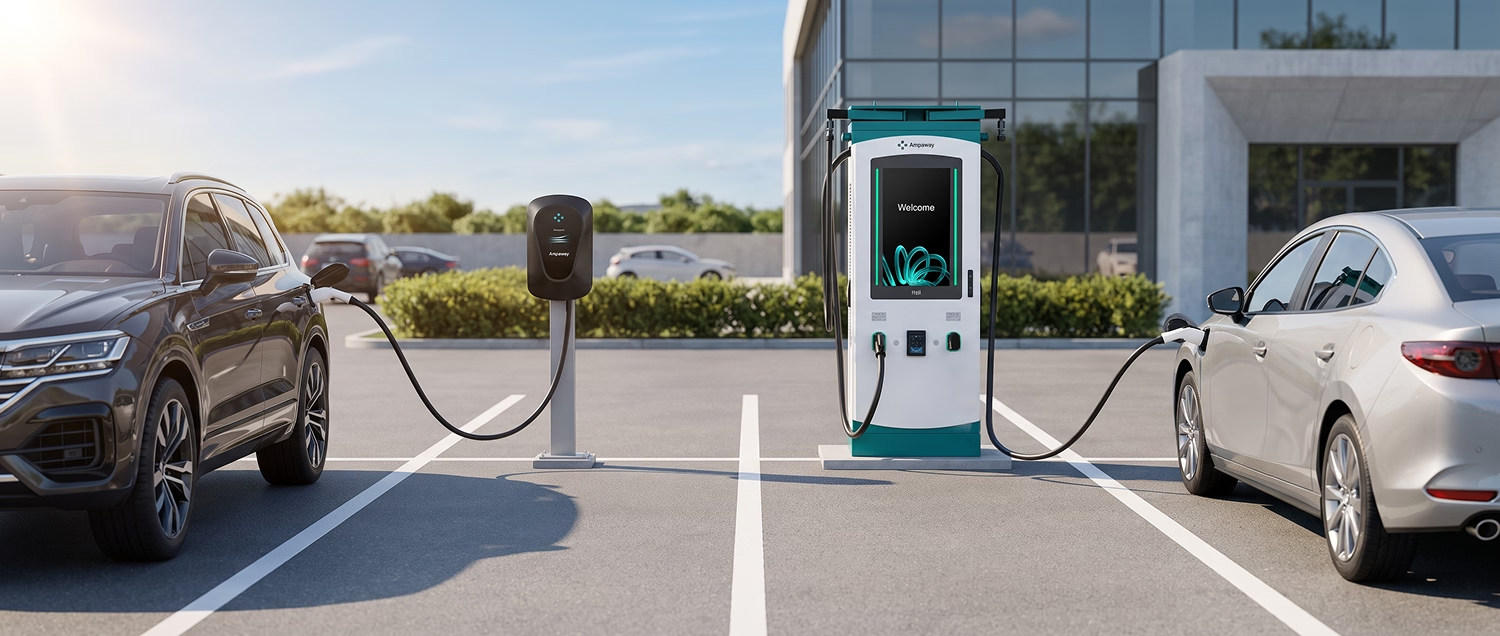
Many fleets combine both technologies: Level 2 chargers handle overnight parking, while a smaller number of DC fast chargers support tight turnarounds or unexpected additional mileage.
The right setup follows the fleet's schedules, routes, and parking patterns, balancing charger speed with dwell time, energy needs, infrastructure capacity, and operating costs.
How Charging Capacity Affects Fleet Operations and Costs
In a fleet, charging capacity is the amount of energy a site can deliver to its vehicles within the available charging window. It depends on five factors: the number of vehicles, the number of chargers, each charger's power output, the site's available electrical capacity, and the length of the charging window.
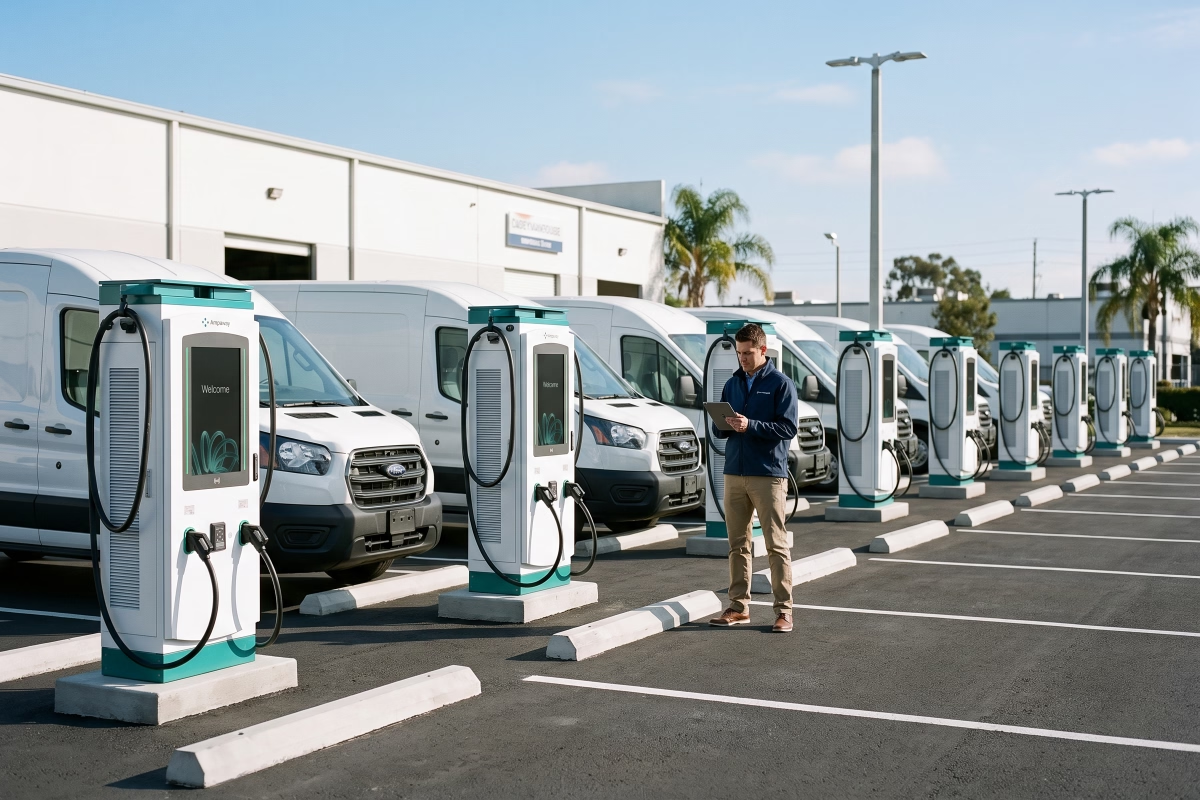
For example, thirty vans that require 40 kWh each consume 1,200 kWh total. Over a 10.5-hour window, this averages roughly 115 kW. Sizing site infrastructure for all thirty chargers operating at full 7 kW capacity simultaneously (210 kW total) is often unnecessary when charging can be spread across the window.
This is where managed charging becomes important. Instead of designing the site around every vehicle charging at maximum power at the same time, operators can distribute available power across the charging window.
Insufficient capacity can lead to partial charges, driver delays, and missed dispatches. Conversely, sizing electrical infrastructure for simultaneous maximum-power charging can add substantial capital expense and increase peak electricity demand.
Planning EV charging station installation around actual energy needs and charging windows helps avoid both problems. Load management can distribute available power across the fleet, allowing vehicles to receive the energy they need without requiring every charger to operate at full output simultaneously.
How Load Management Can Reduce Peak Demand
Without load management, vehicles can draw full power as soon as they plug in, creating sharp demand spikes at the end of the shift followed by periods when chargers are idle. Several load management features can help control power distribution while preserving departure schedules.
Dynamic Load Management
Dynamic load management adjusts charging power based on available electrical capacity. When other building loads rise, charging can slow down. When capacity becomes available again, charging can increase.
This helps a fleet use its existing electrical service more effectively while keeping charging within the site's limits.
Scheduled Charging
Scheduled charging sets charging periods around dispatch times, energy needs, and electricity rates. Staggering charging starts can reduce demand peaks while making sure vehicles have enough charge before they leave. This works particularly well for fleets with predictable overnight schedules, where vehicles can charge during lower-cost periods without affecting operations.
Power sharing
Power sharing divides a site's available charging capacity across multiple chargers. Instead of every connected vehicle receiving maximum power simultaneously, the system distributes available power among active sessions.
For instance, a site with 400 amps of available capacity can typically support about 320 amps of continuous EV charging load.
Priority Charging
Priority charging sends available power first to vehicles with the most urgent operational requirements. Once a mission-critical vehicle has enough energy for its route, available power can shift to vehicles with later departures or lower energy requirements.
In each case, the dispatch schedule sets the limits and load management works within them. A well-configured system can adjust power throughout the charging window so vehicles receive the energy they need before departure.
What Do Electric Fleet Charging Costs Include?
Electric fleet charging costs extend beyond the price of electricity. Equipment, installation, timing, peak power draw, and charger utilization can all influence total expenditure.
Electricity Consumption
Basic energy cost equals energy consumed multiplied by the electricity rate. A van using 40 kWh a day at $0.20 per kWh costs $8 to charge per day.
Commercial electricity bills are usually more complex, with rates that can change by time of day and separate charges based on peak power demand. Understanding the site's tariff is therefore an important part of an EV fleet charging strategy.
Infrastructure and Installation
Upfront expenses include hardware, panels, transformers, conduit, trenching, permitting, and service upgrades. Electrical and transformer upgrades represent the primary drivers of EV charging station installation cost variations between sites.
Charge During Lower-Cost Periods
Many utilities offer off-peak rates overnight. Overnight fleets can shift their charging into these windows with minimal operational impact to reduce energy costs.
Avoid Unnecessary Peak Demand
Many commercial tariffs include demand charges based on the highest power the site draws during a defined interval within the billing period. If every vehicle starts charging at full power at the same time, that short period can significantly increase the site's demand-related costs.
Load management can help lower peaks by spreading charging across the available window.
Use the Right Charger for the Job
DC fast chargers generally cost more to buy and install, and their higher power draw can increase demand-related costs. For vehicles parked for many hours, Level 2 charging can provide the required energy without high-power equipment.
DC fast charging is more useful where parking windows are short, vehicles operate across multiple shifts, or additional energy is needed between routes.
Improve Charger Utilization
A charger that sits idle for most of the day ties up capital, while too few chargers can create bottlenecks. Matching charger count to actual fleet demand and scheduling shared usage can help maintain high utilization without creating queues.
Over the long term, the lowest-cost setup is not necessarily the one with the lowest upfront price. Electricity rates, available power, vehicle requirements, charger utilization, and future fleet growth all contribute to the total cost of ownership.
How Software Supports EV Fleet Charging Optimization
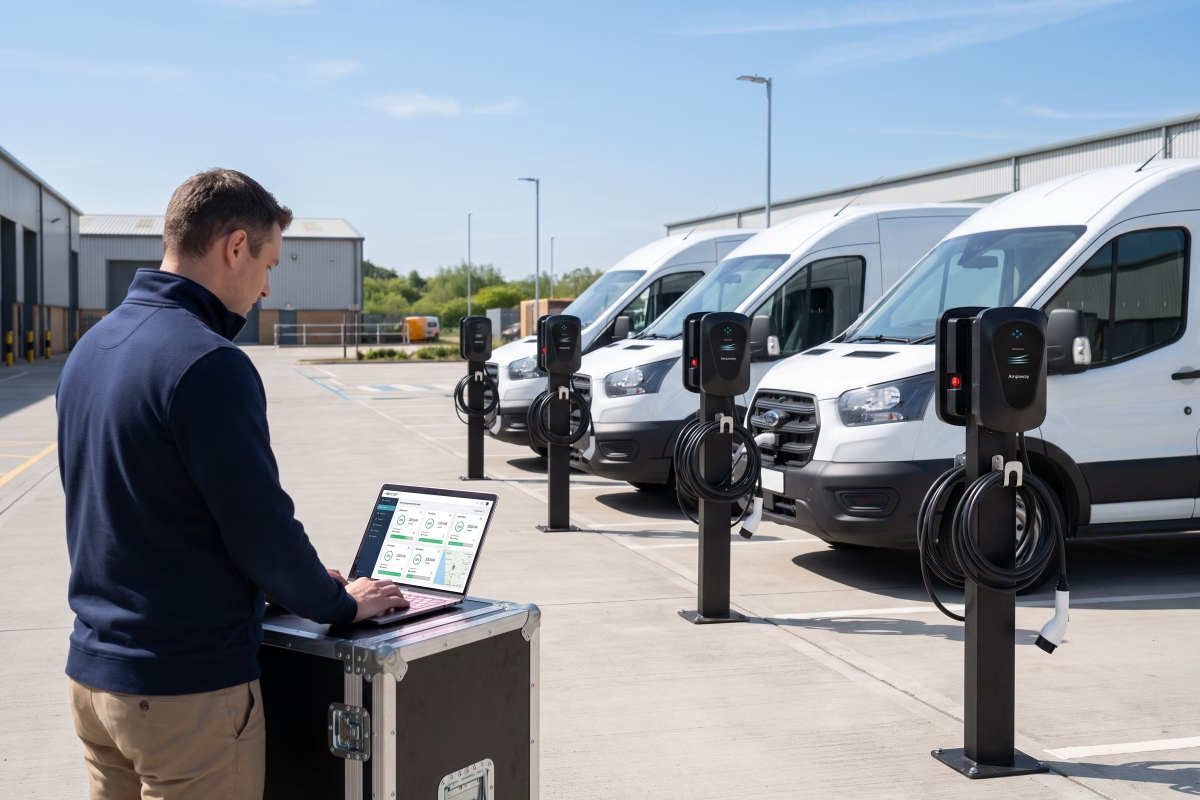
EV charging software makes EV fleet charging optimization possible by connecting individual chargers into one coordinated system. It gives operators visibility into what is happening on site and can apply charging rules automatically.
Real-Time Charger Monitoring
A monitoring dashboard can show charger status, active sessions, faults, and availability. If a charger goes offline, operators can identify the problem and reassign the vehicle when possible before it affects dispatch.
Fleet Charging Schedules
Operators can enter departure times and energy requirements, allowing software to build a charging schedule around those constraints. When a vehicle returns late or with less charge than expected, the schedule can be adjusted accordingly.
Energy Management
Load management settings can be configured within the charging software. Operators define the site's power limit and vehicle priorities, and the system allocates available power across chargers within those limits.
This is particularly useful when the fleet needs to add chargers without immediately increasing the site's electrical service capacity.
Reporting and Cost Analysis
Historical charging data can show how much energy the fleet uses, when peaks occur, which chargers are underused, what charging costs are, and how these patterns change over time.
Regularly reviewing this information helps operators adjust schedules, add or relocate chargers, and plan for new vehicles as the fleet grows and routes change.
Plan Charging Infrastructure for Future Fleet Growth
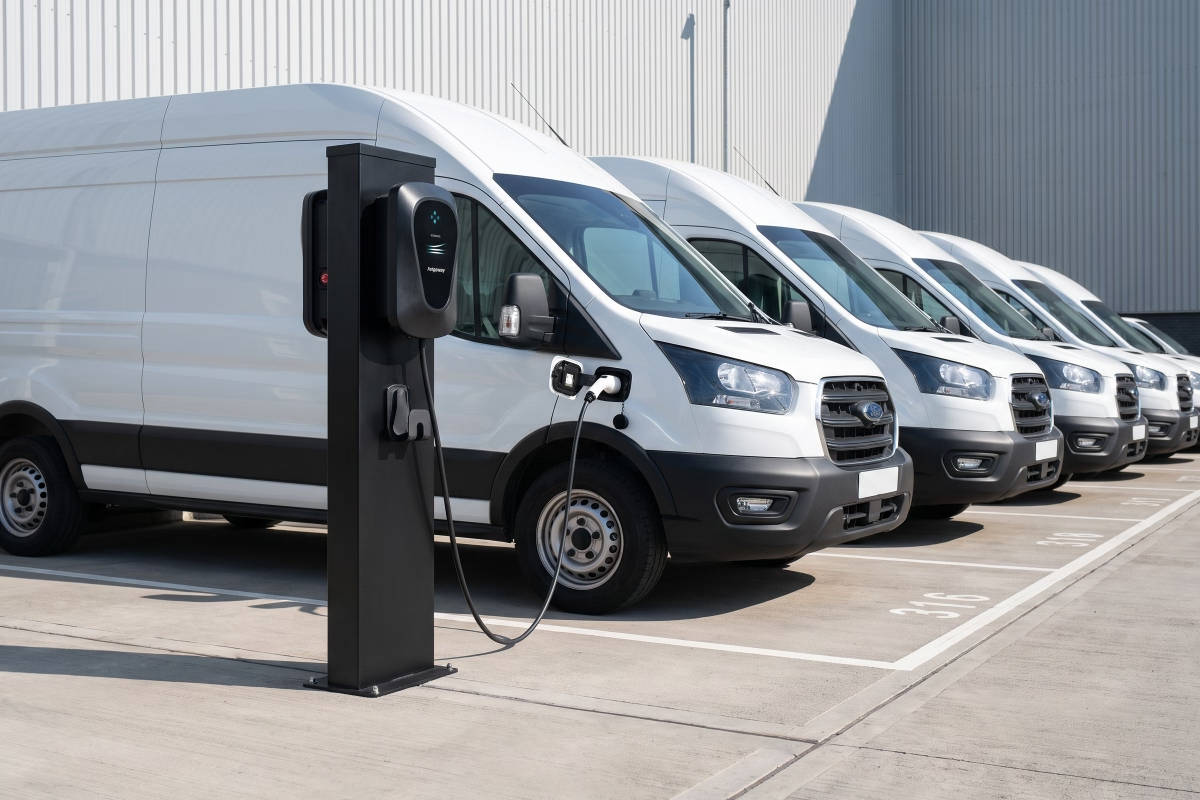
A charging setup sized for today's fleet can fall short within a few years. Fleets add vehicles, change routes, and switch to larger vehicle types, and each change can affect how much energy the site needs to deliver.
Design for Expansion
Much of the costly work happens underground and inside electrical rooms. Laying extra conduit and leaving spare panel capacity during the first project can be less disruptive than trenching and rewiring later.
A good plan also reserves parking spaces for future chargers, confirms how much additional electrical capacity the site can handle, and ensures the network connection can support additional equipment.
Building these considerations into a commercial EV charger installation from the start can make later expansion simpler.
Avoid Overbuilding
Planning for growth works best in phases. The first phase covers current needs while laying the groundwork for expansion. Charging data then reveals actual usage, peak demand, and available capacity to guide the next phase.
Load management can also stretch existing capacity, potentially allowing more chargers to be connected before an electrical service upgrade becomes necessary.
A Practical EV Fleet Charging Strategy Checklist
These questions can guide a new charging plan or a review of an existing setup.
Start with operations
- What time must vehicles be ready?
- When do vehicles return?
- How much energy does each vehicle typically need?
- Which vehicles are mission-critical?
- How long is each vehicle normally parked?
Evaluate infrastructure
- How much electrical capacity is available?
- How many chargers are required based on actual fleet demand?
- Which vehicles are well suited to Level 2 charging?
- Which vehicles require or benefit from DC fast charging?
- Is the existing electrical infrastructure sufficient for the planned charging load?
Optimize operations
- Can you schedule charging around dispatch times?
- Can power be dynamically managed?
- Can charging be shifted to lower-cost periods?
- Can mission-critical vehicles be prioritized?
- Can charger faults be monitored remotely?
Plan ahead
- Can the system scale as the fleet grows?
- Can software manage additional chargers?
- Can the electrical infrastructure support future expansion?
- Can charging data inform future infrastructure decisions?
How Ampaway Can Help Optimize Fleet Charging
Ampaway's EV fleet solutions are planned around how each fleet operates. Projects start with an assessment of dispatch times, energy needs, charging requirements, and available electrical capacity, with charger selection based on those findings.
To support uptime, Ampaway manages installation in-house and provides ongoing support, streamlining maintenance and fault resolution.
To control charging costs, Ampaway uses dynamic load balancing to distribute available electrical capacity across chargers. This helps fleets operate more charging equipment within existing site limits and reduces the need for unnecessary electrical upgrades.
Ampaway's driver app and web dashboard provide real-time visibility into charger utilization and energy usage, enabling ongoing EV fleet charging optimization as fleet requirements evolve.
With more than 1,000 chargers installed, Ampaway brings experience across the charging project lifecycle, from site assessment and installation through ongoing fleet charging management.