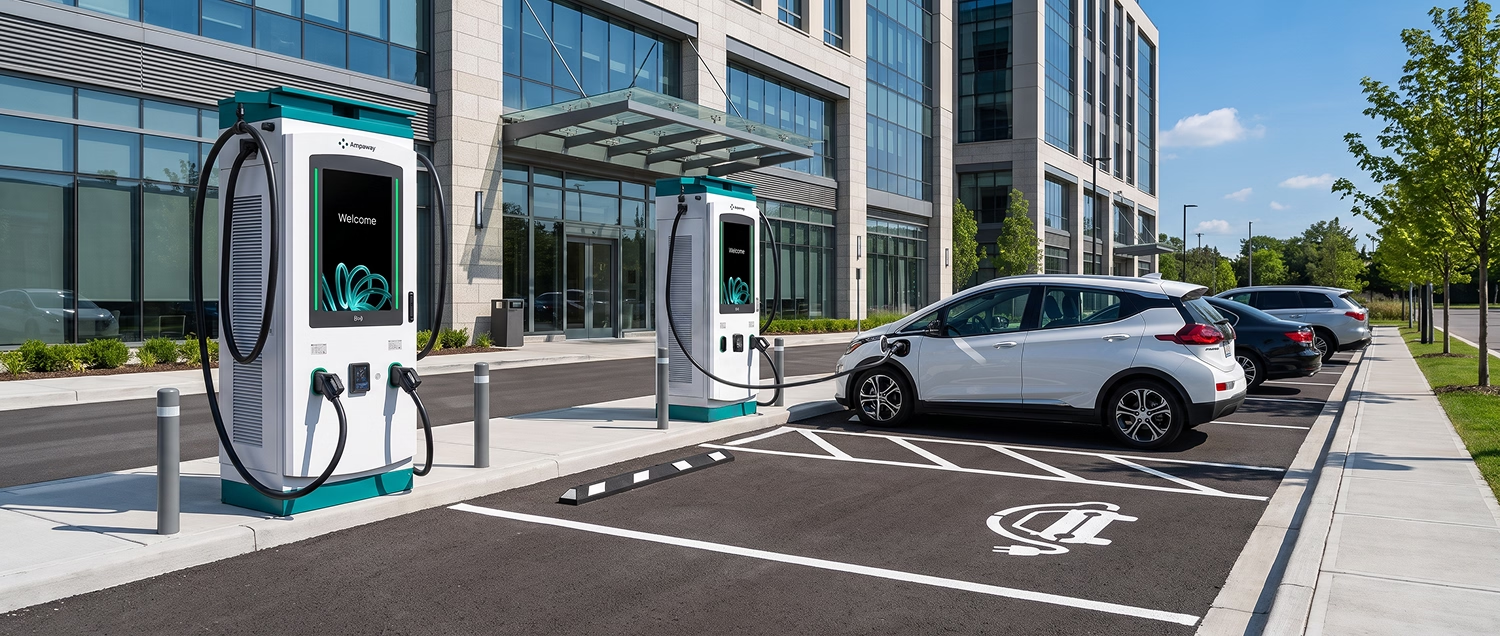
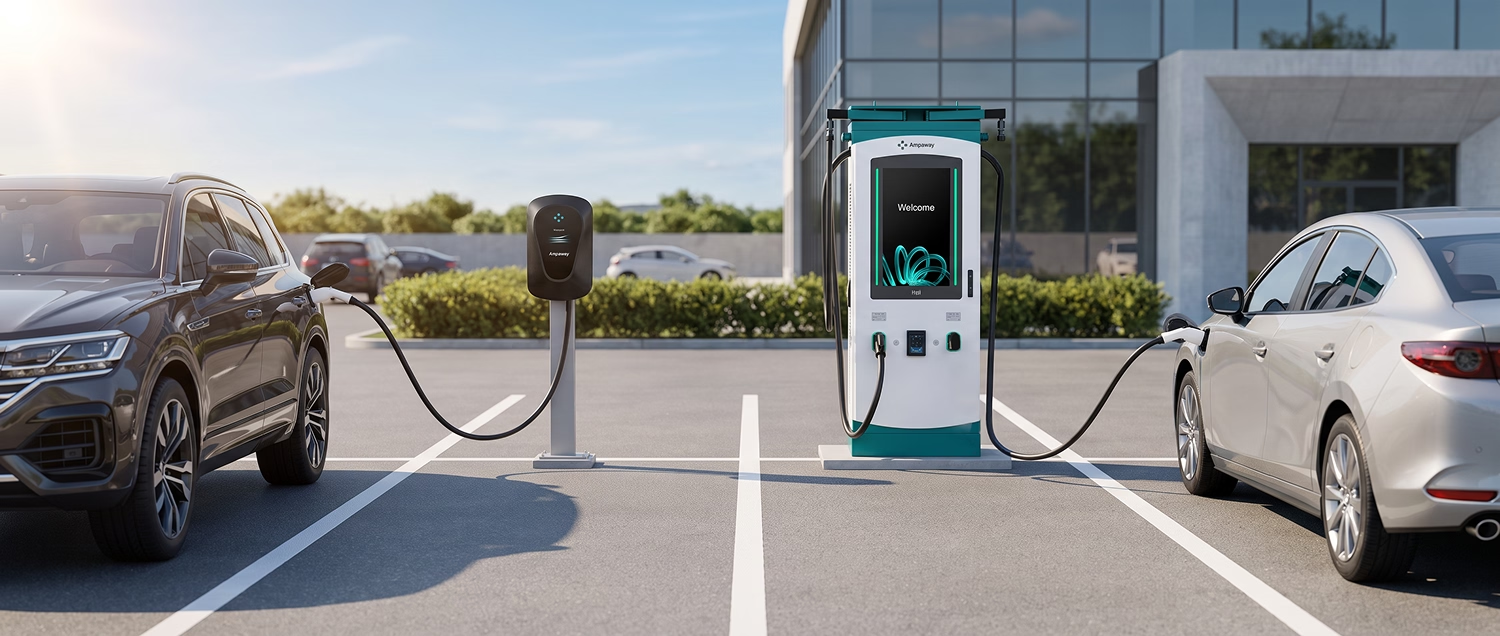
Two properties install EV charging in the same month and spend roughly the same amount, yet get very different results. At one, chargers are used every day and become an additional source of revenue. At the other, they sit mostly empty while the cost of the electrical upgrade cuts into the return. Often, the decision to install AC or DC charging comes down to whether the charger type matches how long vehicles are actually parked.
AC vs. DC EV charging: What's the difference?
EV batteries charge and discharge using direct current (DC), while buildings receive alternating current (AC) from the grid. The key difference between AC and DC charging is where that conversion happens.
With AC EV charging, the conversion happens inside the vehicle. The charger sends AC power to the car, and its onboard charger converts it to DC for the battery. Most commercial AC charging uses Level 2 equipment, and charging speed is limited by the vehicle's onboard charger.
With DC EV charging, the conversion happens inside the charging unit. The equipment converts AC power to DC and sends it directly to the battery, bypassing the vehicle's onboard charger. This allows much higher charging speeds, but DC chargers are larger, more expensive, and place greater demands on the property's electrical system.
Choose AC charging if
- Vehicles stay parked for hours: Ideal for workplace parking, corporate offices, hotels, and long-term commercial garages.
- You want to maximize charging spots: Lower power draw lets you install more ports across your property within existing electrical limits.
- Upfront capital and service costs are a priority: Lower hardware, installation, and maintenance costs mean less capital at risk and make it easier to phase the project as demand grows.
Choose DC fast charging if
- Dwell times are short: Essential for locations where drivers need a rapid turnaround in 20–60 minutes, such as highway stops or quick retail.
- High turnover drives revenue: Serving multiple vehicles per port each day generates more daily charging volume and traffic.
- You operate commercial fleets: Critical for last-mile delivery and logistics fleets requiring mid-shift fast top-ups to stay on schedule.
AC EV charging for commercial properties
Most commercial parking has one thing in common: vehicles often remain parked long enough for Level 2 charging to be practical. Employees may leave their cars for a full shift, hotel guests often park overnight, and visitors to malls or mixed-use centers may stay for an hour or more. With that kind of dwell time, Level 2 charging can add a meaningful amount of range during a typical visit, often without the high equipment and installation costs associated with DC fast charging.
Lower electrical demand. AC chargers use much less power per unit than DC equipment, which can make it easier to add charging without upgrading the property's electrical service or installing a new transformer.
Simpler installation. AC Level 2 installations generally require less electrical infrastructure than DC charging. That can mean simpler permitting and construction, with less disruption to the parking area.
More charging points with the available capacity. Because each charger uses less power, a property can spread its available electrical capacity across more parking spaces. The same electrical service that supports two DC fast-charging ports may support 15-20 Level 2 ports, allowing the site to serve more vehicles and expand the installation as demand grows.

Where AC charging works best
AC Level 2 is often a good fit for properties where vehicles stay parked for several hours or where visits typically last an hour or longer:
- Corporate offices and shift-worker parking. Staff who leave their vehicles parked for most of a shift have enough dwell time for Level 2 charging.
- Hotels. Guests typically park overnight, giving them plenty of time to charge.
- Destination retail and mixed-use centers. Malls, cinemas, gyms, and dining destinations where visits run an hour or longer give drivers enough time for Level 2 charging to add meaningful range. Shoppers can add range while they browse, making charging an added amenity.
- Commercial parking facilities. Operators can install chargers across multiple spaces and offer charging as an additional paid service.
DC EV charging for commercial properties
In contrast to AC charging, DC fast charging is designed for locations where vehicles do not stay parked for long. It’s particularly useful for high-turnover spots, where charging time directly affects how quickly a vehicle can get back on the road.
- Much faster charging. DC chargers handle the AC-to-DC conversion themselves, bypassing the vehicle's onboard charger and allowing them to deliver significantly more power. That makes them useful when drivers only have 20–60 minutes to charge.
- Higher electrical demand. A single 150 kW DC charger can draw as much power as roughly 20 Level 2 ports. Depending on the property's existing capacity, installation may require a service upgrade, a new transformer, or coordination with the utilit.
- More involved installation. DC equipment is larger and typically requires more space, electrical engineering, and site work. Projects may also involve longer permitting timelines, trenching, or other changes to the parking area.
- Higher upfront cost. The hardware, electrical infrastructure, and installation make DC charging considerably more expensive per port than AC Level 2.
- More vehicles served per post. A DC charger can serve multiple vehicles in a day, while an AC charger may be occupied by the same vehicle for several hours.
Where DC fast charging makes sense
DC fast charging works best in places where drivers are only stopping for a short time. This includes fleet and delivery depots, logistics sites, public charging locations, transportation hubs, and short-visit retail such as grocery stores and quick-service restaurants, where visits often last 15–30 minutes and Level 2 charging would add only a few miles of range.

Key factors to consider when choosing between AC and DC charging
Four questions usually narrow down the choice between AC and DC. Work through them in order, and you’ll have a much clearer idea of what fits the property.
- How long are vehicles parked? If cars typically stay for several hours, AC can usually meet the need. If most vehicles leave within 30-60 minutes, DC may be worth considering.
- How many vehicles need to charge? A property serving a few EVs each day has very different requirements from one where dozens of employees or customers need to charge regularly.
- How much electrical capacity is available? The property's existing electrical service ultimately determines what can be installed. Many commercial buildings were designed around lighting, HVAC, elevators, and other loads, leaving limited capacity for EV charging.
- What do you want the chargers to achieve? The right choice also depends on the business goal. Employee charging, public charging revenue, and fleet operations can all lead to different requirements, even at properties with similar parking.
AC vs. DC EV charging ROI for commercial properties
Charging speed is only one part of the business case. The overall numbers come down to three things: what you spend upfront, what it costs to operate, and how much revenue the chargers generate.
- Upfront costs. These include the hardware, electrical work, and installation labor. DC chargers typically cost much more per port than AC equipment, and any required service upgrade or transformer can add significantly to the project cost.
- Ongoing costs. Electricity, demand charges, software or network fees, maintenance, and service all affect the cost of running a charging site. DC fast chargers are more complex than AC equipment and may require more specialized servicing. Demand charges can also be significant because they are based on a property's peak power draw during a billing period.
- Revenue and utilization. Charging revenue depends on factors such as pricing, utilization, and how many vehicles each port can serve in a day. A DC charger that serves several vehicles in a day can generate more revenue than an AC port occupied by one vehicle for hours. If utilization is low, the higher upfront cost can take longer to recover.
How energy management changes the decision
Electrical capacity can look like a serious limitation, but EV load management can make better use of the capacity a property already has. Without it, chargers may need to be sized around their maximum potential draw. Dynamic load balancing instead distributes available power across active charging sessions in real time, increasing or reducing power as needed.
For example, if a property has 400 amps of spare capacity, about 320 amps may be available for continuous loads. If every charger were sized to draw its maximum power at the same time, that would support roughly eight 40-amp Level 2 ports. In reality, chargers rarely operate at full power all at once - some vehicles may be nearly charged, while other parking spaces are empty. Dynamic load balancing takes advantage of that unused capacity, allowing the same electrical service to support two to three times as many ports by adjusting power as demand changes. The exact number will depend on the chargers, vehicles, and site conditions.
If the property already has a building energy management system, check how the charging solution will integrate with it.

What to look for in a commercial AC EV charger
There is no single best commercial AC charger. The right choice depends on different factors. When comparing models, look at:
- Power output per port and whether it fits the property's available capacity
- Load management to distribute power across multiple charging sessions
- OCPP support if you want the option to use different charging software in the future
- ISO 15118 support if you want Plug & Charge, where the driver plugs in, and the session starts and bills automatically, with no app or card
- Connectivity such as Ethernet, Wi-Fi, or cellular, particularly for underground garages
- Number of ports per unit, which affects installation requirements and cost per parking space
- Connector compatibility with the vehicles you expect to serve
- Durability for outdoor or high-traffic locations
- Access control and billing for employee, tenant, customer, or public charging
Features can vary significantly between models, even within the same product line. Always check the specifications and supported software features of the exact model you're considering.
What to look for in a commercial DC fast charger
DC fast charging is a larger investment, so the charger needs to fit both the property's electrical capacity and the way vehicles operate. When comparing models, look at:
- Rated output and charging curve. Peak kW is only part of the picture. Check how much power the charger can sustain and how much energy a vehicle can actually gain during a typical charging session.
- Power sharing and simultaneous charging. If one unit has multiple connectors, check how its available power is divided when more than one vehicle is charging.
- OCPP support and backend integration. Confirm the specific OCPP version and profiles supported, and make sure the charger can exchange the session, meter, and authorization data your software needs for billing and reporting. Ask about ISO 15118 support too, since that is what enables Plug & Charge and lets the charger read vehicle data the software can use for load management.
- Fleet management features. For depots, look for scheduling, vehicle assignment, charging reports, and other tools that fit your dispatch process.
- Remote monitoring and service. Check how faults are detected, how quickly support responds, and who handles repairs and replacement parts.
- Connector compatibility. Make sure the charger works with your current fleet and any vehicle models you expect to add.
- Scalability. Consider whether the system can support additional chargers as the fleet or charging demand grows.
Can a commercial property use both AC and DC chargers?
For many properties, the practical answer is a mix of AC and DC. A mixed-use development is a good example. Employees can use AC charging while they are parked for the day or overnight, keeping the cost per space lower and making it easier to provide charging across more parking spots. Visitors and retail customers have less time, so a small number of DC chargers near the entrance can provide faster charging without taking up spaces intended for long-term parking.
Fleet depots can use the same approach. Vehicles can charge on AC overnight, when there is more time to charge and electricity may cost less, while a few DC chargers can handle vehicles that return between shifts and need a quick top-up before their next route.
Installation and infrastructure considerations
EV charging station installation on a commercial property should start with the electrical service, not the parking layout. An assessment shows how much capacity the building has, how much is already being used, and how many AC or DC chargers the site can realistically support. Panel space is just as important as available electrical capacity. A building may have enough spare amperage for EV charging but no open breaker positions, which could mean adding a subpanel to the project.
The site layout comes next. Getting power to the parking spaces may require conduit, and longer routes or paths across drive aisles and landscaped areas can mean trenching and repaving. The distance from the electrical room also affects installation costs, while the parking layout determines cable reach, equipment clearances, bollard placement, and accessibility requirements.
Permitting and utility coordination can have a bigger impact on the schedule than the physical installation, especially when an electrical upgrade is involved. Start those processes early. It’s also worth checking network connectivity during planning. Underground garages may have limited Wi-Fi coverage, making a wired or cellular connection a better option for keeping chargers connected.
How Ampaway can help commercial properties choose and deploy EV charging
Planning commercial EV charging infrastructure involves more than choosing the right hardware. Ampaway manages the project from initial planning through ongoing support.
We start with a site assessment to understand the property's available electrical capacity and determine what it can support. To overcome high upfront capital hurdles and optimize ROI, Ampaway offers a zero-upfront funding model that allows commercial properties to deploy charging infrastructure without initial equipment or setup costs. From there, we recommend a charging setup that fits the site's needs and handle the electrical planning, permitting, and installation with our own crews.
The software is part of the system as well, with features such as dynamic load balancing, remote monitoring, access control, and reporting. Load balancing can help make better use of existing electrical capacity and support additional chargers as demand grows.
The Ampaway Management Platform is certified under OCPP 2.0.1 with ISO 15118 Support, covering smart charging and Plug & Charge authorization. Ampaway is currently the only US company on the Open Charge Alliance certified products list holding that certification. For a property, it means the charging setup runs on open, certified protocols rather than a closed system, and drivers can charge without an app or a card where the hardware and vehicle support it.
Once the chargers are live, Ampaway continues to handle maintenance and support, including hardware and software issues. As charging demand increases, the system can be expanded without having to start the project over.
Ampaway has installed more than 1,000 AC chargers to date. If you're deciding between AC and DC for your property, we can assess the site and help determine which setup makes sense for your needs.