Commercial EV charging projects can involve high upfront costs. Chargers are only part of the expense; electrical upgrades, trenching, permitting, and utility work can add substantially to the total. EV charging rebates for businesses can help offset these costs, but programs vary widely in eligibility, funding amounts, and application requirements. In this guide, we break down the main commercial EV charging incentives available to businesses, including federal and California programs, and explain what you need to know before applying.
How EV charging incentives can reduce project costs
Property owners often start by estimating their commercial EV charging station cost. Commercial EV charging station incentives can absorb much of that expense. For example, eligible projects under the federal NEVI program can receive up to 80% federal funding, while some California programs provide rebates covering a larger share of approved project costs.
The potential return can also depend on the property and how the chargers are used. At a retail center, charging can encourage drivers to spend time on-site while their vehicles charge. At a workplace, it can provide employees with convenient charging during the workday. Depending on the business model, charging can also generate direct revenue through paid charging sessions.
Categories of commercial EV charging Incentives and application timing
Commercial EV charging incentives generally fall into three categories: grants, rebates, and formula-funded programs. Grants are typically competitive, with applications evaluated against program-specific criteria before funding is awarded. Rebates provide a predetermined amount based on eligible equipment or project costs, usually after the project meets the program’s requirements. Formula-based programs allocate federal funding to states according to a predetermined formula, with individual states then determining which projects receive funding through their own solicitations.
Timing is an important consideration when applying for commercial EV charging rebates and grants. Application windows may remain open for only a few months, while some programs require an issued permit and final utility service design at the time of application. Because permitting and utility design can take longer than the funding window, starting the planning process early helps ensure your project is ready when applications open. If you plan to install an EV charger at your business within the next year, the programs below outline where EV charging incentives for businesses are available and what each one requires.
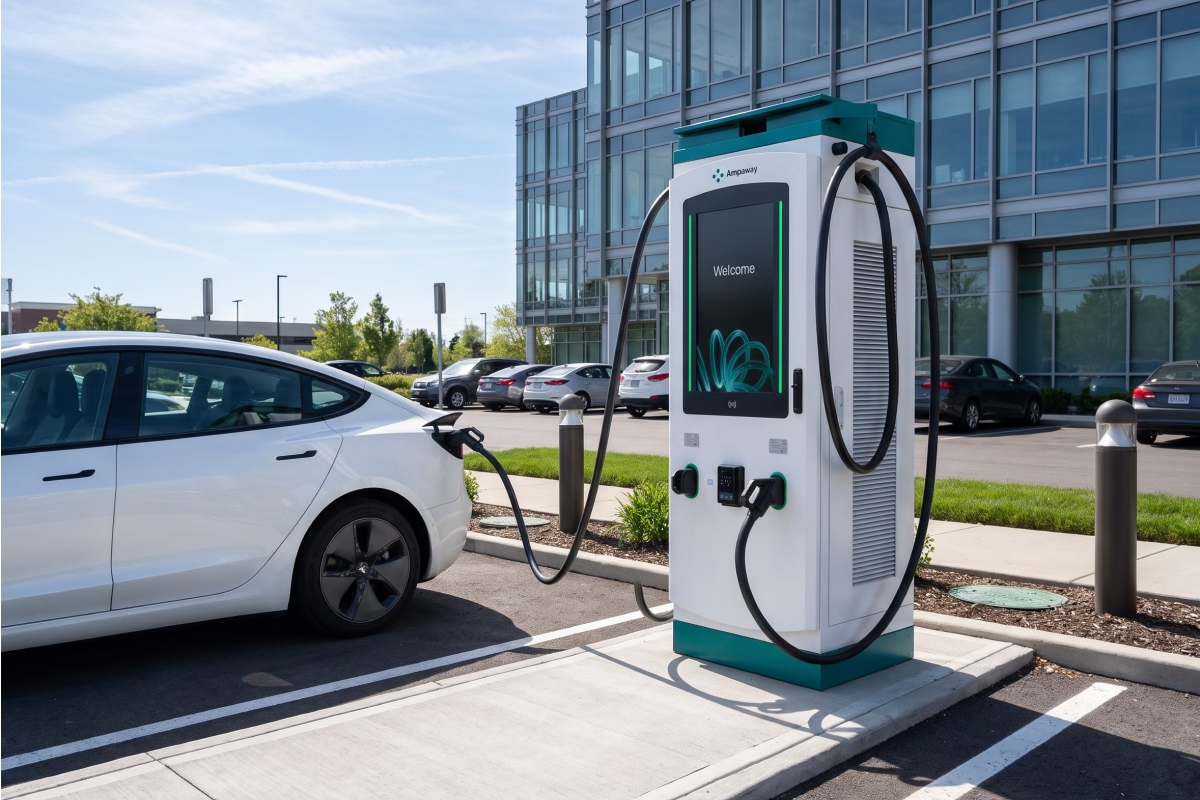
Commercial EV charging incentives at a glance
The table below compares the main federal, California, regional, and utility EV charging incentives discussed in this guide.
* Last updated: October 9, 2026. Incentive amounts, application windows, and funding availability can change. Confirm current program requirements before beginning an application.
Federal & national incentive programs
Federal funding for EV charging rarely goes directly from the federal government to a business. Most federal commercial EV charging incentives are distributed through states or other public agencies, which then select projects and private-sector partners through their own funding programs. For businesses, the key questions are which agency is administering the funding and what role the business can play in the project.
30C Alternative Fuel Vehicle Refueling Property Tax Credit
The federal Alternative Fuel Vehicle Refueling Property Credit, commonly known as the 30C tax credit, previously helped businesses offset the cost of installing qualified EV charging equipment. For eligible business property, the credit generally covered 6% of qualified costs, up to $100,000 per item, or 30% when prevailing wage and apprenticeship requirements were met. Eligibility was also limited to qualifying low-income or non-urban census tracts.
The credit is no longer available for new charging projects placed in service after June 30, 2026.
National Electric Vehicle Infrastructure (NEVI) formula program
The National Electric Vehicle Infrastructure (NEVI) Formula Program is a major federal funding program for EV charging infrastructure. It allocates more than $5 billion to states on a formula basis from fiscal year 2022 through 2026, including $885 million apportioned for FY2026. The program was initially focused on building public DC fast-charging infrastructure along designated Alternative Fuel Corridors, with states required to prioritize corridor buildout before directing funds to other eligible projects.
NEVI projects can receive up to 80% federal funding, with the remaining 20% provided as a non-federal match. For businesses participating as site hosts or developers, that match can represent a significant share of the project cost, making it an important consideration when planning a charging project.
The program has evolved since its launch. After NEVI was paused in early 2025, the Federal Highway Administration issued updated guidance on August 11, 2025. The revised rules give states more flexibility, including broader site eligibility and simplified certification of corridor buildout. Reliability requirements remain in place: funded charging ports must maintain an average annual uptime of at least 97%, making ongoing operation and maintenance an important part of a project's requirements.
Businesses do not apply directly to the U.S. Department of Transportation for NEVI funding. Instead, they participate through state-level solicitations as site hosts, developers, charging operators, or equipment and network providers. For example, a retail center or travel stop might provide the site while a charging company handles installation and operations. Because each state sets its own application schedule and selection criteria, available opportunities depend on the property's location. Program details and state plans are available through the Joint Office of Energy and Transportation.
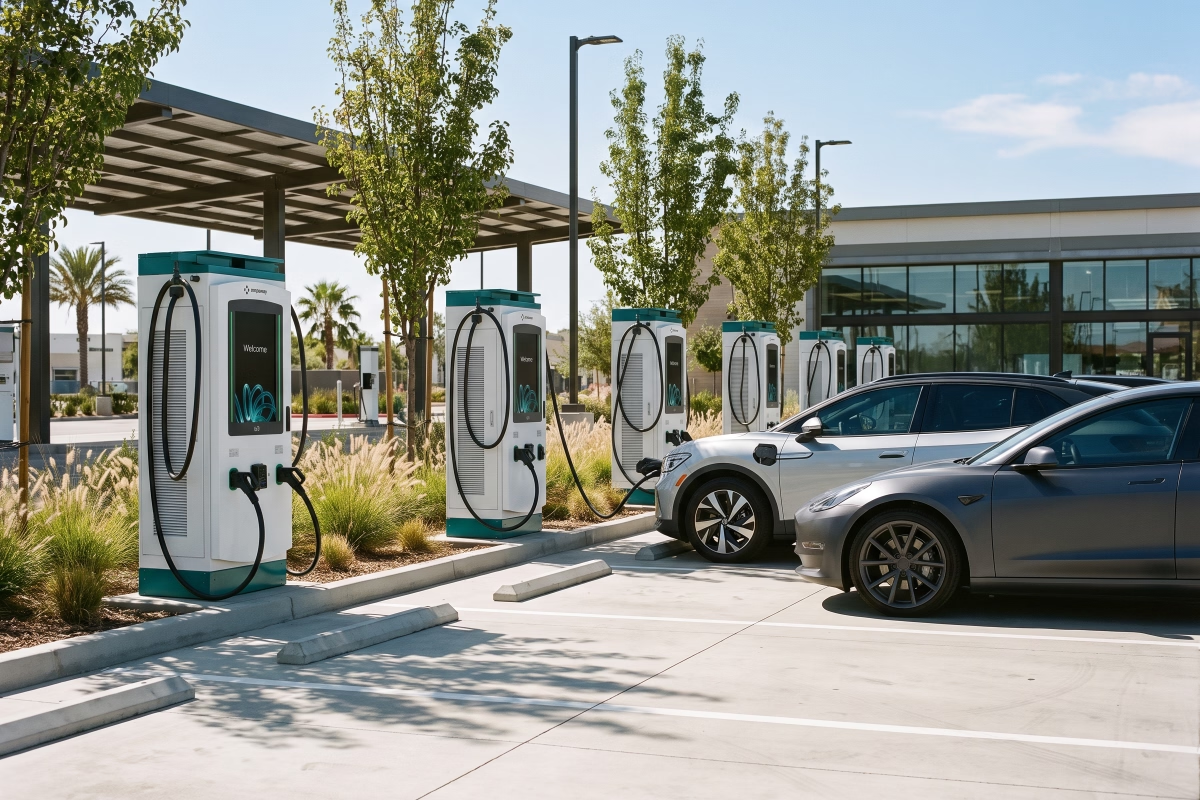
FTA low or no emission + bus & bus facilities program (FY2026)
The Federal Transit Administration's FY2026 funding round offered $610 million for bus programs, including $21 million through the Buses and Bus Facilities Program and $589 million through the Low or No Emission Grant Program.
Applications have closed on September 21, 2026, with selections due within 75 days by statute, or around early December 2026. Current and past funding notices are available on the FTA website.
California state & regional grant opportunities
California supports EV charging through three main channels. The California Energy Commission (CEC) runs statewide solicitations, including the state's share of NEVI funding. Statewide incentive programs administered by the CEC, such as CALeVIP and Communities in Charge, typically provide set amounts based on eligible chargers or ports. Regional air districts fund projects within their respective service areas.
Several funding opportunities are currently open or expected between now and May 2027. They cover projects ranging from public DC fast charging along highways to Level 1 and Level 2 charging at multifamily properties. The right opportunity depends on factors such as the type of site, charger type, public-access requirements, site readiness, equipment ownership, and who will use the infrastructure.
California NEVI — GFO-25-603 (Solicitation 6 community charging)
This is California's current NEVI round, with applications due October 16, 2026, at 11:59 PM through the California Energy Commission's online system. The Energy Commission is offering up to $79 million in competitive grants for publicly accessible, high-powered DC fast-charging stations that support light-duty EV travel along major corridors.
The round accepts applications directly from private entities, excluding investor-owned utilities. Proposed stations must meet NEVI requirements, including at least four 150 kW DC fast chargers per location. Applicants cannot propose sites that received awards in California's first three NEVI rounds, and no single applicant can receive more than 35% of the total available funding.
The application requires more than a project description. Applicants must provide a preliminary site plan, letters of commitment, state and federal environmental review forms, a utility verification form, and match funding. With the October 16 deadline approaching, properties that have not already completed much of this groundwork may not be ready for the current round. For future opportunities, the California Energy Commission’s NEVI program map shows eligible corridors and existing awards, making it a useful starting point when evaluating potential sites.
CALeVIP Fast Charge California — funding windows 2 & 3
CALeVIP is California's main source of commercial EV charging rebates for public fast charging. In May 2026, the California Energy Commission announced $55.2 million in new funding, split across two application windows. The first window of the Fast Charge California Project awarded $54 million for more than 1,200 fast-charging ports across 35 counties, illustrating the scale of the program.
Three rules apply to both windows:
- First-come, first-served processing. Projects in disadvantaged communities, low-income communities, and on tribal lands receive priority in the application queue.
- Payment after completion. Incentives are issued only after installation is complete and the chargers are operational, so applicants need to plan for construction costs before receiving the rebate.
- Broad cost coverage within set limits. Projects can include four to 20 ports, with eligible costs covering equipment, installation, design and engineering, extended warranties, and qualifying networking and service agreements.
Window 2 opens October 7, 2026, and closes January 14, 2027. It offers up to $55,000 per port for 150 to 274.99 kW equipment, or up to $100,000 per port for equipment delivering at least 275 kW, covering up to 100% of approved costs. The incentive is based on the guaranteed output available to each port, rather than the station's nameplate rating.
Projects applying through Window 2 must be ready to build, with an issued permit and final utility service design. At least half of the site's connectors must be CCS. Dedicated charging hubs, hotels, and business districts are not eligible for this window.
Window 3 opens February 24, 2027, and closes May 27, 2027. It offers up to $55,000 per port regardless of power level, with a minimum output of 150 kW. This window accepts both CCS and NACS (J3400) connectors, with at least one CCS connector required per site.
For many projects, the choice between the two windows comes down to timing and incentive structure. Window 2 offers higher incentives for higher-powered equipment and requires applicants to be ready to build, with permits and final utility service design in place. Window 3 gives projects that are not yet ready additional time to reach that stage before the February 2027 application window, but they must still meet the program's ready-to-build requirements when they apply.
Eligible Fast Charge California equipment must also meet the program's networking and interoperability requirements, including Open Charge Alliance certification to OCPP 2.0.1 or later. Full requirements are available on the CALeVIP program page.
Communities in charge — funding wave 5
Communities in Charge is the program most relevant to apartment owners. The program is funded by the California Energy Commission and implemented by CALSTART, with Funding Wave 5 expected to launch in fall 2026. Like the previous wave, Wave 5 is expected to provide incentives for Level 1 and Level 2 charging in multifamily housing.
Incentive amounts for Wave 5 have not been announced, but Wave 4 provides a useful reference point. It offered up to $56.5 million, with up to $8,500 per Level 2 port and $2,000 per Level 1 charger. It favored ready-to-go applicants and used a scoring rubric that gave priority to disadvantaged, low-income, and tribal communities.
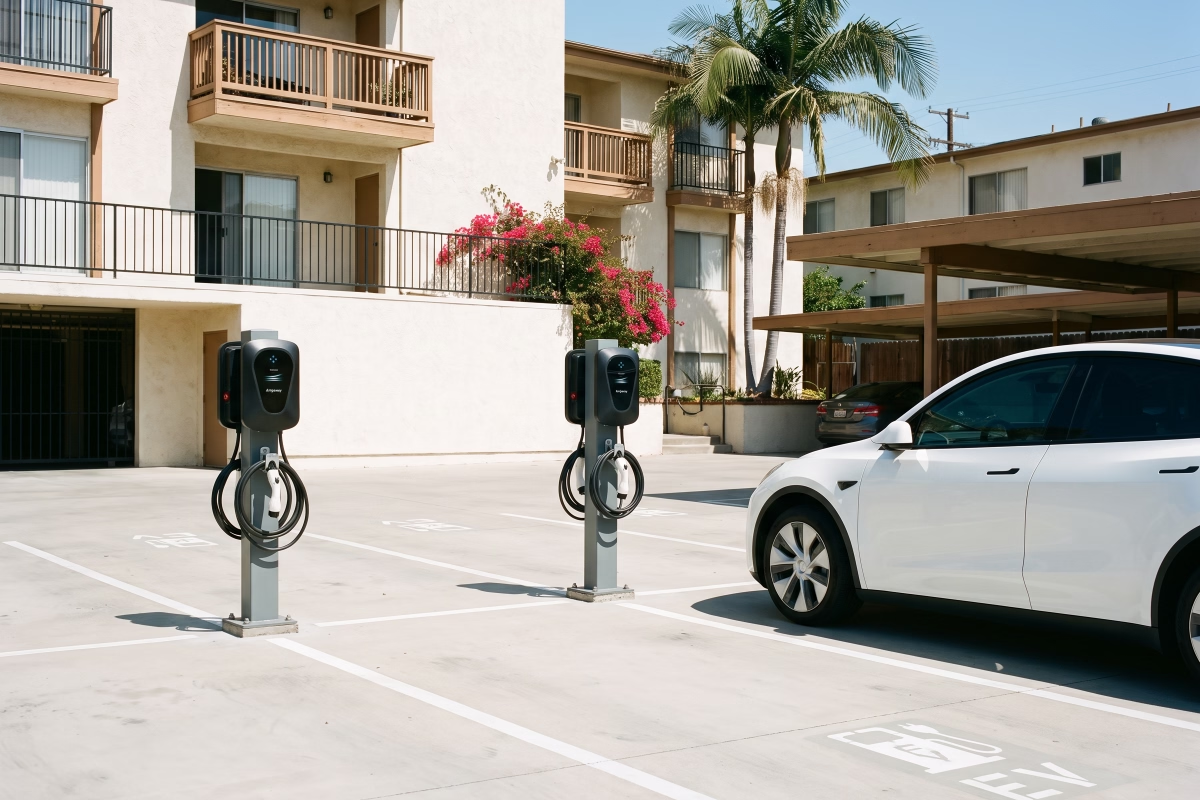
For multifamily and mixed-use properties, Level 1 and Level 2 charging can align with residents' typical parking patterns. Tenants often park for several hours or overnight, making lower-powered charging suitable for regular daily charging without the higher infrastructure requirements of DC fast charging. Owners considering an application can use the time before the next funding round to assess electrical capacity, plan parking layouts, and identify potential installation partners.
Bay Area Air Quality Management District (BAAQMD) programs
The Air District's current opportunity is the Port Emission Reduction and Electrification Pilot Program. It offers up to $20 million in grants, with at least 75% of the funds reserved for zero-emission projects. Applications opened September 3, 2026, and close at 5:00 PM PDT on November 9, 2026. Eligible, complete applications are funded on a first-come, first-served basis until available funds are exhausted.
This pilot focuses on port operations, making it relevant to freight operators, cargo-handling businesses, and the fleets and depots that serve Bay Area ports. It is less applicable to typical retail, workplace, or residential charging projects. Applicants must first contact the Air District's freight and marine team to discuss their project and receive access to the online application portal. The District recommends reaching out early to confirm eligibility and project readiness.
For other commercial sites in the region, the better fit is the Air District's Charge! program, which funds EV charging through the Transportation Fund for Clean Air. At least $10 million was available in its fiscal year 2025 solicitation. Owners of Bay Area parking facilities and workplaces should monitor the program for future funding opportunities.
California utility EV charging rebates and incentive programs
California utilities also offer EV charging incentives that can help cover charger or electrical infrastructure costs. Availability depends on the property's utility territory, charger type, site use, and other eligibility requirements. Some programs focus on Level 2 charging for commercial and multifamily properties, while others primarily support medium- and heavy-duty fleets.
Southern California Edison Charge Ready
Southern California Edison's Charge Ready program has supported EV charging at commercial, public-sector, and multifamily properties through infrastructure assistance and charger rebates. Previous program incentives varied by charger type and property, including higher incentives for qualifying disadvantaged-community sites.
SCE is no longer accepting new Charge Ready applications. Existing applicants must have fully signed program agreements in place by December 31, 2026. Property owners in SCE territory should therefore check SCE's current EV charging programs before planning a project around Charge Ready funding.
LADWP Commercial EV Charger Rebate Program
The Los Angeles Department of Water and Power's Commercial EV Charger Rebate Program has offered incentives for commercial EV charging installations in LADWP territory. Previous program terms provided up to $5,000 per Level 2 charger in disadvantaged communities and up to $125,000 for qualifying DC fast chargers.
The previous enrollment period has ended, but LADWP says a new enrollment opportunity with revised funding amounts, terms, and documentation requirements is planned for October 2026. LADWP's FY2026–27 funding dashboard currently shows $45 million allocated for Level 2 charging and $20 million for DC fast charging, with those funds pending release. Property owners should confirm the new incentive amounts when the next enrollment period opens.
PG&E EV Fleet Program
PG&E's EV Fleet Program supports charging infrastructure for medium- and heavy-duty commercial fleets. Eligible projects can receive make-ready infrastructure support, while charger rebates are available for certain fleets and locations. Current charger incentives can cover up to 50% of equipment costs, with maximum rebates of $15,000 per charger up to 50 kW, $25,000 from 50 to 150 kW, and $42,000 for chargers above 150 kW.
PG&E also states that several state incentive and rebate programs can be combined with EV Fleet funding, although eligibility and stacking requirements must be checked for each program.
SDG&E Power Your Drive for Fleets
SDG&E's Power Your Drive for Fleets program supports charging infrastructure for Class 2–8 medium- and heavy-duty fleets in SDG&E territory. Under one ownership option, SDG&E pays for, constructs, owns, and maintains infrastructure up to the charging station, while the customer purchases and maintains the chargers. Under the customer-owned infrastructure option, SDG&E can provide a rebate covering up to 80% of eligible customer-side infrastructure costs.
Participating fleets must generally commit to at least two electric fleet vehicles, provide charging data for at least five years, and operate and maintain the vehicles and chargers for at least 10 years.
SMUD Commercial EV Program
SMUD currently offers some of the clearest utility incentives for commercial charging. Standard incentives include $2,500 per handle for Level 2 charging below 6.6 kW and $3,500 per handle for Level 2 charging at 6.6 kW or above. Qualifying equity sites can receive $5,000 and $7,000, respectively.
For eligible non-public DC fast charging, standard incentives range from $7,500 to $30,000 per handle depending on charging power, with equity incentives ranging from $15,000 to $60,000. SMUD also offers incentives for qualifying stub-outs, panel upgrades, and transformer
upgrades.
Key factors to qualify for commercial incentives
Eligibility rules vary by program, but three requirements are common across many of them.
Permit and utility readiness
Programs like CALeVIP require an issued permit and final utility service design at the time of application, making project readiness a key eligibility requirement. Funding is limited and, in some programs, applications are processed in the order they are received. In the first Fast Charge California window, oversubscribed ready-to-build applicants were placed on a waitlist, and applications that remained on the waitlist after the cutoff were canceled.
Reaching that stage takes time. Every EV charging station installation starts with a load assessment and site plan, followed by permitting and a utility service request. The utility's design process alone can take months, particularly when a site requires a new transformer or service upgrade. Completing this work before a funding window opens can give a project a better chance of meeting application requirements when funding becomes available.

Connector standards
Connector requirements vary across programs: NEVI and earlier CALeVIP rounds mandate CCS1 connectors, whereas newer funding windows permit or integrate NACS (SAE J3400). Review the specific program rules prior to procuring hardware. Selecting hardware that supports current connector requirements while allowing flexibility for CCS and J3400 can make it easier to adapt as vehicle and funding-program requirements evolve.
Load management
Electrical capacity is often what limits how many chargers a site can support. Smart EV charging solutions with dynamic load balancing distribute available power across chargers in real time, allowing a site to support more chargers without necessarily requiring a service upgrade.
For example, a site with 400 amps of available capacity can typically support about 320 amps of continuous EV charging load. At 40 amps per charger, that works out to roughly 8 chargers if they all draw full power at the same time. With dynamic load balancing, the same electrical capacity can often support more charging ports because the system adjusts power as vehicles plug in, charge, reach higher states of charge, and leave.
Avoiding or reducing the need for a service upgrade can lower total project costs, helping a per-port rebate cover more of the overall installation. It may also simplify the utility design process by reducing the amount of new electrical infrastructure required. Some incentive programs also require networked chargers that can be monitored and managed remotely, which can be handled through the same charging management software.
How Ampaway helps manage EV charging costs and incentives
Rebates and grants can reduce total project costs, but some programs reimburse eligible expenses only after equipment and installation costs have been incurred. That can leave the incentive recipient responsible for financing construction before receiving the rebate. Ampaway offers different project structures depending on the property owner's goals.
Under the zero-upfront-cost revenue-sharing model, Ampaway covers hardware, installation, software, and setup and owns the charging equipment. The property owner can earn a share of charging revenue without funding the installation upfront.
Property owners can also choose an owner-funded installation. Under this structure, the owner funds and owns the charging infrastructure and receives applicable rebates or incentives, subject to each program's eligibility requirements.
Ampaway can also identify applicable CALeVIP and utility incentive opportunities during project planning. Where program rules allow, Ampaway can also prepare and file CALeVIP and utility rebate applications on the property owner's behalf, helping manage the application process alongside the charging installation.
Under the zero-upfront model, Ampaway also covers ongoing maintenance, support, and repairs for hardware and software issues, excluding damage caused by misuse. Drivers contact Ampaway support directly, so property teams do not have to manage day-to-day charging issues.
Ampaway handles each commercial EV charging station installation with its own team, from site assessment and permitting through electrical work and activation. Keeping design and installation in-house reduces the number of parties involved and gives Ampaway direct oversight throughout the project.
The company has installed more than 1,000 chargers. Ampaway is listed in CALeVIP's EV charging provider directory as an equipment manufacturer, installer, and network provider, with Level 2 and DC fast charging equipment and its own Ampaway charging network.