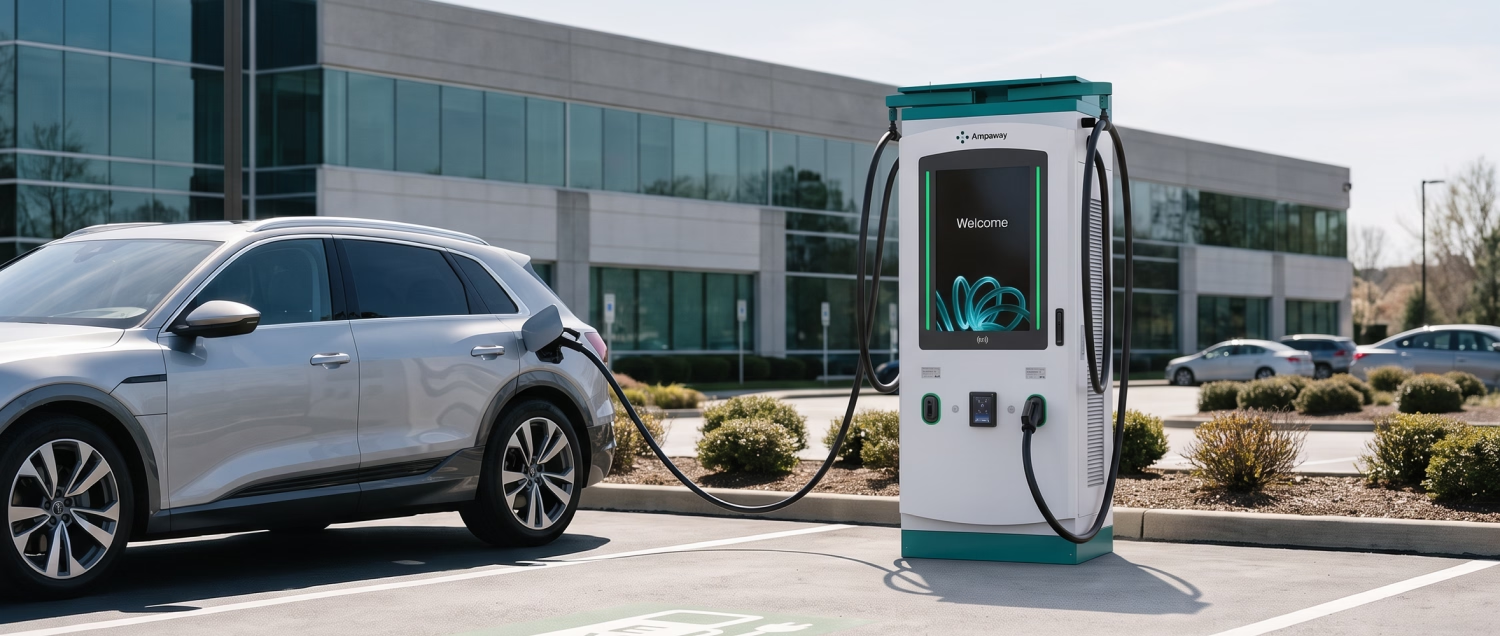
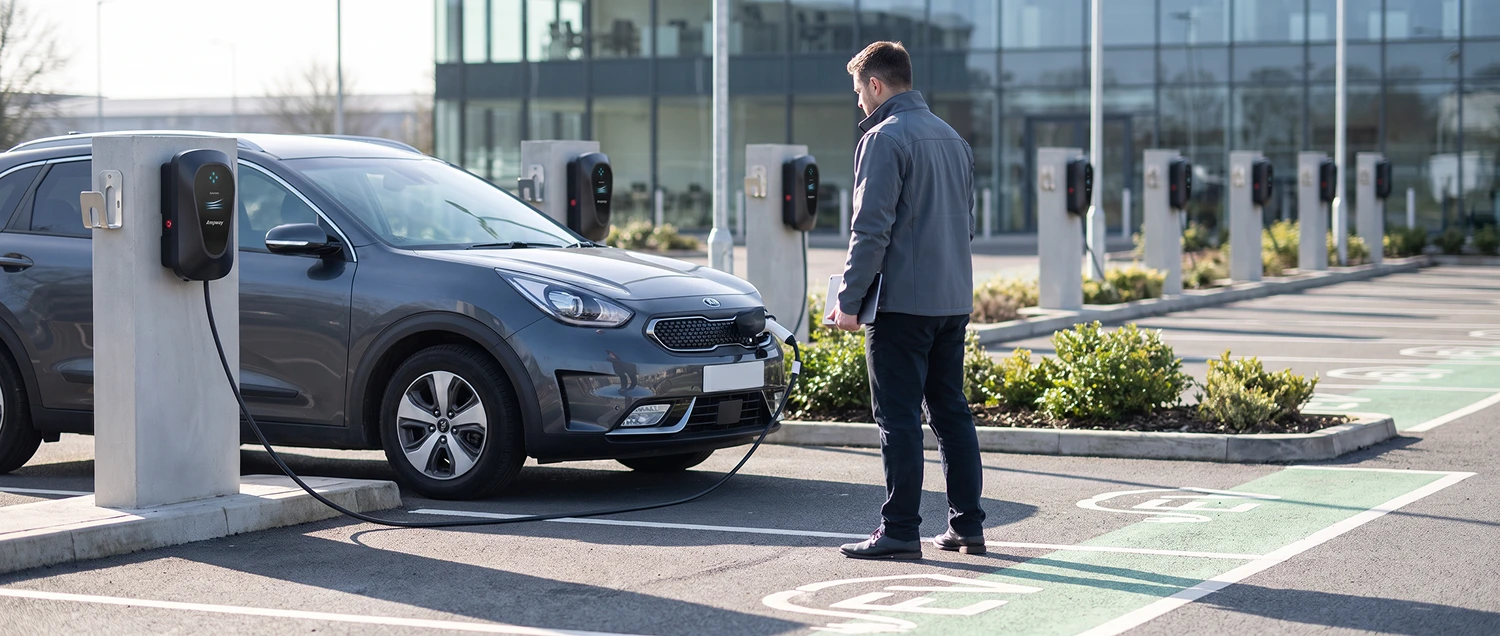
EV chargers can generate solid revenue for property owners, but the EV charging station business model behind them determines how much you earn, what you spend to get there, and how much ongoing responsibility stays on your plate. Full ownership, revenue share, and managed service arrangements each carry a different cost and control profile. The right fit depends on your property type, your capital position, and how hands-on you want to be.
The three main models property owners use
Property owners evaluating EV charging typically encounter three arrangements. In a full ownership model, you buy the hardware, fund the installation, and keep all charging revenue. In a revenue share arrangement, a provider covers the upfront costs and operates the chargers in exchange for a percentage of session earnings. A managed service model is somewhere in between: you fund the installation but hand day-to-day operations to a third party. Each model distributes cost, revenue, and responsibility differently, and understanding those differences is what makes the final decision easier.
1. Full ownership
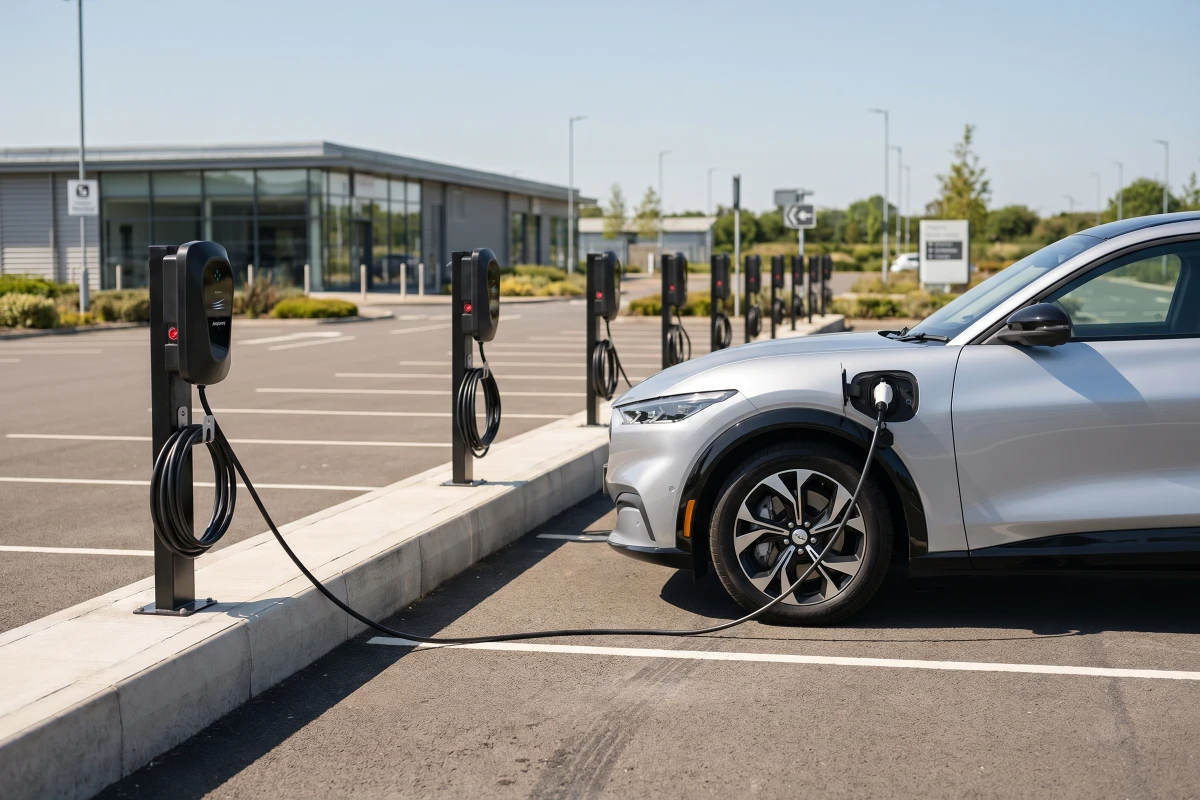
With full ownership, you purchase the hardware, fund the installation, and collect all session revenue directly. No splits, no provider taking a cut, no dependency on a third party for pricing or management. For properties with consistent EV demand and owners thinking in terms of a long-term asset hold, that level of control financially makes sense.
The operational requirements are real. You'll need a software platform to handle driver access, billing, and reporting, which typically comes with a licensing fee and a monthly or per port fee. Maintenance and hardware support fall on you as well, either managed in-house or contracted out separately.
On hardware, it's worth confirming before purchasing that any charger is OCPP 1.6 certified and compatible with OCPP 2.0.1. OCPP is the open protocol that determines whether your chargers can work with different software platforms. Without it, you may find yourself locked into a single software provider simply because your hardware won't support anything else. The decision starts earlier than most owners expect, at the level of EV charger types and what each one implies for cost, speed, and long-term flexibility.
Full ownership works best for owners with the capital to absorb upfront costs and properties where utilization is high enough to generate meaningful returns independently.
2. Revenue share
In a revenue share arrangement, a charging provider installs and operates the chargers at no cost to the property owner. You contribute the parking space and access to your electrical infrastructure. The provider handles hardware, installation, software, and ongoing service, and takes a percentage of session revenue in return.
You give up a share of earnings and some control over how sessions are priced. What you gain is zero capital exposure and no maintenance responsibility. When a charger goes offline or a driver has a billing issue, that falls to the provider.
Before signing any agreement, it's worth understanding how the split is structured, whether the percentage is fixed or tiered, and what the contract term looks like. A low split locked into a long contract can be difficult to exit if a better arrangement becomes available.
Fleet operators sit in a slightly different position. If chargers are installed exclusively for a company's own vehicles, the arrangement typically involves a software fee with no revenue sharing, since there are no external EV drivers generating session income. Revenue sharing applies when a fleet location is opened to outside companies under a rental or lease arrangement. That distinction affects how access and pricing get structured from day one, and it carries real weight for anyone working through the broader financial case for investing in EV charging stations across multiple sites.

3. Managed service
A managed service arrangement means you fund the hardware and installation, but contract a provider to handle operations. That typically covers software access, driver support, monitoring, and maintenance response, usually priced as a monthly fee, a per-charger charge, or a combination of both.
The asset stays on your books, but the operational workload transfers to the provider. Compared to full ownership, the service fee reduces net revenue, but so does the time and coordination that full ownership requires internally.
This model suits owners who want to retain the asset for balance sheet or tax purposes but don't have the internal capacity to run operations day to day.
How revenue actually gets calculated
Most EV charging revenue is generated on a per-kWh basis. The property owner or provider sets a rate per kilowatt-hour, drivers are billed based on the energy their vehicle draws during a session, and revenue accumulates across sessions over the course of the month.
What actually determines monthly earnings is utilization, meaning how often the chargers are in active use. A Level 2 charger delivering around 7.2 kW per hour, priced at $0.50 per kWh, generates roughly $3.6 per hour of active charging. At 25% utilization across a 24-hour day, that's around $648 per charger per month.
At 40% utilization, that figure increases to approximately $1,037 per charger per month. For a small installation of five chargers, increasing utilization from 25% to 40% raises monthly gross revenue from roughly $3,240 to $5,184. A larger installation of 20 chargers operating at 40% utilization generates approximately $20,736 per month before any revenue sharing or operating costs.
Those numbers are realistic for properties still building EV driver adoption. High-traffic retail locations or dense multifamily properties with a large share of EV-driving residents can push utilization higher, but it typically takes time to get there. Projections based on peak utilization from day one rarely reflect how EV charging stations business model economics actually develop in practice.
In a revenue share arrangement, the gross session revenue is divided between the provider and the property owner according to the agreed split. The split percentage matters, but so does the provider's pricing strategy, since a provider setting rates too low to attract drivers affects the gross figure that the percentage is applied to.
What to ask before choosing a model
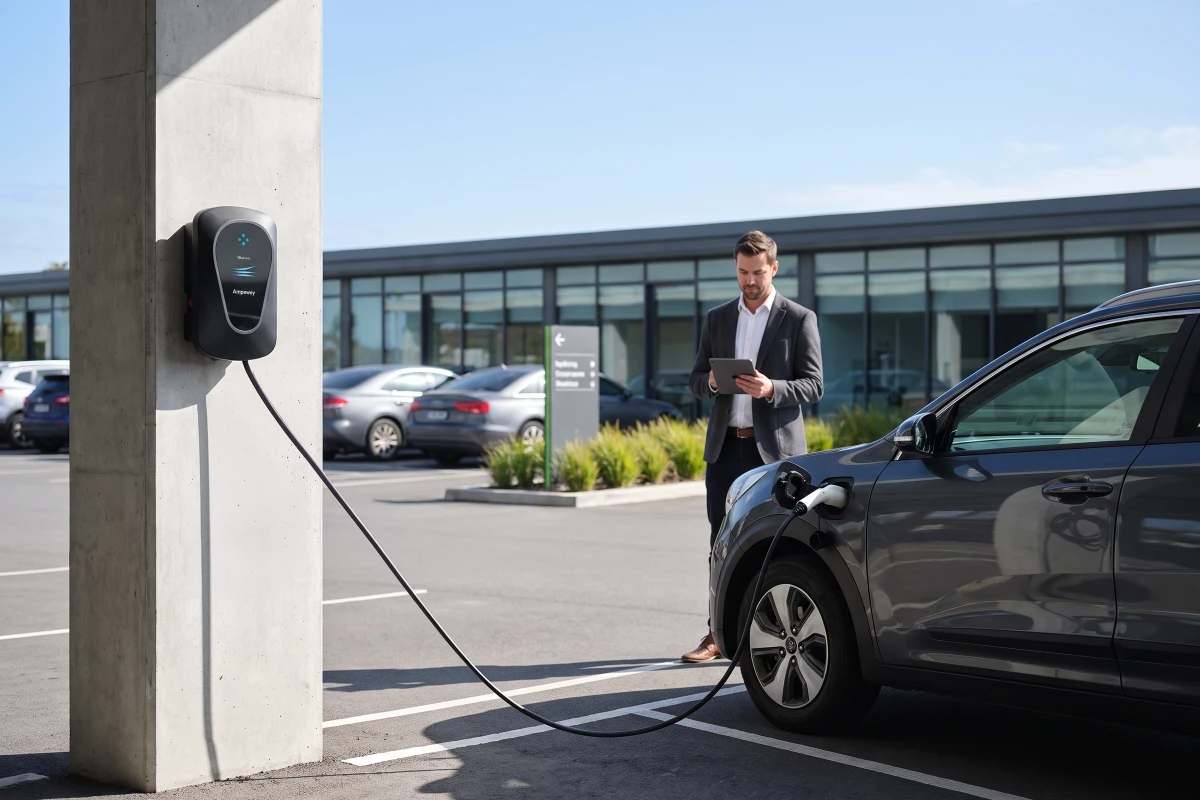
Most provider conversations move quickly toward contract terms. Coming in with the right set of questions can be a real benefit during this negotiation stage.
- Who covers maintenance costs when hardware fails? In a revenue share arrangement, a reputable provider should cover this. But the specifics matter: does that include parts, labor, and software issues, or just certain categories of fault? Get the scope in writing.
- How is revenue reported and paid out? You should have visibility into session data, not just a monthly deposit. Ask whether the platform gives you real-time access to charging activity, how payouts are calculated, and how frequently they're issued.
- Is the software proprietary or built on an open standard? If a provider's software is built entirely in-house and the hardware isn't OCPP-compatible, switching providers later may mean replacing the chargers too. Understanding this in advance prevents a costly dependency down the line.
- What happens if the provider exits the market or is acquired? It's a practical question, not a pessimistic one. Smaller providers can be acquired, pivot, or shut down. Your contract should specify what happens to your chargers, your data, and your revenue stream in that scenario.
- How is the pricing set, and can it be adjusted? In a revenue share model, the provider typically controls session pricing. Understanding how rates are set, how often they change, and whether you have any input matters for forecasting what you'll actually earn over the contract term.
How Ampaway structures its model
Ampaway operates on a zero-upfront revenue share model, covering hardware, installation, and ongoing service with no cost to the property owner. Hardware, software, and field service are all handled in-house, with no subcontractors involved, which keeps response times shorter and accountability clearer. The revenue split is flexible, structured around the property rather than a fixed rate applied uniformly across all accounts. For owners looking into a turnkey EV charging solution, the model is designed to remove the operational and financial barriers that make most property owners hesitant to commit.
Picking the right structure from the start
The EV charging business model you choose affects more than your revenue line. It determines how much capital you commit, who absorbs the cost when something breaks, and how much of your team's time gets pulled into managing it. Those variables compound over a multi-year contract in ways that are hard to restructure once the chargers are in the ground and an agreement is signed.
A property owner with strong capital reserves and a high-traffic location has different leverage than one looking to add charging as a low-risk amenity. Neither starting point is wrong, but they point toward different arrangements. Getting clear on your own position before entering any provider conversation is what makes the difference between a model that works for your property and one that works against it.
Ampaway supports multiple ownership and operating models, so property owners can choose the approach that best fits their budget, operational capacity, and long-term goals.