
Most businesses spend months deciding which EV chargers to install, then treat the software as an afterthought. That's where a lot of otherwise well-planned projects run into trouble. The chargers are just the hardware. The best EV charging management software makes charging straightforward for drivers, gives property owners direct visibility into usage and revenue, and catches faults before they become complaints.
Get that part wrong, and the whole setup underperforms regardless of how good the chargers are.
What EV charging management software actually does
EV charging management software is the system that sits behind the chargers and keeps everything running. It controls who can access the chargers, tracks usage in real time, processes driver payments, and generates reports for the property owner or operator. When a charger develops a fault, the software is what flags it and, in many cases, allows the issue to be diagnosed remotely without sending someone on-site.
Most platforms cover these functions in some form. The differences show up in how well they're executed, how easy the system is to manage day to day, and who's responsible when something goes wrong.
What you need to manage
Before looking at platforms, it helps to get clear on your own setup. Management software for one property isn't necessarily the right fit for another, and most mismatches come down to a few practical variables.
- Scale. How many chargers are you installing, and across how many locations? A single-site deployment with six chargers has different management needs than a portfolio of properties with dozens of units each.
- Who's charging. Employees, tenants, retail customers, or a mix of all three behave differently and often need to be handled differently in the system. A workplace where only staff use the chargers is simpler to manage than a retail center where any driver can pull in and start a session.
- How billing works. Some properties charge drivers per kWh, others use flat session rates, and some offer charging free to tenants or employees as part of a broader package. The billing model you choose shapes what the software needs to do, and not every platform handles all three cleanly.
- Revenue reporting. If you're investing in EV charging stations as a revenue-generating asset, you need clear visibility into what's being earned, by which chargers, and over what period.
Getting these four things mapped out before you start comparing options saves a lot of time and keeps you from either overbuilding or ending up with a system that can't actually support your operation.
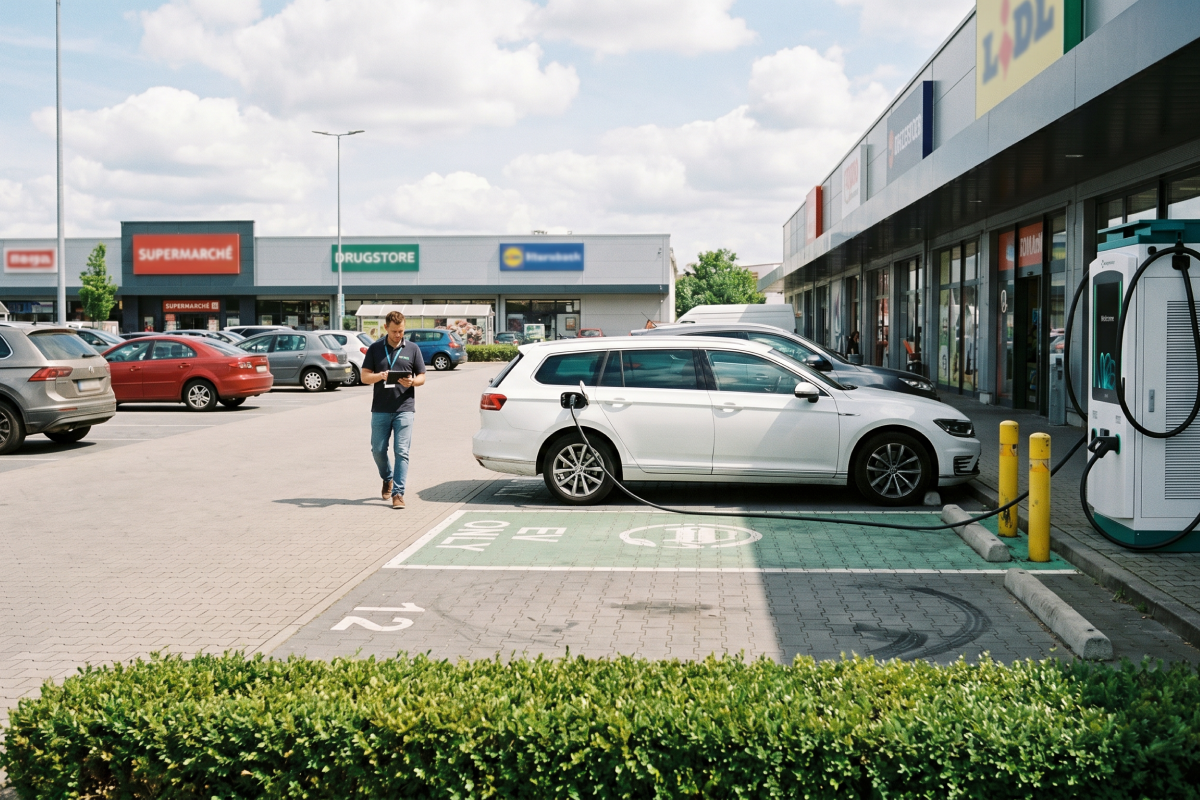
Billing and payment handling
Billing is where EV charging management gets operationally complex, which is why you should think it through carefully before committing to a platform.
How drivers pay
Payment options vary more than most people expect. Some systems require drivers to download an app before they can start a session. Others support RFID cards, which work well in access-controlled environments like apartment buildings or employee parking. A smaller number of platforms allow drivers to tap a credit card directly at the charger, which matters most in retail or public-facing settings where you can't reasonably expect every customer to have an account set up in advance.
Handling multiple user types
The harder problem is managing different billing rules on the same system. A mixed-use property might have tenants on a monthly flat rate, employees charging for free, and retail customers paying per session, all on the same hardware. A well-built EV charging station billing system handles these distinctions without requiring the operator to manually sort out who owes what at the end of the month.
Revenue reporting for property owners
Property owners need visibility into more than just whether payments are being processed. How much is each charger generating? How does usage break down over time? How is the owner's share of revenue calculated? That data should be accessible directly in the platform, without having to request a report or wait on the provider to send one over.
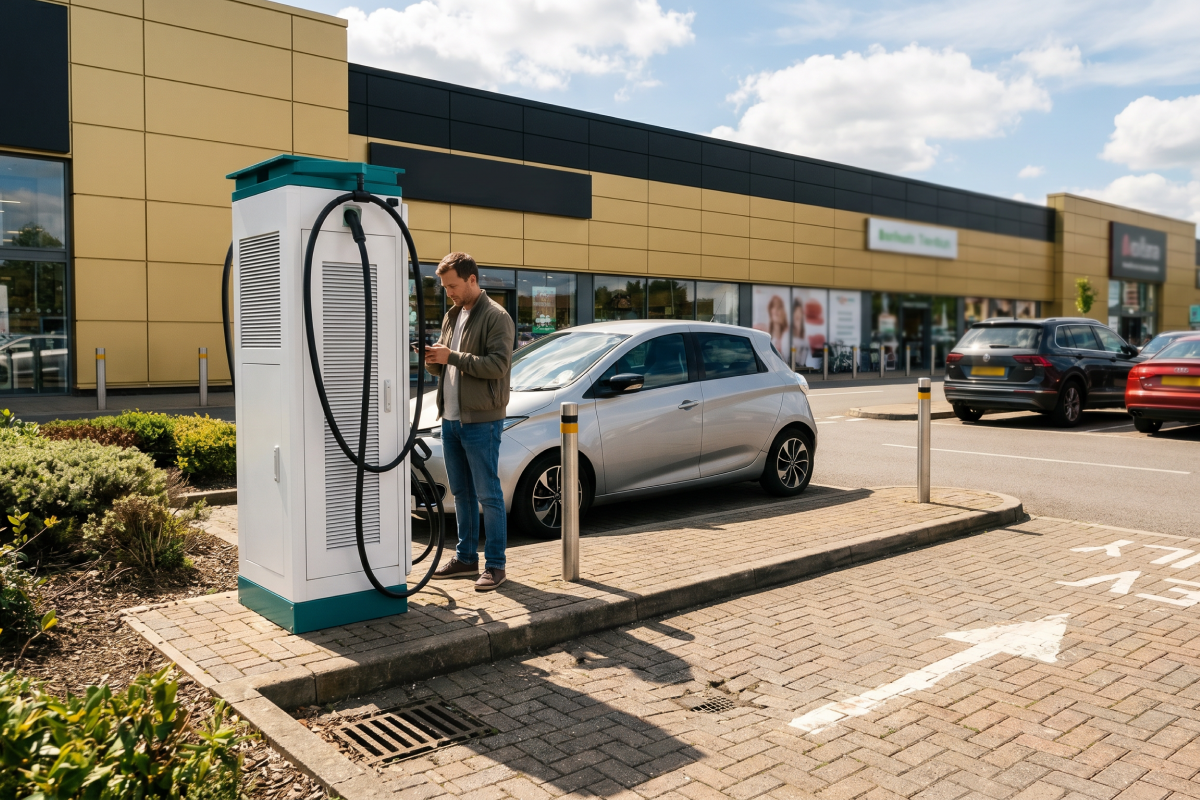
Access and user management
For workplaces and residential properties, access management is less of a setup task and more of an ongoing one. Employees leave, tenants move in and out, and the system needs to keep up without creating extra work for whoever is managing it. A few things are worth evaluating here.
- Driver onboarding. A process that requires manual approval or lengthy registration creates friction from day one. The smoother path is a self-serve flow where drivers sign up independently and get access quickly, with the operator retaining control over who is approved.
- Granting and restricting access. Not every charger should be available to every user. A residential building might reserve certain chargers for specific units. A workplace might restrict access to employees only, while keeping a bay or two open for visitors. The platform should make it straightforward to set and adjust these rules without needing technical support.
- Guest vs. registered users. Registered users are easy to manage because they exist in the system. Guests are harder. For commercial EV charging solutions serving retail customers or visitors, the platform needs a way to handle one-off sessions cleanly, without forcing the driver to create an account or the operator to manually process the transaction.
- Adding and removing users. In a workplace or residential setting, this happens regularly. Removing a user should immediately revoke their access rather than leaving an open session window.
Monitoring and alerts
A charger that goes offline without anyone noticing is a direct operational problem. Drivers can't charge, complaints come in, and if the issue isn't caught quickly, it can sit unresolved for days. How a platform handles monitoring and alerts often determines how much of that risk actually lands on the property owner.
- Real-time status visibility. The platform should show the current status of every charger at a glance. Available, in use, offline, or faulted. Property owners and operators shouldn't have to wait for a driver complaint to find out something isn't working.
- How faults are flagged. There's a meaningful difference between a system that logs faults passively and one that actively pushes alerts when something goes wrong. The latter means issues get caught faster, often before any driver encounters them.
- Who receives the alerts. This is where platforms vary significantly. Some systems send fault notifications only to the software provider, leaving the property owner out of the loop until they follow up. Operators should have direct visibility into issues, not a filtered view that depends on someone else acting first. This matters most in EV charging solutions for businesses where charger uptime directly affects tenants or customers.
- Remote diagnostics. Many faults can be identified and resolved without sending a technician on-site. A platform with solid remote diagnostic tools reduces response times and keeps maintenance costs down. When a site visit is genuinely necessary, the team arriving should already know what the problem is.

Software ownership and service model
Most people evaluating EV charging platforms don't think to ask who actually built the software. It's worth asking.
A significant number of hardware vendors don't operate their own platform. They license software from a third party and bundle it with their chargers. When something breaks, the hardware vendor and the software provider each have partial visibility into the problem and no direct accountability for the other's piece. Support requests get passed between teams, response times stretch, and the property owner is left waiting while two companies work out whose issue it is.
A provider that owns and operates its own software has a different accountability structure. There's one team responsible for the full system, which means faster diagnosis, cleaner issue resolution, and no gap between what the hardware does and what the platform is built to support. That same team controls updates, fixes, and long-term development, without depending on a third-party vendor's roadmap.
When comparing providers, it's a simple question to ask: is this your software, or are you licensing it from someone else? The answer tells you a lot about what support actually looks like once the chargers are in the ground.
How Ampaway approaches EV charging software
Ampaway builds and operates its own management software, which means the same team that installs the chargers is responsible for the platform running them. There are no third-party software vendors in the chain, and no split accountability when something needs fixing.
The platform is built for two distinct users. Drivers get a simple app-based experience: download, sign up with a phone number, scan the charger, and start charging. Property owners get access to a dedicated dashboard where they can monitor charger status, track usage, and view revenue data across their entire portfolio.
On the service side, issues are handled directly by Ampaway's team. When a fault comes in, there's no handoff to an external provider. The people managing the software are the same people resolving the problem.

Questions worth asking any software provider before you commit
Before signing with any EV charging provider, these questions will tell you more than most sales conversations will.
- Who handles software issues when something breaks? You're looking for a direct answer here. If the response involves escalating to a third-party platform or a separate support team, that's a sign of the split accountability problem covered earlier.
- Can drivers pay without downloading an app? In a workplace or residential building, requiring an app is manageable. In a retail or visitor setting, it's a real barrier. Know what your drivers will actually tolerate before committing to a payment flow.
- How is revenue reported to the property owner? Ask to see the reporting interface, not just a description of it. You want to know how often data updates, how it's broken down, and whether you can access it yourself or have to request it.
- Is this your software, or are you licensing it from someone else? A provider running their own platform will answer this without hesitation. If the answer is unclear, follow up until it isn't.
- What happens when a charger goes offline? Ask specifically who gets notified, how quickly, and what the typical resolution process looks like. The answer reveals how much operational risk stays with you versus the provider.
Choosing software that holds up in practice
The chargers are visible. The software isn't, which is exactly why it tends to get less attention during the decision process. But once the installation is done, it's the software that determines how smoothly everything runs day to day, how quickly problems get resolved, and how much operational work stays with the property owner versus the provider.
The questions worth asking before you commit are straightforward: who owns the software, who handles issues when they arise, and how much visibility do you actually have into your own system. A provider that can answer all three clearly is one worth taking seriously.
Good software is built around the people managing the property, not just the drivers using the chargers. That distinction shapes everything from how billing is structured to how faults get handled, and it's the clearest way to separate providers who have thought this through from those who haven't.


