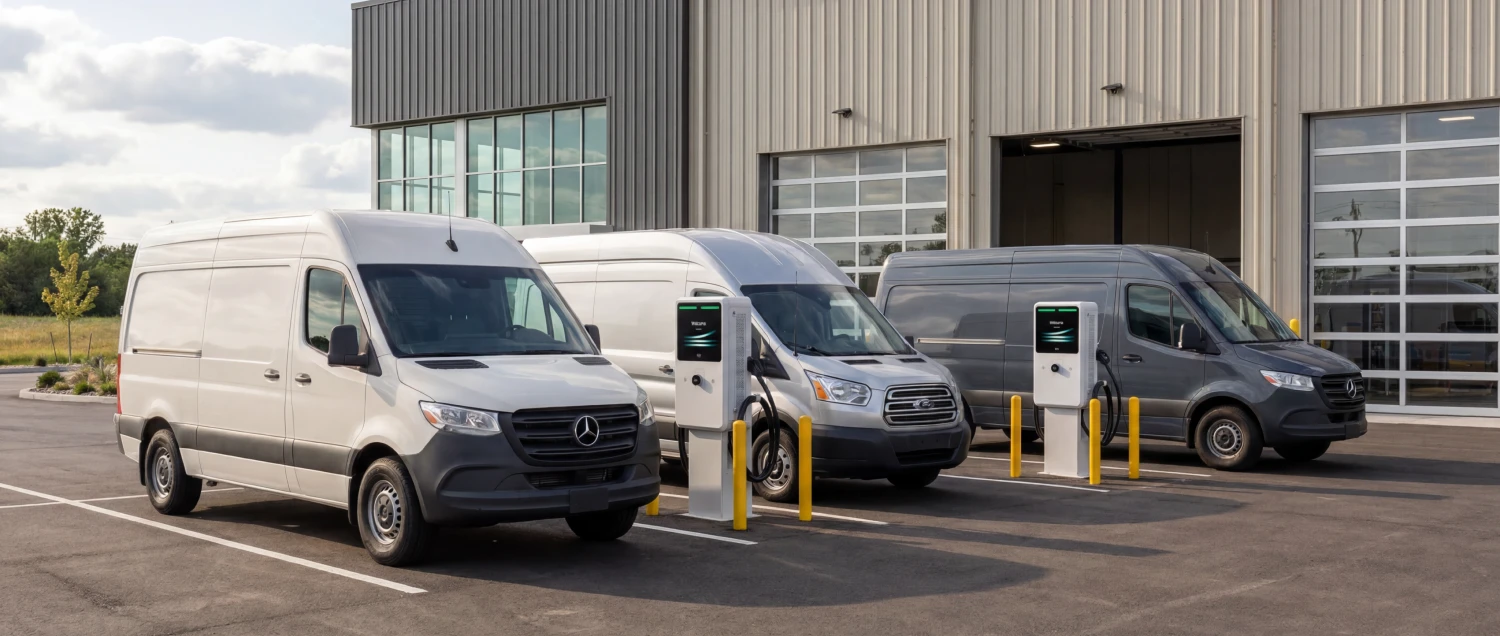
An EV fleet transition looks simple on paper: swap the vehicles, install the chargers, and keep moving. In practice, the gap between planning and execution is where most operations run into trouble, from underestimated infrastructure needs to charging schedules that conflict with dispatch. This guide walks through each stage of the planning process so your fleet can electrify without losing a day of productivity.
Step 1. Start with a fleet audit
Before making any infrastructure or procurement decisions, you need a clear picture of what your fleet looks like today. This means going beyond a simple vehicle count and looking at how each vehicle is used.
Start by pulling together the following for each vehicle or vehicle category:
- Vehicle type and duty cycle. What kind of vehicle it is, how many hours a day it operates, and what kind of routes it runs.
- Daily mileage. A vehicle covering 40 miles a day has very different charging needs than one covering 180.
- Current fuel costs. Breaking this down by vehicle or category gives you a baseline to measure against once you start modeling the cost of charging. It also tends to surface which vehicles are the most expensive to run.
With that data in hand, you can start identifying your best first candidates for an electric fleet transition. The lowest-disruption entry points are usually vehicles with predictable routes, moderate daily mileage, and overnight parking at a central depot. Their charging needs are consistent and manageable without requiring major infrastructure changes upfront.
A thorough audit at this stage saves significant time later. The more clearly you understand your fleet's patterns now, the easier it becomes to size your charging infrastructure, sequence your rollout, and avoid surprises mid-transition.
Step 2. Map out your charging infrastructure needs
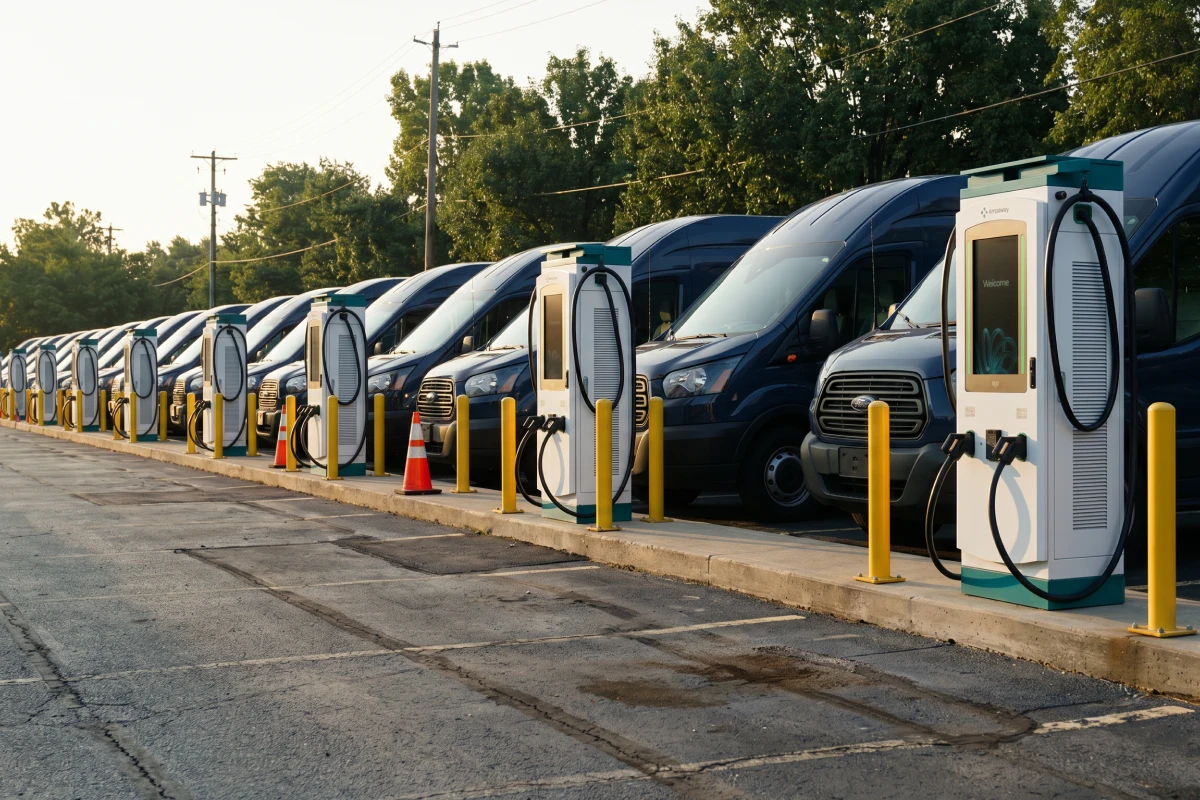
This is where most EV fleet transition plans stall. Fleets underestimate how much charging infrastructure they need, or they overestimate the electrical upgrades required to support it. Getting this right early prevents costly decisions in both directions.
Level 2 vs. DC fast charging
For most fleets, Level 2 charging is the practical choice. Vehicles returning to a depot overnight have 8 to 10 hours to charge, which is enough time for a Level 2 charger to reach full capacity. DC fast charging makes sense for vehicles with long daily ranges or unpredictable schedules, but comes at a significantly higher hardware and installation cost. Your duty cycle data from Step 1 will tell you which category your vehicles fall into. For a full breakdown of output levels and use cases, see our guide to EV charger types.
Calculating your charging capacity
Start with the number of vehicles that need to charge simultaneously, then factor in their battery sizes and your available charging window. Overnight charging patterns are generally easier to plan around because demand is spread across several hours. Daytime or opportunity charging requires more careful scheduling to avoid peak demand spikes that drive up energy costs.
Check: do you need an electrical panel upgrade?
Dynamic load balancing distributes available power across all active chargers in real time. For depots with limited infrastructure, this often means supporting significantly more chargers than a standard panel calculation would suggest, without upgrading the electrical system at all.
Step 3. Understand your real costs
Fleet operators consistently underestimate total cost because the upfront hardware and installation number gets most of the attention. Energy costs, maintenance responsibility, and available incentives are just as consequential over time. Here is how each category actually breaks down.
Upfront hardware and installation
Hardware costs vary depending on charger type, the number of units, and site conditions. Installation adds to that, covering electrical work, trenching if needed, panel modifications, and permitting. For a mid-size fleet depot, this is the category most operators focus on, but it is only part of the picture.
Zero-upfront and revenue-share models
Some charging partners cover the full cost of hardware and installation in exchange for a share of charging revenue. For fleet operators, this model shifts the capital burden entirely off your books. Ampaway covers hardware, installation, and ongoing service, and takes a share of charging revenue in return. What makes this different from most providers is that maintenance, software issues, and service calls stay with Ampaway, not with you. Before committing to any revenue-share arrangement, confirm exactly what the partner covers and what falls back on your team.
Ongoing energy and maintenance costs
Energy costs depend on your utility rate, charging schedule, and whether you can take advantage of off-peak pricing. Charging overnight during off-peak hours can meaningfully reduce the cost per charge compared to daytime charging. Maintenance costs depend largely on who is responsible for them. With an in-house owned system, hardware failures, software issues, and service calls fall to you. With the right charging partner, those costs transfer to them.
Available incentives and rebates
Several programs exist to offset fleet charging infrastructure costs, though eligibility varies more than it might appear at first glance.
On the charging infrastructure side, programs like CALEVIP have historically offered rebates for EV charging installation, but eligibility depends on your region, site type, and the current program window. Private fleet depots are not always eligible, particularly where programs require publicly accessible charging. Regional availability has also shifted, with some project windows closed and funding redirected to other programs. Before building any incentive assumptions into your budget, check what is currently open for your specific sites rather than relying on general program descriptions.
On the vehicle side, California opened the Clean Fuel Reward program in May 2026, offering rebates of $7,500 to $120,000 toward new electric medium- and heavy-duty fleet vehicles, with $250 million available and applications opening in June 2026. That is squarely aimed at fleet operators and worth factoring into your overall cost model alongside infrastructure costs. Federal incentives also exist, with eligibility varying by location, fleet type, and project scope.
The best way to evaluate cost is to separate what you control from what can be transferred to a partner. Upfront capital, energy rates, and scheduling sit on your side. Hardware maintenance, service response, and software uptime do not have to.
Step 4. Plan for operational continuity
For most fleet managers, this may be the most important section. Vehicles need to be available, routes need to run, and the business cannot absorb disruption while infrastructure catches up. A well-structured electric vehicle fleet conversion accounts for this from the start.
Phased rollout vs. full conversion
Converting your entire fleet at once is rarely the right move.A phased rollout lets you electrify a subset of vehicles first, work through any operational adjustments, and scale from a position of confidence. Start with the vehicles you identified in Step 1: predictable routes, moderate mileage, overnight parking. Full conversion follows once the operational patterns are proven.
Route planning and charging schedules
Range anxiety at the fleet level is a planning problem, not a technology problem. Build charging into your operations the same way you schedule maintenance or driver shifts. Assign vehicles to routes that match their range, build in charging windows during natural downtime, and make sure dispatchers have visibility into charge levels before vehicles go out.
When a charger goes down
Before committing to any charging setup, get clear answers on who is responsible for repairs, what the expected response time is, and whether service is handled in-house or through a subcontractor. When service is managed internally, response times are faster and accountability is clearer. When it is subcontracted, you are often dealing with scheduling delays and unclear ownership, which for a fleet that runs daily, has real operational consequences.
Step 5. Choose the right charging partner
The infrastructure decisions covered in the previous steps only hold up if the partner delivering them can actually execute. Here is what to evaluate before signing anything.
End-to-end ownership
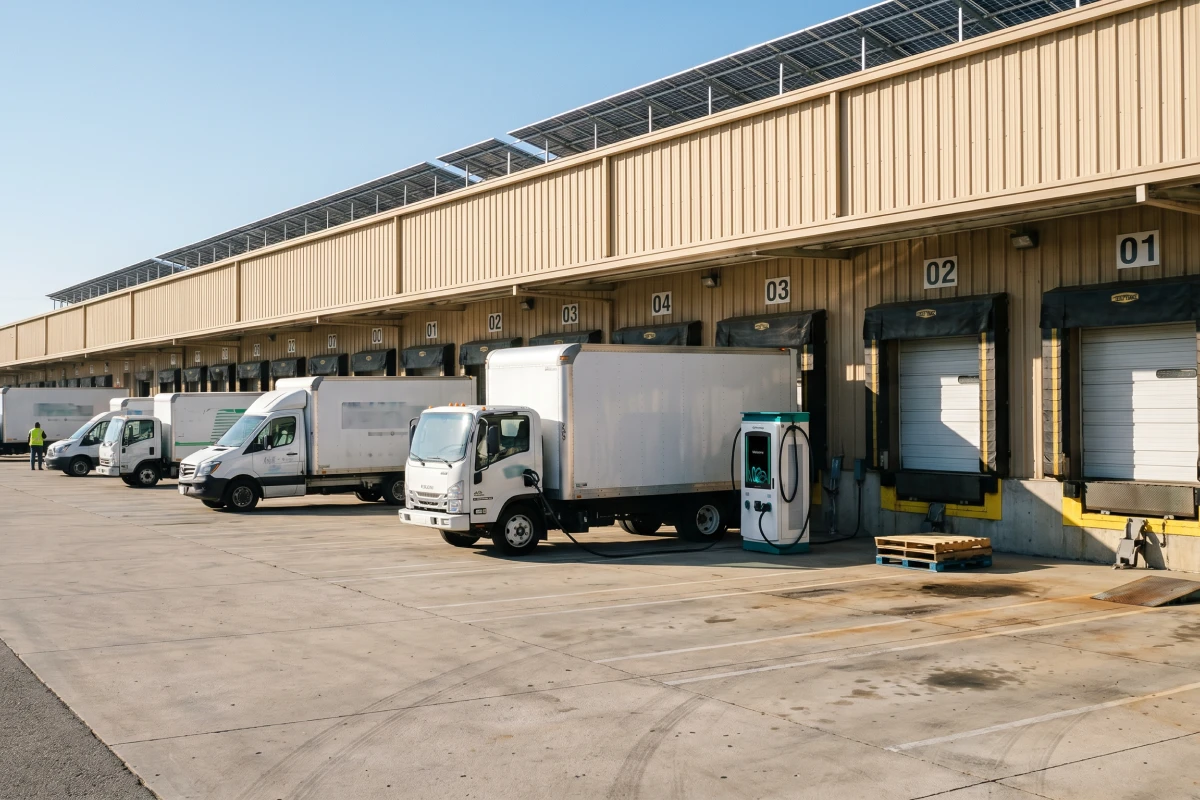
Find out how much of the project a provider owns directly. Some companies handle sales and project management but subcontract installation, hardware, and service to third parties. This creates coordination gaps, diffuses accountability, and often drives up costs. A provider that owns the full process, from hardware and installation through to ongoing operations, gives you a single point of contact and fewer places for things to go wrong.
Service model
Ask directly: when something breaks, who fixes it and how fast? Get a specific answer, not a general assurance. A provider with an in-house service team gives you a clear answer. One that relies on subcontractors often cannot.
Software simplicity
The software your team uses daily should not require training to navigate. Look for a platform that gives fleet operators clear visibility into charger status, energy usage, and session data without unnecessary complexity. If a demo requires a long walkthrough to make sense of basic functions, that is a signal worth paying attention to.
Installation speed
Delays in installation have a direct knock-on effect on your transition timeline. Ask providers for realistic timelines based on comparable projects, and find out what has caused delays in past installations. Providers with construction experience and in-house installation teams tend to move faster and run into fewer surprises on site.
Ampaway covers the full scope of EV fleet charging solutions with no subcontractors, in-house service, straightforward software, and a revenue-share model that removes upfront cost entirely. If you are evaluating turnkey EV charging solutions for your fleet, it’s worth seeing how Ampaway's end-to-end model with zero upfront cost compares to a traditional procurement approach.
The transition to an EV fleet starts before the first charger goes in
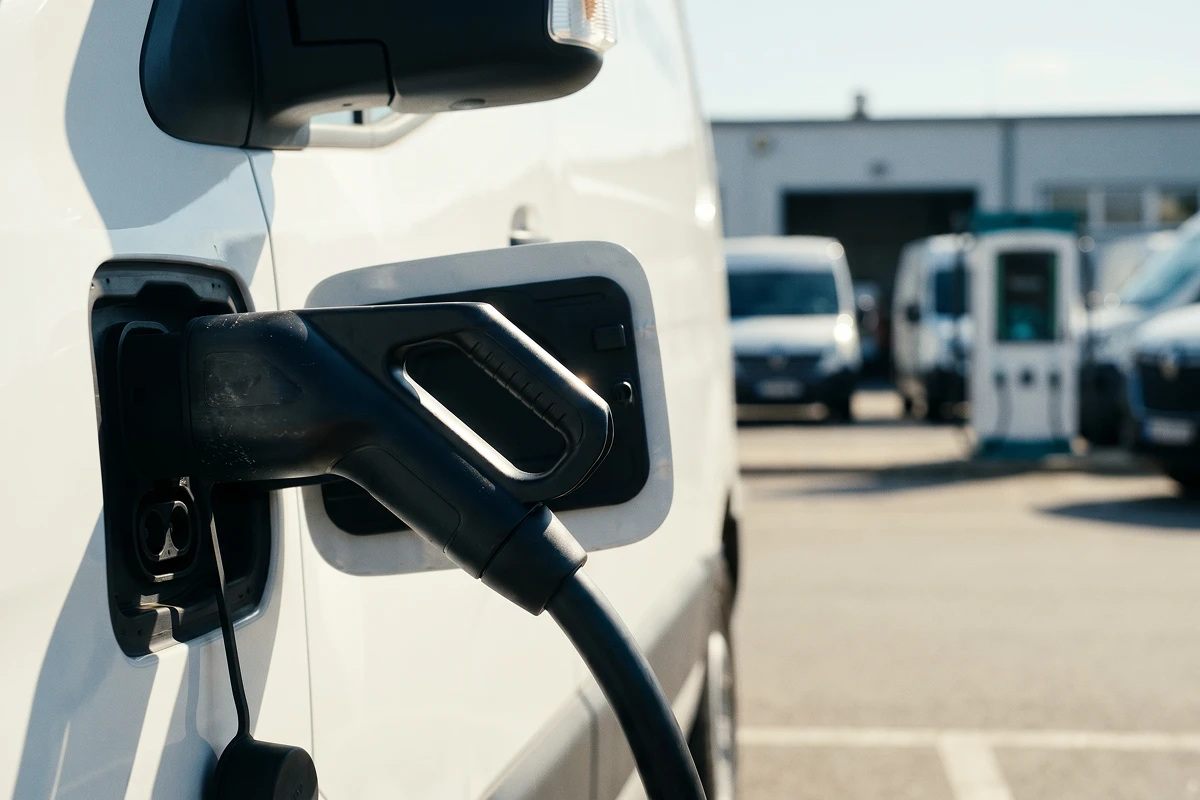
The most common mistake fleet operators make is treating electrification as a procurement decision rather than an operational one. The chargers, the hardware, the vehicles: those are the visible parts. What determines success is everything that happens before any of it is installed.
A fleet audit gives you the data to make confident decisions. A clear infrastructure plan prevents you from over-building or under-preparing. A phased rollout keeps vehicles on the road while the transition moves forward. And the right charging partner means that when something does go wrong, it does not become your problem to solve.
None of this requires a full infrastructure overhaul or an all-at-once commitment that puts operations at risk. The fleets that transition well are the ones that plan around how they actually operate, not around how the technology works in ideal conditions.


