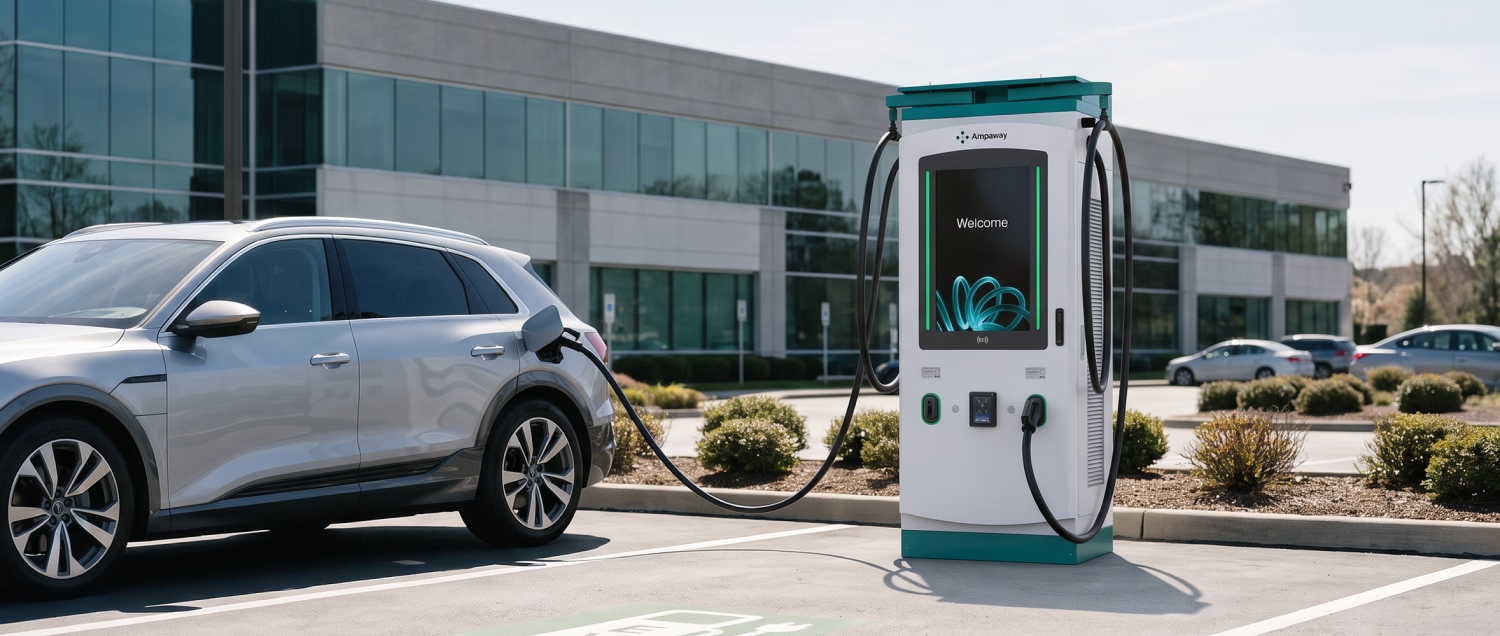

It goes without saying that electric vehicles are more than just a trend. They’re everywhere. You’ll find them in company fleets, employee parking lots, hotel driveways, and retail centers. As more drivers switch to electric, the question for many businesses is no longer if they should offer charging, but how to do it the right way. This means choosing one of the best commercial EV charging solutions.
What this guide will help buyers decide
If you’re exploring EV charging for your business, this guide will help you:
- Understand the different types of commercial chargers
- Learn which features matter most for your use case
- Compare leading providers in the market
- Think through long-term growth and expansion
By the end, you should have a clear picture of what kind of commercial EV charging solution fits your site, your users, and your future plans.
Quick comparison of the best commercial EV charging solutions
What is a commercial EV charging solution?
A commercial EV charging solution is a complete setup for businesses that expect regular, shared use and long-term growth.
Commercial charging needs to support multiple drivers throughout the day. This might include employees at an office, customers at a retail center, guests at a hotel, or vehicles in a company fleet. The system has to manage power safely, handle different users, and stay reliable under daily demand.
A full commercial EV charging setup usually includes the physical charging stations, the software that manages sessions and energy use, the electrical infrastructure and installation work, and ongoing support. When all of these elements work together, businesses get a system that’s easy to manage today and flexible enough to expand in the future.
Types of commercial EV chargers
When choosing a commercial EV charger, one of the first factors to consider is the charger type. For most businesses, Level 2 chargers are the starting point.
Level 2 EV chargers
Level 2 EV chargers usually operate in the 7 to 19 kW power range. They are suitable for steady charging over a few hours, and can add a solid driving range during a workday, a hotel stay, or while someone shops or parks for a longer visit.
That’s why Level 2 chargers are commonly used at workplaces, hotels, and mixed-use properties. These are places where cars stay parked long enough for charging to happen naturally, without the need for very high power.
Pros
- Lower installation cost compared to fast chargers
- Easier to scale by adding more units over time
- Suitable for most daily business use cases
Limitations
- Slower than DC fast chargers
- Not ideal for high-traffic locations that require very quick charging turnaround

DC fast chargers (DCFC)
DC fast chargers operate at much higher power levels than Level 2 units, usually starting around 50 kW and going up to 350 kW or more. This allows vehicles to charge in a much shorter time, which is important in locations where drivers cannot stay parked for long. They are most often used along highways, at transit hubs, in busy public charging sites, and at fleet depots where vehicles need to get back on the road quickly.
Because of their high power output, DC fast chargers require a more complex installation. They often need electrical upgrades and close coordination with the local utility. The equipment itself is also more expensive than its Level 2 counterpart.
Pros
- Very fast charging times
- Ideal for high-traffic locations and fleets
- Supports quick vehicle turnaround
Limitations
- Higher equipment and installation costs
- Greater electrical and infrastructure requirements

Best commercial EV charging solutions for businesses
1. Ampaway
Ampaway provides a full-service commercial EV charging solution designed for property owners, retail centers, workplaces, hospitality operators, and fleet managers who want a smooth and well-managed setup. The team handles everything from site evaluation and design to permitting, installation, activation, and long-term support.
Each project starts with a review of the property’s layout, electrical capacity, and expected demand. Ampaway manages engineering, utility coordination, and available rebates to help lower upfront costs. Once the chargers are live, owners can track usage, revenue, and performance through a user-friendly dashboard, while drivers use a mobile app to find stations and start charging.
Ampaway offers two ways to launch: a no-upfront cost deployment model or a direct investment option with higher long-term revenue potential. Both include software access, support, and ongoing system management.
Pros
- Full-service support from planning to long-term operations
- No upfront cost option available
- Assistance with rebates and incentive programs
- Centralized management dashboard with multi-site performance analytics and operational insights
- Ongoing support and maintenance included
- Advanced load management features
Cons
- Focused mainly on property-based installations rather than highway fast charging
- Availability may vary by region
2. EVgo
EVgo operates one of the largest public DC fast charging networks in the United States. The company focuses on fast, on-the-go charging, with stations located in high-traffic areas such as shopping centers, grocery stores, and major travel corridors.
Its network is built around rapid charging, helping drivers get back on the road quickly. Through the EVgo app, users can find chargers, check real-time availability, monitor sessions, and manage payments. EVgo also works closely with automakers, government agencies, and utility partners to expand infrastructure and offer charging incentives.
Pros
- 800+ conveniently located fast charging stations across 34 states.
- Rates based on regional utility costs to offer lowest possible rates.
- Mainly focused on fast chargers
Cons
- Primarily focused on public fast charging rather than private property deployments
- Higher charging costs compared to slower Level 2 options
- Less tailored for businesses seeking fully managed, on-site charging solutions
3. ChargePoint
ChargePoint is one of the most established EV charging providers, with more than a decade focused on electric mobility. The company offers both Level 2 and DC fast chargers, along with cloud-based software and support services.
Its platform serves a wide range of industries, including workplaces, retail, apartments, parking operators, auto dealerships, and commercial real estate. Businesses can manage access, pricing, and usage through a unified software system, with options for implementation support and financing.
ChargePoint’s network supports passenger vehicles, fleets, and buses. The company is known for its mobile app, certified hardware, and strong presence among large enterprises, including many of the top Fortune 500 companies.
Pros
- Wide range of Level 2 and DC fast charging hardware
- Unified cloud-based management platform
- Strong presence across multiple industries
- Large customer base, including major enterprises
- Long experience in EV infrastructure
Cons
- Can be more complex for smaller properties with simple needs
- Pricing and structure may vary depending on configuration
- Often requires active management by the property owner
4. EV Connect
EV Connect is a software-driven EV charging provider built around its cloud-based management platform. The system allows businesses to manage chargers across different brands and locations from one central dashboard, with tools for monitoring, pricing, reporting, and energy control.
The platform is OCPP-compatible, giving companies flexibility in hardware choice. It also comes with a driver mobile app, open APIs for system integrations, built-in payment tools, and dynamic load management. EV Connect supports a wide range of sectors, including commercial real estate, retail, fleets, hospitality, utilities, and multifamily properties.
Pros
- OCPP compatibility with multiple hardware brands
- Flexible pricing and monetization tools
- White-label and API integration options
Cons
- More software-focused, which may require active management
- Hardware is typically sourced through partners
- May feel complex for small sites with basic charging needs
5. SWTCH Energy
SWTCH Energy provides EV charging stations for multifamily and commercial buildings across North America. The company focuses on helping property owners install charging stations using their existing electrical setup, which can help avoid major upgrades.
The platform includes load management tools and a cloud-based portal where owners can manage access, pricing, and track performance. SWTCH also offers ongoing support with remote monitoring and on-site service, making it easier for property managers to run charging stations without added stress.
Pros
- Built for multifamily and commercial properties
- Works with existing electrical systems
- Includes load management tools
- Central dashboard for monitoring and control
- Support services available
Cons
- Mainly focused on building-based charging
- Some services may require an ongoing subscription
- Not focused on large public fast charging networks
6. Chargie
Chargie is a turnkey EV charging provider serving multifamily communities, office properties, retail locations, government buildings, healthcare facilities, transportation hubs, and fleet sites. Founded in 2017, the company designs, installs, manages, and operates charging infrastructure across the country.
Chargie begins with site evaluation, electrical capacity review, engineering, and permitting. The company installs Level 2 and Level 3 chargers supporting multiple connector types, including J1772, CCS, NACS, and CHAdeMO. After activation, Chargie provides 24/7 network monitoring, customer support, maintenance, and payment processing through its centralized management platform, supported by a dedicated Network Operations Center.
Pros
- Fully turnkey model covering design, permitting, installation, and operations
- Level 2 and Level 3 charging options with multiple connector types
- 24/7/365 monitoring and customer support
- Dedicated Network Operations Center for reliability oversight
- Experience across multifamily, retail, government, and commercial properties
Cons
- Primarily focused on property-based deployments rather than highway fast charging networks
- Some user feedback notes app usability concerns and pricing transparency issues
- Subscription-based features may require active plan management
7. AMPUp
AmpUp is a software-driven EV charging provider founded in 2018 and backed by Y Combinator. The company focuses on making EV charging simple and accessible for workplaces, multifamily properties, and fleets through a cloud-based platform.
Its main offering, AmpUp EV Cloud, allows businesses to manage pricing, access, reporting, and performance from one dashboard. The platform is paired with a driver app and additional services, such as operations and maintenance support. AmpUp also comes with tools like intelligent pricing features to help operators set charging rates based on real data.
Pros
- Cloud-based management platform
- Driver mobile app included
- Flexible pricing and monetization tools
- Designed for workplaces, multifamily, and fleets
- Backed by well-known investors
Cons
- Strongly software-focused, may require active program management
- Hardware is typically sourced through partners
- More suited for managed networks than single, simple installs
Key features to look for in commercial EV charging solutions
Once you’ve decided on the charger type, the next step is understanding which features will make the system easy to manage over time. A good commercial EV charging platform should give you control, visibility, and room to grow.
Smart charging and load management
This feature helps balance energy use across multiple chargers. It prevents overload, protects your electrical system, and can lower energy costs by spreading power more efficiently across vehicles.
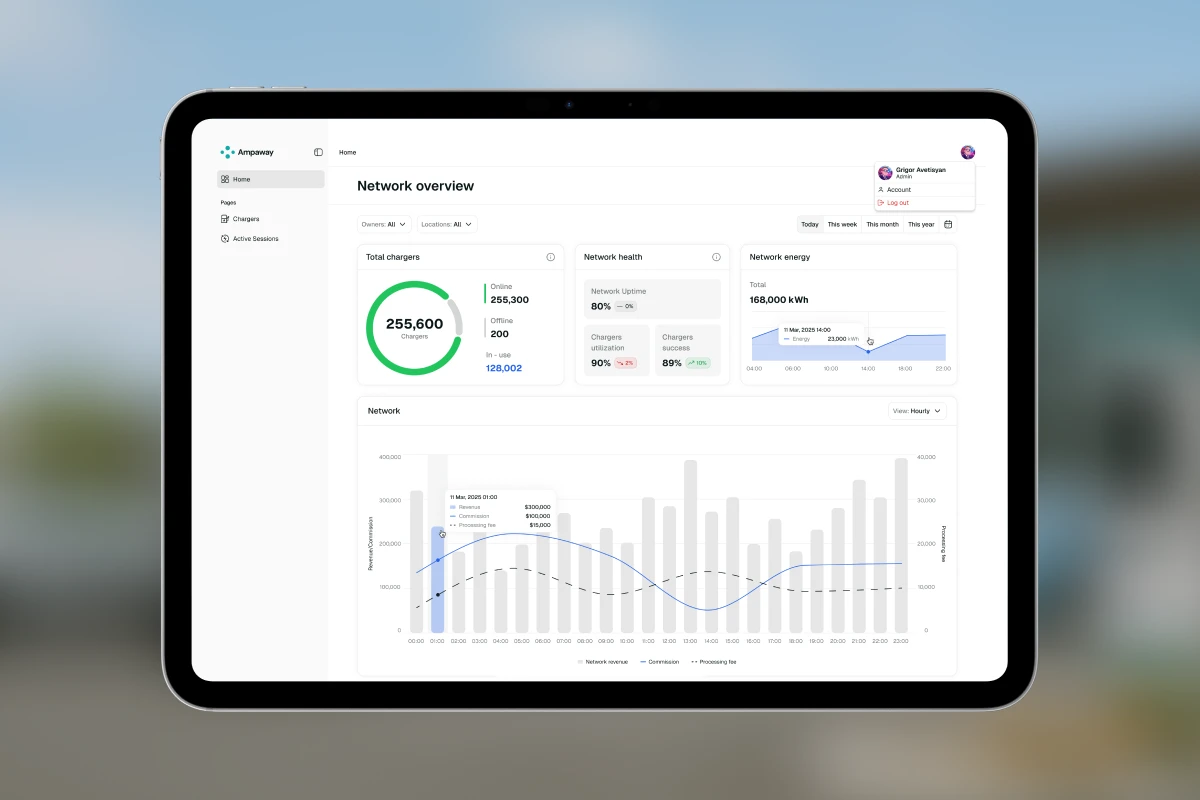
Payment and billing options
Depending on your business model, you may want to offer free charging, paid sessions, or subscription access. Look for solutions that support different payment methods, including app-based payments, RFID cards, and credit card options.
Network connectivity
Cloud-based platforms allow you to manage chargers remotely. This includes tracking usage, adjusting settings, and reviewing performance data. Open standards can also make it easier to integrate with other systems in the future.
User authentication
Access control is important in commercial settings. You may want to limit charging to employees, tenants, or approved drivers, or offer different pricing for different user groups.
Remote monitoring and diagnostics
The ability to monitor chargers in real time helps reduce downtime. Alerts and remote troubleshooting can prevent small issues from turning into larger problems.
Scalability and future expansion
As EV adoption grows, your charging needs may grow too. A scalable solution should allow you to add more chargers, upgrade software, and expand to new locations without starting from scratch.
Why businesses are investing in EV charging now
First, demand is growing. Employees want to charge at work. Customers expect charging to be available where they shop, stay, or park. Fleet operators are moving toward electric vehicles to reduce fuel costs and meet sustainability goals.
Plus, offering EV charging can set a business apart. It shows that you’re thinking ahead and responding to real changes in how people move.
Ultimately, installing charging stations is becoming part of long-term planning. Many businesses see it as an investment in their property and infrastructure, something that will only become more important over time.

Choosing a commercial EV charging solution that lasts
EV charging is not just another add-on. For many businesses, it becomes part of their core infrastructure. As electric vehicles become more common, demand will keep rising. Planning with the future in mind helps you avoid costly upgrades and changes that could have been anticipated from the start.
Flexibility is key. A good commercial EV charging platform should let you add more chargers over time, adjust pricing and access, and manage energy use as your needs grow. What fits your site today should still work a few years from now.
Before choosing a provider, be clear about your goals. Who will use the chargers? How often? How much control do you want over operations and revenue?
The right setup should fit your property, support your users, and leave room to expand. With the right partner and plan, EV charging can become a long-term asset that strengthens your business and keeps you ready for what’s next.