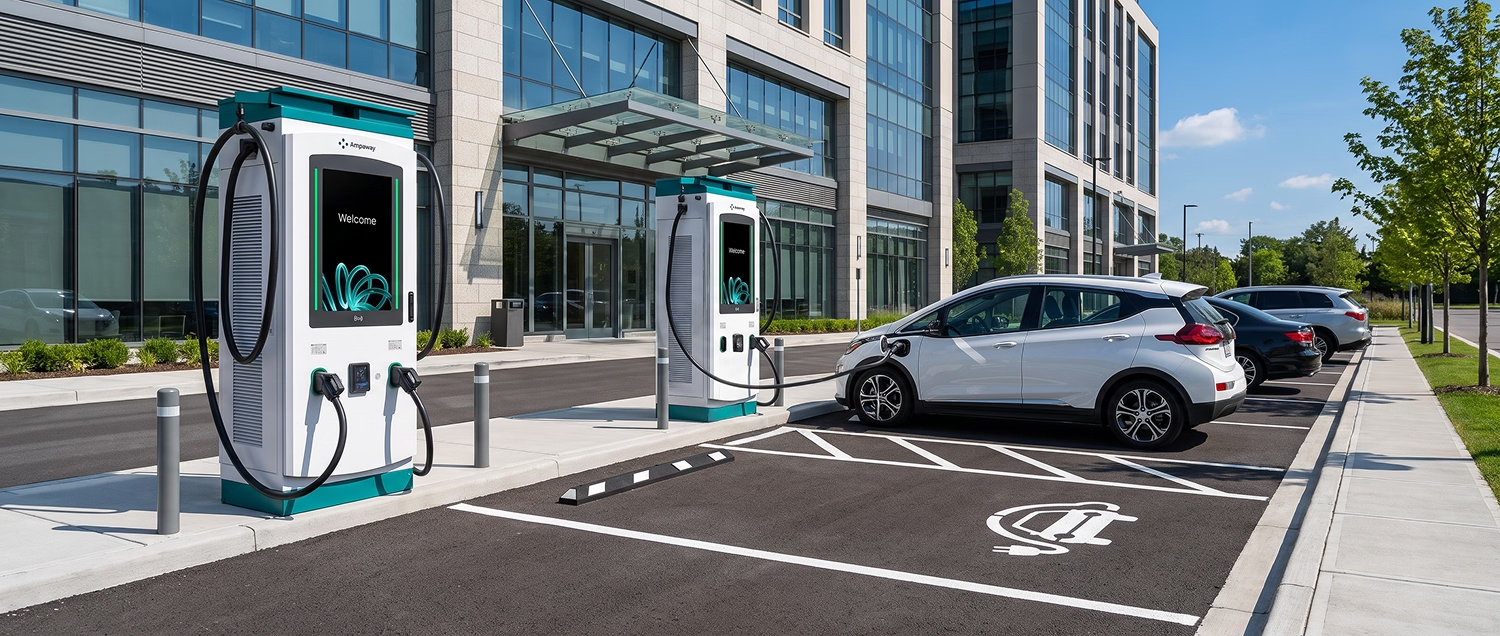

Take a look at any busy parking lot today, and you’ll notice something different. More electric vehicles are pulling in, and their drivers are thinking ahead about where they’ll charge next. For many customers, having access to charging is no longer a bonus. It’s part of how they decide where to shop, eat, work, or stay.
That shift creates a real opportunity. The benefits of EV charging stations for business go far beyond supporting clean transportation. Charging stations can help you attract new visitors, encourage them to stay longer, support employees who drive EVs, and even open up new revenue streams. What started as a sustainability move is quickly becoming a smart business strategy.
In this guide, we’ll walk through the top benefits of installing EV charging stations and show how they can help your business grow, stay competitive, and prepare for what’s next.
Why you should install EV chargers for your business
As electric vehicle adoption rises, companies that provide charging position themselves to capture new demand, strengthen their brand, and unlock additional revenue opportunities. The benefits of EV charging stations for business extend far beyond convenience. They impact customer behavior, employee satisfaction, operational efficiency, and long-term competitiveness.
Meet rising EV charging demand before competitors
Electric vehicle adoption is growing steadily around the world, and many regions are seeing the same trend locally. More drivers are choosing EVs for lower fuel costs, government incentives, and environmental reasons. As the number of EVs on the road increases, so does the need for convenient and reliable charging options. Public infrastructure is expanding, but it still doesn’t fully match the speed of adoption.
This is where businesses have a real advantage. Retail centers, offices, hotels, and commercial properties are already places where people park for extended periods of time. Adding EV charging builds on existing infrastructure rather than starting from scratch. It allows businesses to meet rising demand in a practical way, using space they already have.
By acting early, companies can position themselves ahead of nearby competitors that have not yet installed chargers. As EV drivers plan their routes around available charging, businesses that offer this service become natural destinations. Meeting demand before it peaks helps create long-term loyalty and a stronger presence in a market that is only continuing to grow.
Attract more customers and increase dwell time
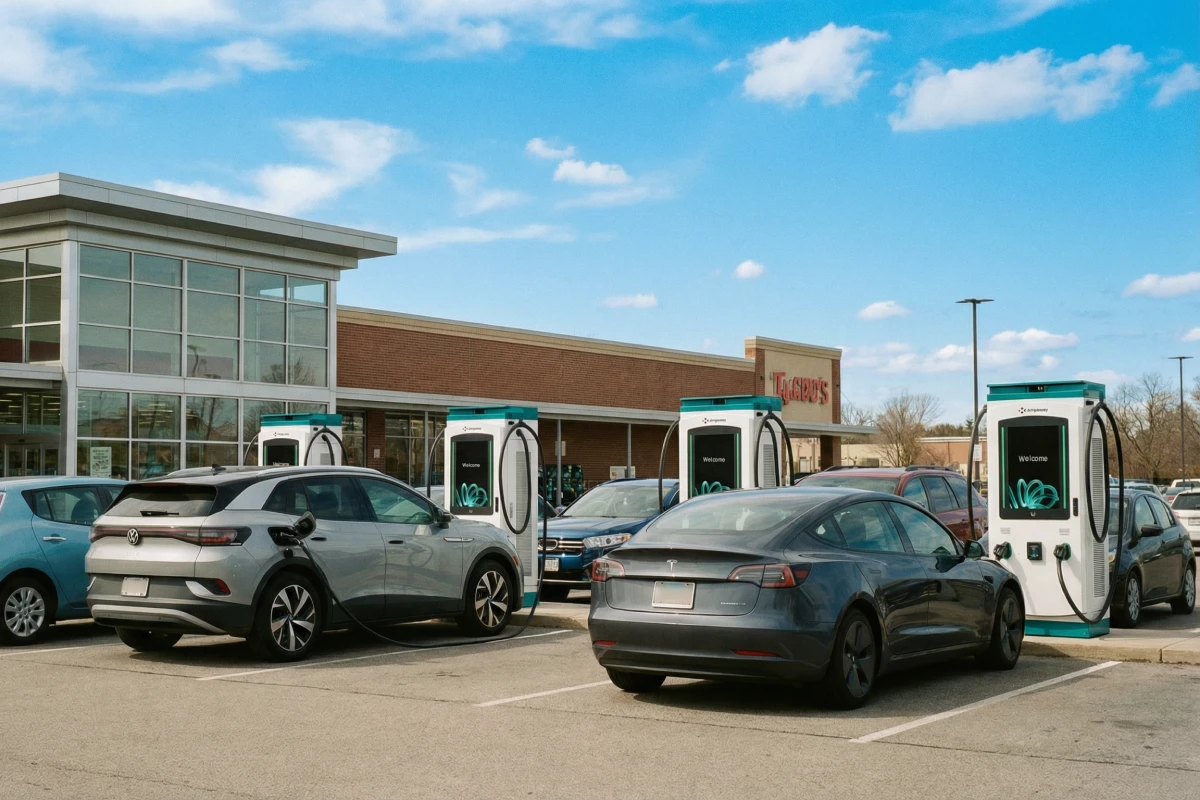
EV drivers plan their stops with charging in mind. Many actively look for locations that offer charging, especially if they expect to stay parked for a while. That makes your business more likely to be chosen over others nearby. When charging is available, your location becomes part of the driver’s route rather than an afterthought.
Unlike traditional fuel stops, EV charging takes longer, and that extra time often benefits the business. While vehicles power up, customers tend to shop, dine, or use services on-site.
This can lead to:
- Longer visits
- Higher average spending
- Greater likelihood of repeat visits
In competitive areas, access to charging can be the simple factor that brings people through your doors and keeps them there longer.
Strengthen brand image and sustainability positioning
Many customers these days pay attention to how businesses operate. They notice which companies take real steps toward cleaner energy and long-term responsibility. Installing EV charging stations sends a clear message: your business is ready to support a more sustainable future.
For many organizations, this also supports broader ESG and CSR goals. EV charging can become part of your sustainability reporting and environmental commitments, helping demonstrate measurable progress. At the same time, it appeals to eco-conscious consumers, partners, and even investors who prefer to work with businesses that reflect their values. Over time, these choices strengthen trust and help build a brand that feels modern, responsible, and forward-looking.

Create new, recurring revenue from parking assets
One of the most common questions business owners ask is: Are EV charging stations profitable? In many cases, they can be, especially when implemented with a clear pricing and usage strategy. Charging allows businesses to convert existing parking spaces into income-generating assets rather than fixed overhead.
Businesses can structure charging fees in ways that match their location, traffic patterns, and customer behavior. Common revenue models include:
- Pricing per kWh
- Charging per session
- Time-based pricing
Beyond direct charging fees, value can also be created through bundled offers, such as discounted charging for hotel guests, tenants, or loyalty members. Some businesses choose to partner with charging networks or utilities to streamline operations or share revenue.
Providers like Ampaway can help implement and manage these pricing structures through centralized platforms that support payments, usage tracking, and reporting. With the right setup in place, charging can move from being a simple amenity to becoming a steady, recurring revenue stream.
Increase employee satisfaction and retention
EV charging isn’t only valuable for customers. It can also make a real difference for employees. Offering workplace charging shows that your company understands how people live and commute today. For employees who drive electric vehicles, having a reliable place to charge during the workday removes stress and adds convenience.
Over time, this simple benefit can boost loyalty and support retention. Workplace charging can be seen as a practical perk, similar to flexible schedules or wellness programs. It improves the daily experience and shows that the company is invested in modern, forward-thinking solutions. As more professionals consider sustainability and convenience in their career choices, offering EV charging can set your workplace apart.

Future-proof the business for EV adoption and regulation
Electric mobility continues to expand, and charging demand will grow alongside it. Preparing now allows businesses to plan intentionally instead of reacting under pressure later. Working with an experienced provider like Ampaway allows businesses to deploy scalable infrastructure from the start, reducing the need for disruptive upgrades as demand grows.
Waiting too long can create avoidable challenges. Retrofitting parking areas or upgrading electrical systems after demand spikes is often more expensive and disruptive than building capacity gradually.
In many regions, building codes and regulations are also evolving to support electric mobility. By acting ahead of these changes, businesses stay compliant, reduce future upgrade risks, and maintain a competitive position as market expectations continue to shift.
Reduce upfront and long-term costs through incentives
One reason many companies hesitate to install charging stations is the initial investment. But in U.S. markets, programs like CalVIP and the National Electric Vehicle Infrastructure Program offer grants, tax credits, and subsidies to help offset installation costs. These programs vary by region, but they are designed to encourage businesses to expand charging access. In some cases, utilities also offer support to reduce setup or operating expenses.
When you look at the bigger picture, the economic benefits of EV charging stations become clearer. Incentives can lower the upfront cost, while smart energy management and usage fees can help cover ongoing expenses. Over time, the combination of financial support and steady demand can make EV charging a cost-effective addition to your site rather than a burden on your budget.
Increase property value and site attractiveness
EV charging stations are a visible upgrade to your property. Adding charging signals that your site is modern, practical, and ready for future demand. Just like strong internet access or updated security systems, charging infrastructure has become part of what many tenants and visitors expect.
For landlords, developers, and property owners, this can increase appeal to tenants, investors, and potential buyers. Retail centers, hotels, office buildings, and mixed-use developments can all benefit from offering charging on-site. As electric vehicles become more common, properties that already support them may stand out as more attractive, competitive, and forward-thinking in the real estate market.

Support fleet electrification with lower operating costs
For businesses that operate company vehicles, EV charging can play a key role in fleet planning. Installing chargers on-site allows you to support company-owned electric vehicles without relying only on public infrastructure. This makes daily operations more predictable and easier to manage.
Electric fleets can also reduce operating costs over time. Compared to fuel-powered vehicles, EVs often have lower fuel and maintenance expenses. Charging at your own location can further control energy costs and simplify budgeting. With the right setup in place, transitioning part or all of your fleet to electric vehicles becomes a smoother and more practical step forward.
Gain operational insights from smart EV charging data
Platforms such as Ampaway provide real-time usage insights, load management tools, and reporting dashboards that help businesses make informed decisions about expansion, pricing, and energy optimization.
Charging analytics can show when stations are used most, how long vehicles remain connected, and how demand shifts throughout the day or week. This visibility helps businesses:
- Identify peak usage periods
- Adjust staffing or services accordingly
- Plan future charger expansion based on real demand

Optimize energy use and control costs
Smart charging systems also support load management and energy optimization. Businesses can balance electricity usage, reduce strain during peak hours, and limit demand charges.
In some cases, charging data integrates with broader energy management systems, offering a clearer view of overall site consumption. Over time, this turns EV charging from a simple amenity into a more efficient and measurable part of daily operations.
Turning EV charging into a lasting business advantage
EV charging has become an important part of how businesses grow and stay competitive. It can help attract more customers, increase the time they spend on-site, create new revenue opportunities, and prepare your company for long-term market changes. The impact reaches across marketing, operations, finance, and the overall workplace experience.
So, what are the benefits of EV charging stations for businesses? They include stronger customer appeal, recurring income potential, higher property value, and better readiness for future regulations. Installing EV charging stations can deliver value both now and over time, helping businesses adapt as electric mobility continues to grow.
When viewed as a strategic investment, EV charging becomes part of a clear growth plan. Assess your site, understand your customers, and think about long-term goals so you can move forward with confidence. Many businesses choose full-service providers such as Ampaway to simplify deployment and long-term management, making it easier to turn EV charging into a stable, long-term asset.