Charging an electric car costs less than most drivers expect, but the final number depends on more than just the price of electricity. The cost of charging an electric car varies by where you live, where you plug in, and how fast you need the charge to happen. A driver charging overnight at home pays a very different rate than someone using a fast charger on a road trip. This guide discusses the real costs behind EV charging, the factors that move your bill up or down, and how to estimate what charging will actually cost you.
How much does it cost to charge an electric car?
Electric car charging is priced by the kilowatt hour, or kWh, which is the unit used to measure how much electricity a charge actually uses. Instead of paying per gallon like you would at a gas station, you're paying for the energy that goes into your battery. Because electricity rates and battery sizes vary widely, there's no single number that applies to every driver, but looking at cost per full charge and cost per mile gives a realistic starting point.
Average cost per full charge
Most electric cars have battery capacities between 40 kWh and 100 kWh, with many mainstream models sitting in the 60 to 75 kWh range. At a typical US residential electricity rate of around $0.12 to $0.30 per kWh depending on the state, a full charge from empty generally costs somewhere between $7 and $25. Drivers in states with higher electricity rates, or those charging larger battery packs, will land toward the higher end of that range. This figure only reflects home charging rates. Public and fast charging, covered later in this guide, typically cost more per kWh.
Average cost per mile or kilometer
Cost per full charge is useful, but cost per mile makes it easier to compare an EV against a gasoline car or against another EV with a different battery size. Most electric cars average around 3 to 4 miles per kWh, though this changes with driving conditions and vehicle efficiency. At a home charging rate of $0.12 to $0.30 per kWh, that works out to roughly $0.03 to $0.08 per mile. Drivers who track their charging over a full month often find this per mile figure more useful than the cost of any single charge, since it accounts for a mix of charging locations and driving conditions rather than one ideal scenario.
What affects the cost of charging an EV?
Home and public charging aren't priced the same way, and the gap between them is often bigger than drivers expect going in. Where you charge determines which pricing structure applies, whether that's a flat residential rate, a per kWh public rate, or a per minute fee at a fast charger. Comparing the four most common charging settings side by side makes it easier to see where the real cost differences come from, and where a public charging station might fit into your routine without derailing your monthly costs.
Electricity rates
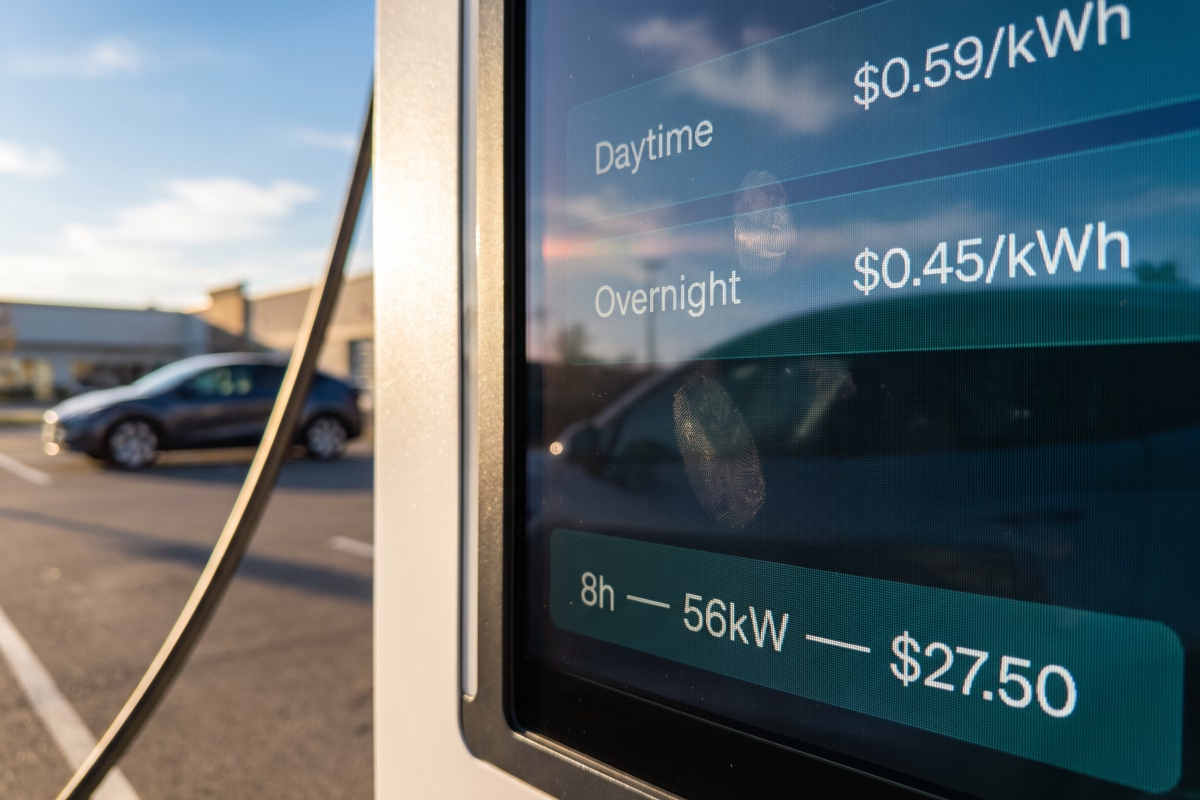
Electricity prices vary by utility, by state or country, and often by time of day. Some utilities charge a flat rate per kWh no matter when you use power, while others use tiered pricing that increases once you pass a certain usage threshold in a billing cycle. This is the single biggest driver of cost differences between regions, since the same car charged in two different cities can produce two very different bills.
Battery size
Larger batteries hold more energy, so filling one from empty costs more in raw dollars than filling a smaller pack. That said, a bigger battery also delivers more range per charge, so the cost per mile often ends up similar across battery sizes. Battery size affects the size of the bill, not necessarily how efficiently you're spending your money.
Charging location
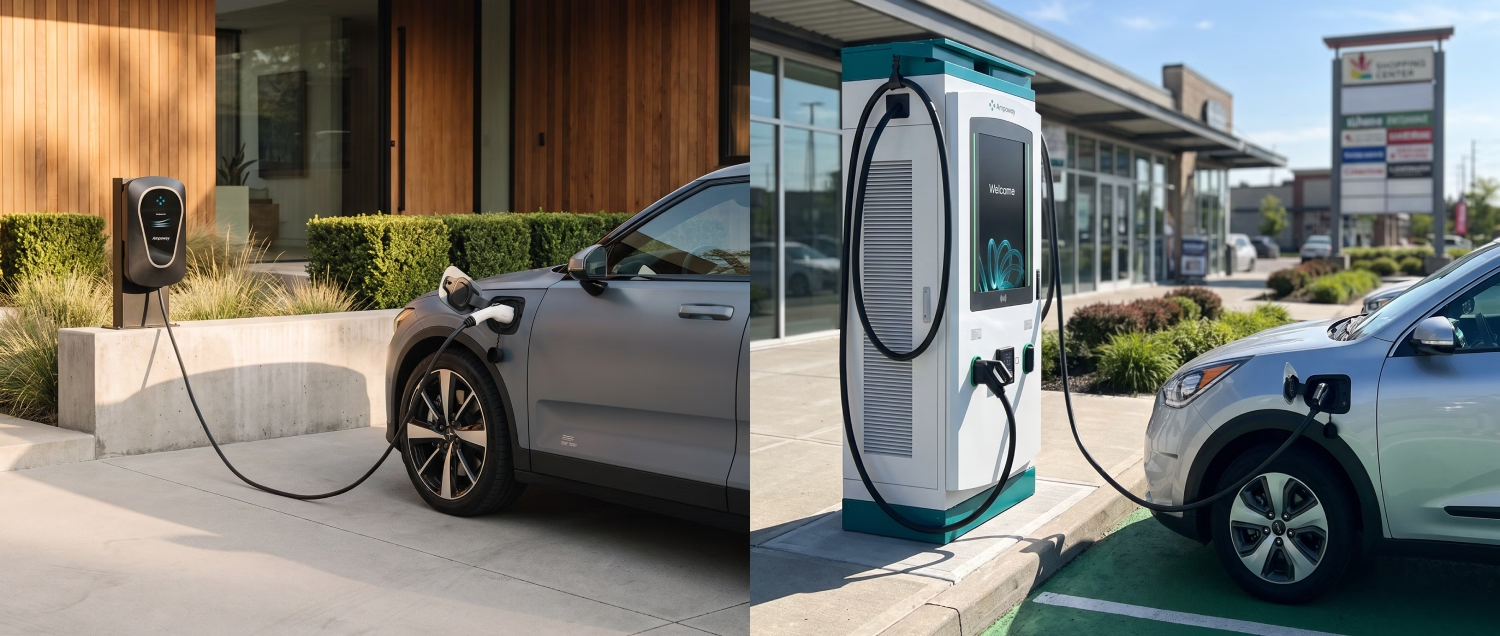
Where you charge changes the price structure entirely. Home charging typically reflects your residential utility rate. Charging at work may be free, subsidized, or billed separately. Public locations, including retail lots and shared parking facilities, often set their own pricing independent of local utility rates.
Businesses that install an EV charging solution for parking facilities frequently choose pricing models designed to recover equipment and maintenance costs, which is part of why public rates tend to run higher than home charging. We'll break down the actual cost differences between these locations in the next section.
Charging speed
Charging speed and charging cost are related but not the same thing. A faster charger gets you back on the road sooner, but speed itself doesn't set the price. Many fast chargers do cost more per kWh than slower ones, mainly because the equipment is more expensive to install and operate, not because faster electricity delivery is inherently pricier. It's worth separating these two factors when comparing options, since assuming faster always means proportionally more expensive can lead to inaccurate cost estimates.
Time of day
Utilities that offer time of use pricing charge different rates depending on when electricity is used, typically with lower rates overnight and higher rates during peak demand hours in the late afternoon and evening. Charging during off peak hours can meaningfully lower your cost, even without changing anything else about how you drive or charge.
Weather and driving conditions
Cold weather reduces battery efficiency, which means a car may use more energy to travel the same distance in winter than in mild conditions. This doesn't change the price per kWh, but it does change how many kWh a given trip requires, which raises the effective cost per mile during colder months. Aggressive driving and highway speeds have a similar effect, increasing energy use without changing the underlying electricity rate.
Charging efficiency and energy losses
Not all the electricity drawn from a plug ends up stored in the battery. Some energy is lost as heat during the charging process, a normal part of how charging works. This loss, often referred to as charging efficiency, typically ranges from 85% to 95%, depending on the charger and conditions. In practical terms, this means your actual electricity cost is slightly higher than the battery's stated capacity would suggest, since you're paying for some energy that never reaches the battery.
Home charging vs. public charging costs
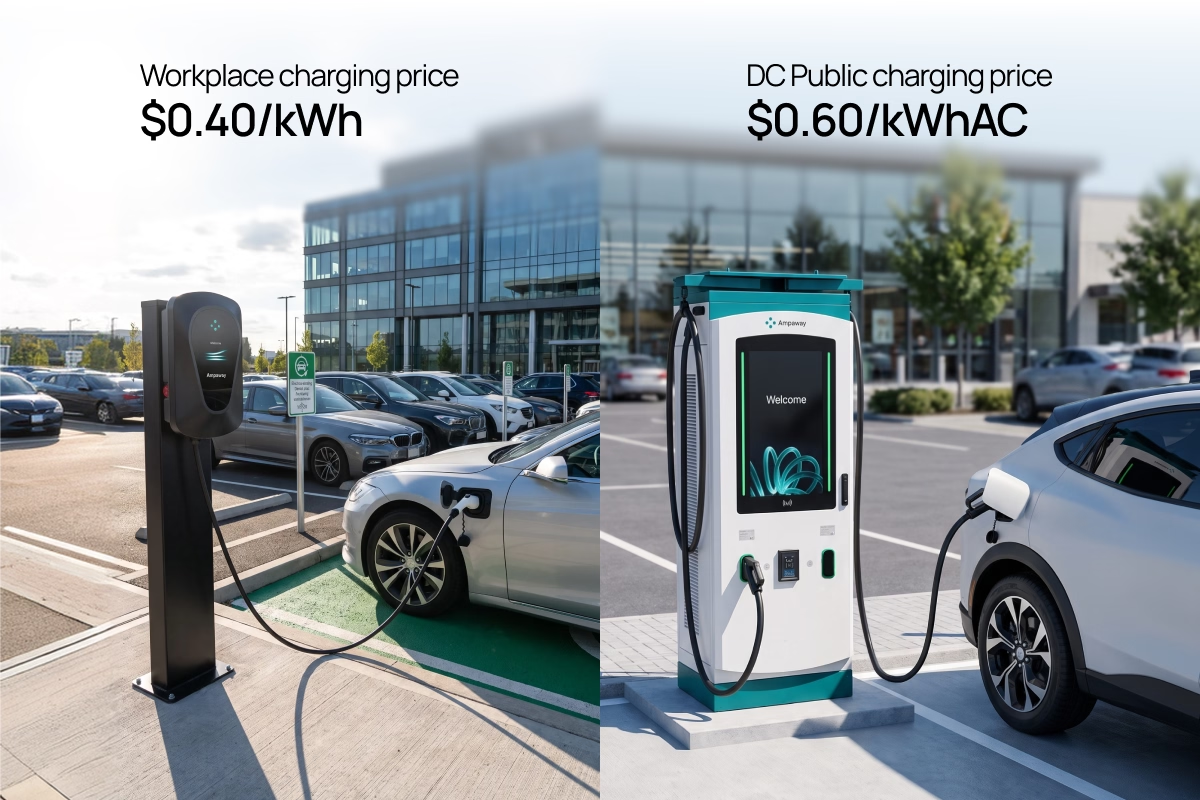
Charging cost depends heavily on where you plug in, since each setting uses its own pricing structure. Home charging runs through your residential utility rate, workplace charging often follows separate rules set by the employer, and public locations price by the kWh, by the minute, or through a flat session fee. Looking at these four settings side by side shows where the biggest cost swings actually happen, including what to expect the first time you use a public charging station.
Charging at home
Home charging uses your existing residential electricity rate, which is what makes it the most predictable option. Based on the $0.12 to $0.30 per kWh range covered earlier, a full charge typically costs $7 to $25. Most home setups use a Level 2 charger running on AC, or alternating current, the same power type used by household appliances. Charging overnight often costs less, since many utilities lower their rates during off peak hours.
Workplace charging
Workplace pricing is set by the employer, not a utility, so it varies more than any other option. Some workplaces offer charging free as a perk, others charge a flat daily fee, and some bill per kWh close to commercial rates. There's no standard model, so it's worth checking directly rather than assuming.
Public AC charging
How much it costs to charge an electric car at a public charging station depends on the network and how it prices power, whether per kWh, per hour, or a flat session fee. Public AC charging typically runs $0.30 to $0.55 per kWh, higher than home rates, since operators need to recover equipment and maintenance costs. Some locations add a separate parking or session fee on top.
DC fast charging
DC, or direct current, delivers power straight to the battery, which is what makes fast charging so much quicker than AC. That speed comes at a price, usually $0.35 to $0.70 per kWh, sometimes billed per minute instead. The premium reflects the cost of the equipment needed to deliver power that fast, not a higher cost for the electricity itself.
How to estimate your EV charging costs
Once you know your electricity rate and your car's efficiency, estimating the cost of charging an electric car takes just one simple formula. This section walks through the calculation and applies it to a real example, so you can plug in your own numbers afterward.
Simple cost calculation
The basic formula is:
Battery capacity (kWh) x electricity rate (cost per kWh) = cost per full charge
To estimate cost per mile instead, divide that number by your car's expected range on a full charge. Both figures depend on the rate and efficiency numbers specific to your car and location, so treat the formula as a starting point rather than a fixed answer.
Example calculation
Take a car with a 65 kWh battery and a home electricity rate of $0.18 cents per kWh. That works out to 65 x 0.18, or $11.70 for a full charge. If that same car gets 250 miles of range per charge, the cost per mile comes to roughly $0.047. Swap in your own battery size, local rate, and range to get a number that actually reflects your car and your electricity bill, rather than relying on a national average.
How to reduce your EV charging costs
Most of the factors covered so far are outside your control, but a few habits can meaningfully lower what you pay to charge. None require a different car or a different charger, just a shift in when and how you charge.
Charge during off-peak hours
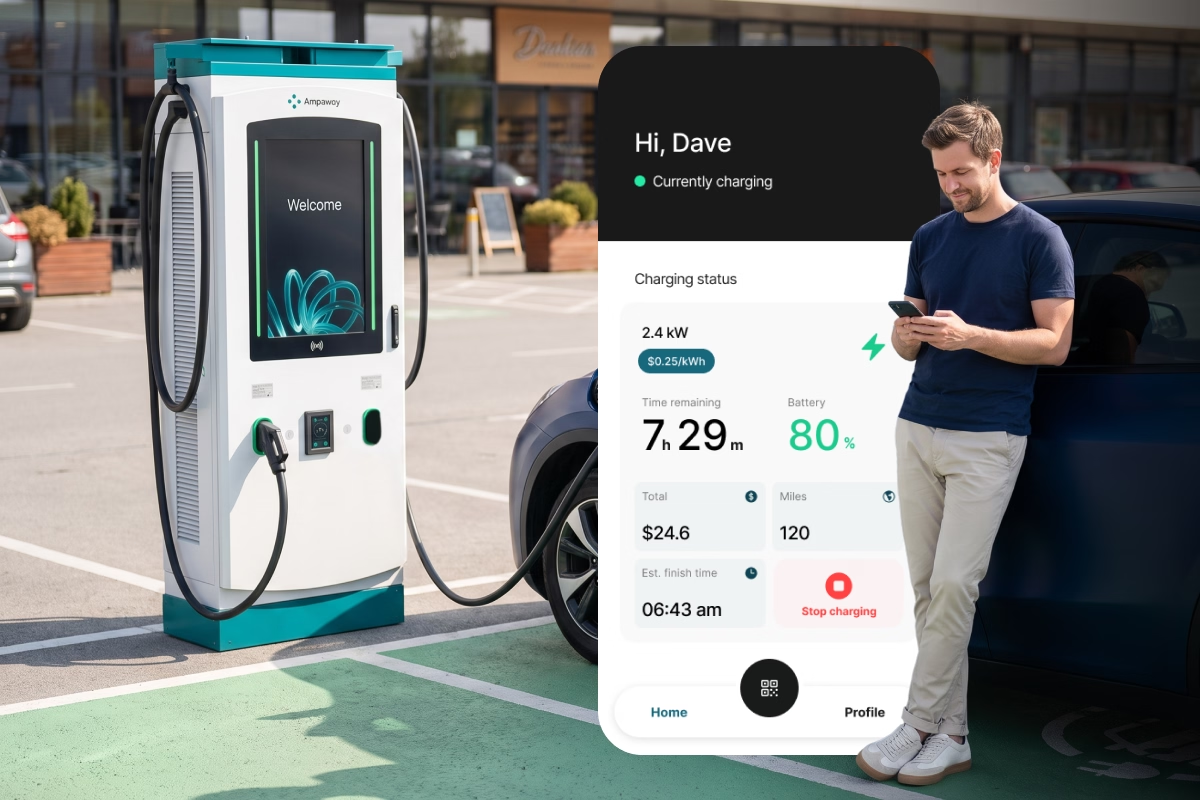
If your utility offers time of use pricing, charging overnight instead of right after work can lower your rate significantly, sometimes by half or more. This is one of the simplest ways to cut costs, since it changes nothing about your driving, only the timing of when you plug in.
Use smart charging features
Most EVs and home chargers let you schedule charging sessions in advance, so you can plug in whenever it's convenient and still only draw power during off peak hours. Businesses managing multiple vehicles or chargers often rely on EV charging management software like Ampaway to track usage and costs across a full fleet or property, rather than monitoring each charger manually.
Compare public charging networks
Public charging costs vary by network, and many offer membership plans that lower the per kWh rate for regular users. If you charge in public often, comparing a few networks in your area can reveal meaningful savings over relying on whichever charger happens to be closest.
Keep your battery healthy
Frequent fast charging generates more heat and stress on the battery than slower AC charging, which can gradually reduce how efficiently it stores and delivers energy over time. Sticking to Level 2 charging for daily use, and saving DC fast charging for road trips, helps preserve battery efficiency, which keeps your cost per mile from creeping up as the car ages.
Why EV charging prices vary between charging stations
Even within public charging, prices swing widely from one station to the next. That variation comes down to how each network structures its pricing, what fees apply on top of the energy cost, and where the station is located.
Pricing models
Charging networks price sessions in different ways, and there's no single standard across the industry. Some charge per kWh, which most closely reflects actual energy use. Others charge per minute, which can cost more if your car charges slowly, or less if it charges fast. Flat session fees are also common, especially at AC stations where charging times vary less. Payment is typically handled through an app or an EV charging payment system built into the station itself, so it's worth checking how a network prices and processes payment before relying on it regularly.
Network operator fees
Beyond the base rate, many networks add fees that aren't obvious until you're already charging. Idle fees charge extra if you leave your car plugged in after it finishes charging, meant to free up the spot for the next driver. Membership fees can lower your per session rate but add a recurring cost. Roaming fees may apply if you use a station outside your home network. These add-ons can meaningfully change the real cost of a session beyond the advertised rate.
Location and demand
Stations in high-traffic areas, dense urban centers, or locations with limited charging options nearby tend to price higher than stations in less competitive areas. Demand pricing, where rates rise during busy periods, is also becoming more common, similar to how ride-hailing or parking pricing shifts with demand. This means the same network can charge different rates for the same charging speed depending purely on where and when you plug in.
To Conclude
Charging costs come down to rate, location, speed, and timing, not a single fixed price. Home charging stays cheapest for daily use, while public and fast charging trade cost for convenience. Estimating your own numbers, and shifting to off peak hours when possible, makes the biggest difference. For property owners and businesses adding charging on site, Ampaway's dynamic load balancing helps support more chargers without expensive electrical upgrades, keeping charging accessible without driving up costs for drivers.